Supreme Court Poised to Redefine Presidential Power, Voting Rules, and Sports Policy in High-Stakes Term-End Rulings
Synthesized analysis of corroborated SCOTUS cases on Fed/FTC removals, mail ballots, trans sports, and geofencing shows potential shifts in executive power and policy fault lines, backed by arguments through April 2026.
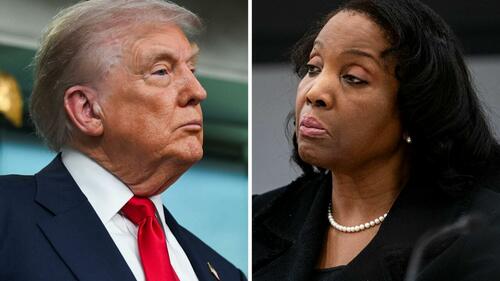
As the Supreme Court's October 2025 term nears its close in late June or early July 2026, multiple pending cases test the boundaries of executive authority, electoral procedures, and equal protection in athletics—issues with sweeping implications for federal agencies, midterms, and cultural debates. Credible reporting from SCOTUSblog and major outlets confirms the docket aligns closely with recent developments under the Trump administration. In Trump v. Cook, oral arguments on January 21, 2026, revealed justices' skepticism toward President Trump's attempt to remove Federal Reserve Governor Lisa Cook over alleged mortgage fraud, potentially preserving Fed independence while probing statutory 'for cause' removal standards untouched since 1913.[1][2] Parallel disputes, including Trump v. Slaughter on FTC Commissioner Rebecca Slaughter's removal, signal a likely narrowing or overruling of Humphrey's Executor (1935), expanding presidential control over independent agencies.[3] On elections, March arguments in Watson v. Republican National Committee suggest the Court may strike Mississippi's five-day grace period for mail ballots postmarked by Election Day, affecting similar laws in over a dozen states ahead of November midterms and reinforcing strict federal Election Day receipt rules.[4][5] Transgender athlete cases from Idaho (Little v. Hecox) and West Virginia (West Virginia v. B.P.J.), argued January 13, 2026, appear headed toward upholding state bans on biological males in female school sports, prioritizing competitive fairness.[6] A Virginia geofence warrant challenge (Chatrie v. United States), argued April 27, 2026, examines Fourth Amendment limits on broad cell data sweeps.[7] These rulings could interconnect agency autonomy with electoral integrity and privacy, reshaping governance beyond isolated headlines.
[Liminal]: These interconnected rulings could accelerate a realignment of institutional independence and state-level policies on contested social issues, with effects rippling into 2026 midterms and beyond through stricter voting timelines and clarified agency oversight.
Sources (6)
- [1]Supreme Court appears likely to prevent Trump from firing Fed governor(https://www.scotusblog.com/2026/01/supreme-court-appears-inclined-to-prevent-trump-from-firing-fed-governor/)
- [2]Supreme Court appears likely to uphold transgender athlete bans(https://www.scotusblog.com/2026/01/supreme-court-appears-likely-to-uphold-transgender-athlete-bans/)
- [3]Justices seem ready to overturn state law allowing for late-arriving mail-in ballots(https://www.scotusblog.com/2026/03/court-appears-ready-to-overturn-state-law-allowing-for-late-arriving-mail-in-ballots/)
- [4]Justices appear mixed on whether geofence warrant violated the Fourth Amendment(https://www.scotusblog.com/2026/04/justices-appear-mixed-on-whether-geofence-warrant-violated-the-fourth-amendment-/)
- [5]Court seems likely to side with Trump on president's power to fire FTC commissioner(https://www.scotusblog.com/2025/12/court-seems-likely-to-side-with-trump-on-presidents-power-to-fire-ftc-commissioner/)
- [6]Supreme Court doubtful of Trump claim he can fire Fed governors by fiat(https://www.npr.org/2026/01/21/nx-s1-5683968/supreme-court-federal-reserve-lisa-cook)