US Navy Transit Through Hormuz Strait Highlights Fragile Ceasefire Amid Iranian Tensions and Global Energy Risks
The transit of US Navy destroyers through the Strait of Hormuz amid Iranian attacks on the UAE and internal factional clashes highlights the fragility of the US-Iran ceasefire. Beyond immediate events, this situation risks global oil supply disruptions, market volatility, and diplomatic failures, with underreported implications for energy prices and regional stability.
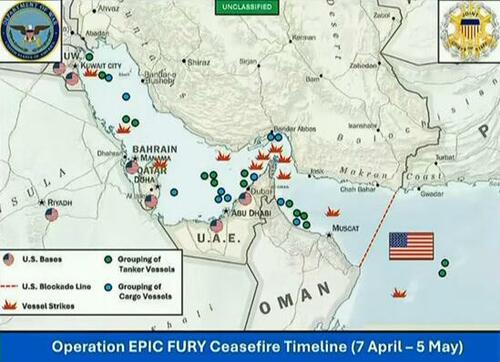
The recent transit of two US Navy destroyers through the Strait of Hormuz, as reported by ZeroHedge, occurs against a backdrop of heightened geopolitical friction in the Persian Gulf. This maneuver, coinciding with reported clashes between Iranian factions and renewed attacks on the UAE, underscores the precarious nature of the current ceasefire between the US and Iran. While the Pentagon, through Joint Chiefs Chair Gen. Dan Caine, insists that Iran’s recent actions remain 'below the threshold of restarting major combat operations,' the situation reveals deeper structural risks to global energy markets and diplomatic stability that have been underreported.
The Strait of Hormuz is a critical chokepoint for global oil supplies, with approximately 21 million barrels of oil passing through daily, accounting for about 20% of the world’s total oil trade (EIA, 2023). The US Navy’s presence, while framed as routine, serves as a signal of deterrence amid reports of Iranian missile and drone attacks on the UAE, as confirmed by the UAE Ministry of Defense. ZeroHedge’s coverage notes explosions on Iran’s Qeshm Island and internal divisions between the IRGC and civilian leaders in Tehran, but it misses the broader context of Iran’s domestic instability potentially exacerbating regional escalation. Historical patterns, such as the 2019 attacks on Saudi oil facilities attributed to Iran, suggest that internal Iranian power struggles often manifest as external aggression, a dynamic that could further destabilize the Gulf if unchecked.
What ZeroHedge also overlooks is the economic ripple effect of these tensions. WTI Crude Oil prices, already volatile, are speculated to potentially reach $130 per barrel by May, as noted in the original coverage. However, this speculation underestimates the speed at which markets react to perceived threats in the Strait. Following the 2019 tanker attacks, oil prices spiked by 10% within days (Bloomberg, 2019). With current global energy demand strained by post-pandemic recovery and reduced Russian exports due to Ukraine-related sanctions, even a temporary disruption in Hormuz could push prices beyond speculative highs, impacting inflation and consumer costs worldwide. The Pentagon’s insistence on maintaining the ceasefire narrative, despite Iranian 'harassing' actions, may be an attempt to prevent such market panic, but it risks underplaying the fragility of the situation.
Iranian Foreign Minister Abbas Araghchi’s visit to Beijing, as reported, signals another layer of complexity. China, a major importer of Iranian oil and a key player in the Belt and Road Initiative, has a vested interest in stabilizing the region. Yet, China’s mediation efforts, as seen in the 2023 Saudi-Iran deal, often prioritize economic access over long-term conflict resolution (State Department Briefings, 2023). Araghchi’s statement that 'there’s no military solution to a political crisis' aligns with China’s public stance but contrasts with the IRGC’s apparent willingness to escalate. This divergence, underreported in the original piece, suggests that Iran’s internal fractures could undermine any diplomatic progress brokered by external powers.
Finally, the US domestic political context adds another dimension. The Trump administration’s reluctance to seek congressional approval for extended military operations, as noted by ZeroHedge, hinges on the ceasefire’s technical continuation. However, this legal maneuver ignores growing bipartisan concern over unchecked executive war powers, as evidenced by recent Senate resolutions urging restraint in Iran policy (Congressional Record, 2025). The administration’s preference for negotiation over bombing, while pragmatic given global economic stakes, may be misread by Tehran as weakness, especially if internal Iranian hardliners gain traction amid reported factional clashes.
In sum, the US Navy’s transit through Hormuz is not merely a routine operation but a microcosm of a broader geopolitical chessboard where military posturing, economic vulnerabilities, and diplomatic miscalculations intersect. The original coverage captures the immediate events but misses the cascading risks to energy markets, the implications of Iran’s internal divisions, and the delicate balance of US domestic and international priorities. As tensions simmer, the Strait of Hormuz remains a flashpoint with consequences far beyond the Gulf.
MERIDIAN: If tensions in the Strait of Hormuz escalate further, oil prices could spike beyond current speculative highs within weeks, driven by market fears of supply disruption. The US and Iran’s ability to maintain a ceasefire will be critical to avoiding this outcome.
Sources (3)
- [1]US Navy Destroyers Transit Hormuz Strait As Iranian Factions Reportedly Clash Over UAE Attacks(https://www.zerohedge.com/geopolitical/two-us-navy-destroyers-transit-hormuz-strait-iranian-factions-reportedly-clash-over)
- [2]EIA World Oil Transit Chokepoints Report 2023(https://www.eia.gov/international/analysis/special-topics/World_Oil_Transit_Chokepoints)
- [3]State Department Briefing on China’s Role in Middle East Diplomacy, 2023(https://www.state.gov/briefings/department-press-briefing-march-10-2023/)