Chernobyl Ablaze Again: Climate-Driven Fires, War, and Radioactive Legacies Expose Deep Systemic Vulnerabilities
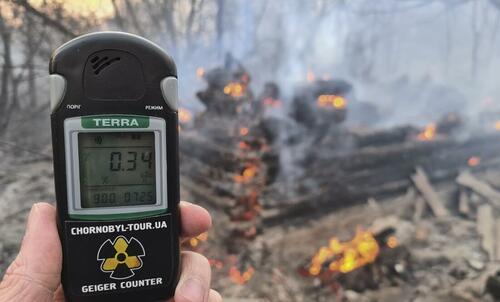
A major wildfire over 1,100 hectares is ravaging the Chernobyl Exclusion Zone amid dry, windy conditions and wartime obstacles like landmines. This event highlights how climate change amplifies fire risks in radiologically contaminated forests, while ongoing conflict adds ignition sources and response barriers, threatening both human safety and the zone's surprising biodiversity haven. It reveals deeper regulatory gaps in managing hybrid nuclear-climate threats beyond typical war-focused reporting.
As Ukraine marked the 40th anniversary of the 1986 Chernobyl disaster just weeks ago, a new threat has emerged in the Exclusion Zone: a massive forest fire exceeding 1,100 hectares, driven by strong winds, dry conditions, and complicated by landmines and potential drone activity linked to the ongoing conflict. While immediate radiation levels are reported as normal, history shows these events can remobilize radioactive particles, with the 2020 wildfires causing spikes up to 16 times background levels in the zone. This incident is not an isolated emergency but a symptom of converging crises overlooked in mainstream coverage focused on wartime blame.
Scientific assessments reveal that wildfires have become annual occurrences in the Chernobyl Exclusion Zone (CEZ), with over 1,250 registered between 1993 and 2014, escalating dramatically in scale during dry years. The 2020 blaze burned approximately one-third of the Ukrainian portion of the zone, releasing a fraction of original contaminants but demonstrating real atmospheric transport risks. Climate change is intensifying this pattern across Polesia, with experts warning of more frequent large fires due to rising temperatures and altered precipitation, turning the regrown forests—ironically a result of abandonment—into heightened fuel loads.
Compounding this are regulatory and preparedness failures. The Russian invasion introduced widespread landmines that now restrict firefighter access, while downed drones are cited as a primary ignition source by on-the-ground units. This hybrid threat—contaminated landscapes meeting modern warfare and climatic shifts—has transformed the CEZ from a post-accident quarantine into an active environmental hazard zone. Yet the same area has paradoxically become one of Europe's largest unplanned wildlife sanctuaries, with wolf populations seven times higher than pre-disaster levels, thriving elk, deer, lynx, and even recovering Przewalski's horses. These biodiversity gains, driven by reduced human pressure rather than radiation tolerance, now face reversal as fires, fortifications, and habitat disruption take their toll.
Mainstream narratives emphasize immediate fire containment or geopolitical accusations, but deeper analysis reveals missed connections: inadequate international frameworks for managing 'nuclear wildfires' in a warming world, underinvestment in resilient firefighting infrastructure amid minefields, and the long-term remobilization risk of cesium-137 and other isotopes stored in soil and biomass. Previous modeling of CEZ fires estimates potential redistribution of contaminants across Europe, albeit in small fractions of the 1986 release. Without addressing these intersections of climate vulnerability, conflict, and nuclear legacy, similar incidents are likely to recur, underscoring broader regulatory shortcomings in safeguarding post-catastrophe ecosystems. Sources confirm radiation monitoring continues, but the pattern signals escalating environmental precarity.
LIMINAL: Recurrent climate-amplified wildfires in radioactive exclusion zones, worsened by conflict-created access barriers, will likely cause periodic low-level radiation releases and habitat loss, forcing global reevaluation of long-term nuclear site stewardship in an era of environmental instability.
Sources (4)
- [1]Chernobyl on fire as huge massive blaze spark panic in nuclear accident exclusion zone(https://www.express.co.uk/news/world/2203145/chernobyl-fire-huge-massive-blaze)
- [2]The no-go zone paradox: Chornobyl's wildlife thrives amid pro-nuclear shift(https://www.theguardian.com/environment/2026/apr/23/exclusion-zone-chornobyl-wildlife-thrives-amid-pro-nuclear-shift)
- [3]Chernobyl's radioactive landscape is a testament to nature's resilience(https://www.washingtonpost.com/world/2026/04/19/ukraine-russia-chernobyl-nature-rebounds/5fe97dec-3baf-11f1-90c4-9772c7fabc03_story.html)
- [4]Wildfires in the Chornobyl exclusion zone—Risks and remediation(https://onlinelibrary.wiley.com/doi/full/10.1002/ieam.4424)