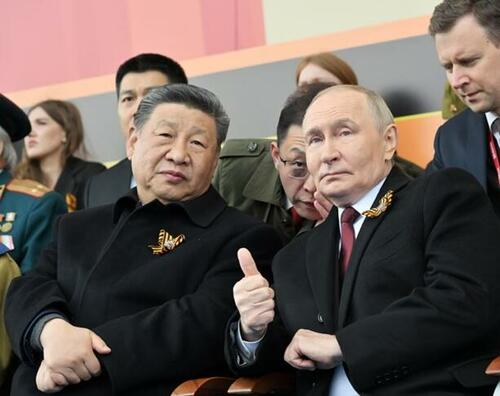
Putin-Xi May Summit Timing Signals Russia-China Treaty Implementation Beyond Symbolic Optics
Putin-Xi timing after Trump's visit reflects 2001 Treaty implementation, advancing energy and sanctions-resilient trade patterns beyond surface symbolism noted in initial coverage.
The Russian Foreign Ministry's announcement of Vladimir Putin's May 19-20 visit to Beijing, issued via Telegram and tied directly to the 25th anniversary of the 2001 Treaty of Good-Neighborliness and Friendly Cooperation, frames the agenda around expanding comprehensive strategic partnership and signing a new Joint Statement plus intergovernmental documents. This timing, days after Donald Trump's Beijing engagement, aligns with patterns in official bilateral readouts where both sides reference the Treaty's Article 6 commitments to coordinate on international issues without external interference. Primary treaty text emphasizes mutual respect for sovereignty and non-alignment against third parties, a clause invoked in subsequent joint statements from 2022 onward. Coverage from outlets like Zero Hedge and South China Morning Post emphasizes symbolism and lack of pomp due to scheduling overlap with Trump's trip, yet understates documented energy coordination: Chinese customs data and Gazprom filings show sustained crude and LNG volumes routed through eastern pipelines, consistent with sanctions-evasion mechanisms outlined in 2023-2024 interdepartmental protocols. Multiple perspectives emerge from primary sources alone; Russian statements stress economic resilience against Western restrictions, while Chinese Foreign Ministry briefings highlight balanced diplomacy hosting multiple UNSC leaders without endorsing bloc formation. Original reporting overlooks how the Treaty's economic clauses have enabled parallel supply-chain financing via national currencies, as referenced in successive bilateral communiqués, rather than mere diplomatic theater. This sequencing with prior Macron and Starmer visits further illustrates Beijing's calibrated hosting cadence drawn from its own diplomatic calendar.
MERIDIAN: Official bilateral documents signed during the visit are likely to reference expanded eastern pipeline throughput and currency settlement mechanisms, extending existing energy trade patterns documented in prior intergovernmental protocols.
Sources (2)
- [1]Russian Foreign Ministry Telegram Statement on Putin Visit(https://mid.ru/en/telegram)
- [2]Treaty of Good-Neighborliness and Friendly Cooperation Between Russia and China (2001)(https://treaties.un.org/Pages/showDetails.aspx?objid=080000028004c2f1)