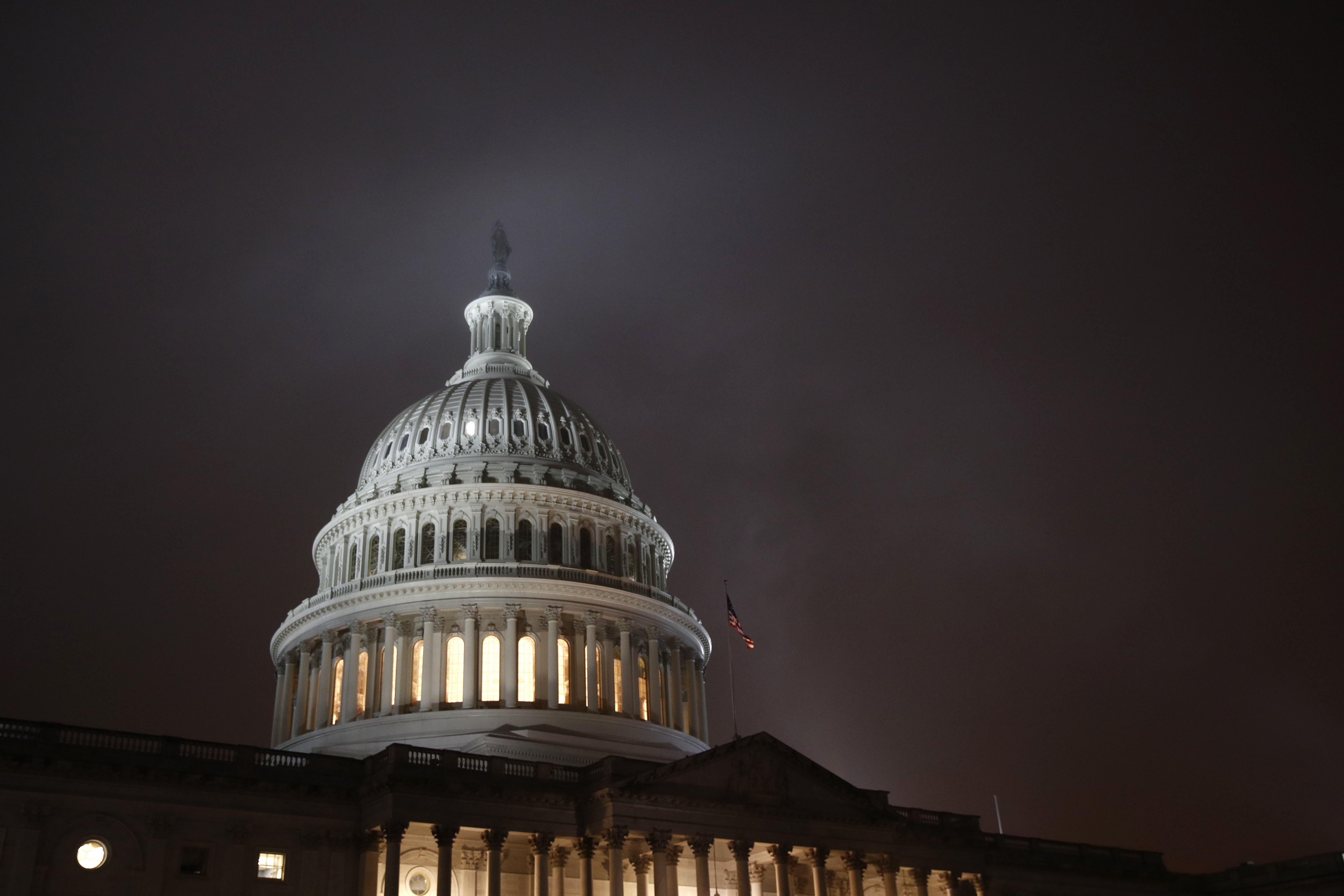
The $488 Billion Reckoning: How Prolonged Conflicts Are Forging a New National Security Burden
The proposed $488B VA budget for FY2027 reveals the unsustainable long-term costs of post-9/11 wars, driven by toxic exposure claims under the PACT Act. This under-examined linkage between veterans' health, mandatory spending shifts, and future defense flexibility signals mounting pressure on national security resources that could constrain military modernization against peer adversaries.
The Trump administration’s proposed $488 billion VA budget for fiscal 2027—representing a 7.7% increase—appears on the surface as routine support for veterans. Yet beneath the headline numbers lies a deeper structural reality that Defense News coverage largely treated as isolated departmental growth rather than the predictable fiscal echo of two decades of continuous overseas contingency operations. This request is not merely a VA story; it is a national security ledger entry that exposes the long-tail human and budgetary costs of post-9/11 conflicts that few strategists internalized when authorizing those campaigns.
The raw figures are sobering. Of the $488 billion total, $282.6 billion is mandatory spending for disability compensation reaching more than 7.4 million veterans, while discretionary funding hits $205.6 billion. Critically, the proposal seeks to shift another $52 billion from the Cost of War Toxic Exposures Fund into the discretionary column. This maneuver, as flagged by prior Congressional Budget Office analyses of similar shifts, effectively treats presumptive conditions created by burn pits, airborne toxins, and other exposures in Iraq, Afghanistan, and Syria as routine operating costs rather than one-time war expenditures. The 2022 PACT Act dramatically expanded eligibility; the current budget is its mathematical consequence. What the original reporting missed is the actuarial inevitability: VA disability rolls have grown 75% since 2010, with toxic-exposure claims now outpacing traditional combat wounds.
Synthesizing the Defense News reporting with the Congressional Budget Office’s 2024 long-term outlook on veterans’ benefits and a 2023 RAND study updating the costs of the post-9/11 wars, a clearer pattern emerges. RAND’s revised estimates already placed the eventual cost of Iraq and Afghanistan operations above $8 trillion when including future medical and disability obligations through 2050. The current VA request validates that trajectory. CBO projections warned that mandatory veterans’ spending would consume an increasing share of federal discretionary flexibility; the proposed cut of 9,000 VA staff positions while expanding community care contracts suggests an attempt to manage that squeeze through efficiency claims that historically have masked access problems.
The original coverage also underplayed strategic implications. While the White House simultaneously requests a $1.5 trillion Defense Department budget—up 44%—the combined security envelope now approaches $2 trillion annually when VA spending is properly viewed as downstream conflict cost. This creates an invisible opportunity cost: every dollar committed to legacy toxic-exposure claims and electronic health record restarts is a dollar unavailable for hypersonic defense, Pacific deterrence infrastructure, or munitions stockpiles required for potential conflict with China. History offers precedent—Vietnam-era Agent Orange liabilities continued reshaping federal budgets into the 2000s. The pattern repeats, only accelerated by 20 years of near-constant deployments and repeated exposure to modern urban combat toxins.
VA Secretary Doug Collins’ statement that “the days of measuring VA’s progress by how much money we spend… are over” reveals an ideological tension. Reducing headcount while restarting the troubled electronic medical records program (halted since 2022) risks repeating past implementation failures documented in GAO reports. Meanwhile, specific earmarks—$500 million for a Los Angeles homeless veterans center, nearly $2 billion for an Indianapolis replacement facility—address symptoms of broader failures in transition support, mental health, and rapid demobilization policies that characterized the Global War on Terror.
The under-covered intersection is clear: contemporary military policy continues to be written without sufficiently pricing the decades-long tail risk of veterans’ care. When recruitment crises already plague the services, visible shortfalls in veteran outcomes become strategic variables affecting force posture. A nation that cannot adequately fund the human consequences of its wars will eventually find itself unable to wage them. This $488 billion request is therefore less a budgetary line item than a warning: America’s security architecture must now permanently allocate nearly half a trillion dollars yearly to the last generation’s conflicts while preparing for the next. Policymakers who treat VA funding as separate from defense strategy are practicing strategic illiteracy.
SENTINEL: This VA budget explosion confirms that prolonged conflicts create multi-decade fiscal anchors; the $488B request, paired with a $1.5T DoD ask, signals America is now paying for yesterday's wars at the direct expense of tomorrow's deterrence against China.
Sources (3)
- [1]Trump’s VA budget request tops $488 billion for fiscal 2027(https://www.defensenews.com/news/pentagon-congress/2026/04/07/trumps-va-budget-request-tops-488-billion-for-fiscal-2027/)
- [2]CBO: The Veterans Disability Compensation Program(https://www.cbo.gov/publication/59926)
- [3]RAND: The Costs of War in Iraq and Afghanistan Through 2050(https://www.rand.org/pubs/research_reports/RRA1000-1.html)