China's Targeted Fentanyl Precursor Curbs Reveal Diplomatic Leverage Linking Trade, Security, and America's Overdose Crisis
Corroborated reports confirm China imposed new export license requirements on fentanyl precursors to North America following 2025 Trump-Xi talks and tariff adjustments, exposing intertwined leverage between narcotics control, trade policy, and the U.S. opioid epidemic.
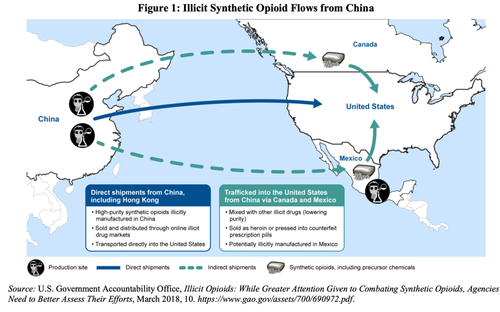
Following President Trump's summit with Xi Jinping, China has implemented new export controls on key chemicals used in fentanyl production, specifically targeting shipments to the United States, Mexico, and Canada. This move, announced shortly after discussions that intertwined trade tariffs with narcotics enforcement, underscores an under-reported reality: Beijing holds a measurable lever over a crisis that has contributed to over 800,000 U.S. overdose deaths in the past decade. The White House fact sheet from the summit explicitly noted China's commitments to halt designated precursor shipments to North America and control others globally, in exchange for adjustments to fentanyl-related tariffs previously set at 20% and reduced to 10%.[1][2]
Bloomberg and other outlets reported that Beijing's Ministry of Commerce and multiple agencies now require special licenses for three to 13 restricted compounds central to illicit fentanyl synthesis, signaling pragmatic cooperation amid broader tensions over trade, Iran, and regional security. This builds on historical patterns where U.S. pressure, including tariffs imposed early in Trump's second term via executive orders citing China's role in the opioid supply chain, has prompted regulatory action from Beijing. A Congressional Research Service overview confirms the November 2025 controls on 13 precursors directly followed the Busan Trump-Xi meeting, tying counternarcotics progress to tariff relief.[3][2]
The connections run deeper than standard diplomacy. U.S. officials have framed the flow of precursors—Chinese suppliers to Mexican cartels to U.S. streets—as a hybrid threat echoing the 19th-century Opium Wars in reverse, a narrative advanced by figures like Secretary of State Marco Rubio and counterterrorism officials. While Beijing rejects accusations of deliberate flooding, the timing of curbs aligned with tariff negotiations and agricultural purchase commitments reveals fentanyl policy as a bargaining chip in great-power competition. Critics note limitations: production can shift, enforcement gaps persist, and domestic U.S. demand plus progressive policies in some cities exacerbate the toll. Yet this lever connects border security, trade deficits, and public health in ways mainstream coverage often fragments. As the Lowy Institute observed, such deals revive working-group formats from prior administrations but may build momentum for deeper law enforcement ties—even as they highlight America's internal vulnerabilities as a vector for external influence.[4]
New York Times reporting similarly framed the licensing requirements for exports to North America as an indicator of thawing economic tensions, while acknowledging the synthetic opioid's role in tens of thousands of annual deaths. This episode illustrates how trade, security, and border policy are fused: progress on precursors can unlock tariff relief, yet sustained pressure remains tied to verifiable reductions in cartel supply chains.
LIMINAL: Beijing's calibrated chemical valve shows how supply-side pressure on the U.S. drug crisis has become a quiet diplomatic currency, binding tariff talks to overdose statistics and exposing vulnerabilities where trade, cartel logistics, and domestic decay intersect.
Sources (5)
- [1]Fact Sheet: President Donald J. Trump Strikes Deal on Economic and Trade Relations with China(https://www.whitehouse.gov/fact-sheets/2025/11/fact-sheet-president-donald-j-trump-strikes-deal-on-economic-and-trade-relations-with-china/)
- [2]China Restricts Chemical Exports to US in Fentanyl Crackdown(https://www.bloomberg.com/news/articles/2026-05-22/china-restricts-chemical-exports-to-us-in-fentanyl-crackdown)
- [3]China Tightens Controls on Fentanyl Precursors After Summit(https://www.nytimes.com/2025/11/10/world/asia/china-fentanyl-united-states-trade.html)
- [4]Fentanyl precursors - Congressional Research Service(https://www.congress.gov/crs_external_products/IF/HTML/IF10890.web.html)
- [5]The US-China fentanyl deal will not stop America's opioid crisis(https://www.lowyinstitute.org/the-interpreter/us-china-fentanyl-deal-will-not-stop-america-s-opioid-crisis)