Oil Majors' Warnings on Critical Shortages Expose Global Energy Fragility, Inflation Risks, and Underreported Resource Scarcity
Chevron and ConocoPhillips executives warn of imminent oil shortages and demand destruction from the ongoing Hormuz blockade in the 2026 Iran war, revealing deeper links between geopolitical shocks, resource scarcity, inflation, and the limits of mainstream climate narratives on energy security.
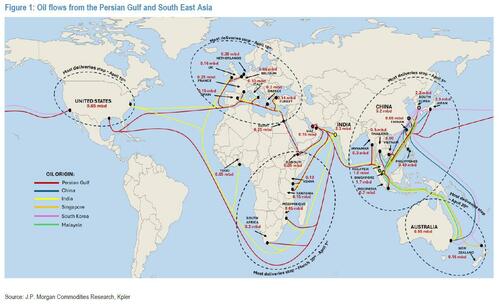
As the 2026 Iran conflict enters its third month, executives from ConocoPhillips and Chevron have delivered some of the most urgent alerts yet about the global oil market's breaking point. ConocoPhillips CFO Andy O’Brien told analysts that the depletion of pre-blockade tanker inventories means import-dependent nations could face 'critical shortages' as early as June or July, with refiners already cutting processing by roughly 8 million barrels per day in response to the effective closure of the Strait of Hormuz. Chevron CEO Mike Wirth echoed this on CNBC, warning that without restored supply, 'demand will have to come down across different sectors of the economy,' risking extreme outcomes as inventories hit operational floors.
These statements, corroborated across Bloomberg and CNBC reporting, highlight the acute fragility of energy markets long dependent on a chokepoint carrying one-fifth of global oil and LNG. Yet the deeper story, often missed by mainstream climate-focused coverage, connects these disruptions to persistent patterns of resource scarcity and inflation that predate the current geopolitics. Soaring prices for gasoline, jet fuel, and especially fertilizer are already rippling through food production and transport costs, amplifying inflationary pressures at a time when central banks struggle with post-pandemic legacies. WSJ reports detail how CEOs from Exxon, Chevron, and ConocoPhillips have held repeated briefings with the Trump administration, underscoring that the crisis is not a temporary shock but a potential reordering of energy baselines.
This episode reveals underreported tensions: while climate narratives emphasize transition to renewables, the physical realities of supply destruction expose how quickly demand must adjust when geopolitics intersects with finite conventional resources. The Hormuz disruption—whether through direct mining, insurance paralysis, or naval threats—has accelerated what analysts describe as 'demand destruction,' a polite term for economic contraction as high energy costs suppress activity in aviation, manufacturing, and agriculture. Al Jazeera and Seeking Alpha analyses suggest the crisis could persist for months even after ceasefires, as mine clearance and rerouting prove slow. This links to larger heterodox insights: scarcity is not merely a climate story but a geopolitical and geological one, with oil majors quietly positioning in the Permian and alternative basins while warning that the era of abundant, cheap energy may be structurally ending. Mainstream outlets have underplayed these interconnections, framing the issue primarily through emissions lenses rather than the immediate economic pain and systemic vulnerabilities now surfacing. The result risks a feedback loop where energy inflation undermines the very investment needed for any energy transition, exposing the hubris of policies that ignored market fragility.
LIMINAL: This crisis signals the end of energy abundance illusions, where geopolitics and physical scarcity will drive sustained inflation and economic demand destruction far beyond climate policy timelines, forcing a painful reassessment of global resource realities.
Sources (5)
- [1]ConocoPhillips Sees 'Critical Shortages' of Oil on Horizon(https://news.bloomberglaw.com/environment-and-energy/conocophillips-sees-critical-shortages-of-oil-on-horizon)
- [2]How the big oil and gas CEOs think the Iran war supply disruption will play out(https://www.cnbc.com/2026/03/28/iran-war-oil-companies-price-gas-diesel-strait-hormuz.html)
- [3]Energy crisis from Iran war could worsen, US oil executives warn Trump administration: WSJ(https://www.aa.com.tr/en/americas/energy-crisis-from-iran-war-could-worsen-us-oil-executives-warn-trump-administration-wsj/3866218)
- [4]When will Strait of Hormuz be 'safe' for commercial shipping again?(https://www.aljazeera.com/features/2026/4/28/when-will-strait-of-hormuz-be-safe-for-commercial-shipping-again)
- [5]Oil Forecasts Raised As Prolonged Strait Of Hormuz Disruption Continues(https://seekingalpha.com/article/4894825-oil-forecasts-raised-prolonged-strait-of-hormuz-disruption-continues)