Cameco's Projection of 20 AP1000 Reactors Signals Major Shift in Nuclear Energy Investment and Global Energy Transition
Cameco’s projection of up to 20 AP1000 nuclear reactors in the U.S. highlights a potential nuclear energy surge amid the clean energy transition. This article explores overlooked supply chain bottlenecks, financial risks, geopolitical stakes, and uranium market impacts, drawing on historical patterns and global energy trends to provide a nuanced view of this development.
Cameco, a leading uranium producer, recently projected during its 2026 Q1 earnings call the potential construction of up to 20 AP1000 nuclear reactors in the United States, split between initiatives supported by the Department of Commerce (DOC) and the Department of Energy (DOE). This ambitious forecast, as articulated by Chief Operating Officer Grant Isaac, reflects a significant pivot toward nuclear energy as a cornerstone of the global clean energy transition. However, the announcement raises critical questions about supply chain readiness, financing models, and geopolitical implications that were underexplored in initial coverage. This article delves into the broader context of nuclear energy's resurgence, the challenges of scaling deployment, and the intersection with commodity markets and international policy.
The original coverage by ZeroHedge highlighted Cameco's projection and the distinction between DOC and DOE programs, with the DOC focusing on long-lead items and innovative ownership models (e.g., federal build-own-operate or build-own-transfer), while the DOE collaborates with utilities on financing and project advancement. However, it missed the deeper structural challenges and historical parallels that frame this development. For instance, the global nuclear supply chain, particularly outside of China and Russia, has atrophied since the post-Fukushima slowdown in reactor construction. Curtiss-Wright, the sole producer of cooling pumps for Westinghouse’s AP1000 reactors, currently has capacity for only 3-4 units annually—a bottleneck that could delay or derail timelines for a fleet of 20 reactors. This constraint echoes past nuclear buildout delays in the 1970s and 1980s, when supply chain limitations and regulatory hurdles led to cost overruns and project cancellations.
Moreover, the announcement ties into broader energy transition patterns. Nuclear energy is experiencing a renaissance as countries seek to meet net-zero targets while addressing energy security concerns amid volatile fossil fuel markets. The International Energy Agency (IEA) notes in its 2023 World Energy Outlook that nuclear capacity must double by 2050 to limit global warming to 1.5°C, yet current global construction rates fall short. The U.S. push for AP1000 reactors aligns with this urgency but also reflects a strategic move to reduce reliance on foreign uranium and reactor technology, particularly from Russia, which still dominates enriched uranium supply despite sanctions. Cameco’s role as a North American uranium supplier positions it as a critical player in this geopolitical chess game, especially as uranium prices have surged over 50% since 2021 due to supply tightness and renewed nuclear interest.
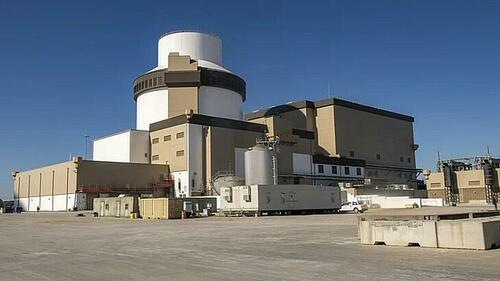
What the initial coverage also overlooked is the financial risk and policy uncertainty surrounding these projects. The DOC’s exploration of federal ownership models is unprecedented in recent U.S. nuclear history and could face political pushback, especially if costs balloon as they did with the Vogtle AP1000 project in Georgia, which ran billions over budget. Meanwhile, DOE-backed loans for utilities, while more traditional, hinge on sustained bipartisan support for nuclear energy—a gamble given shifting political winds. Additionally, the environmental and social dimensions of nuclear expansion, such as waste management and community opposition, remain unaddressed in Cameco’s optimistic framing.
Connecting to commodity markets, Cameco’s projection could reshape uranium demand forecasts. If even half of the 20 reactors materialize over the next decade, annual uranium demand could increase by 10-15%, tightening an already constrained market. This dovetails with recent moves by countries like Kazakhstan and Canada to ramp up uranium production, yet geopolitical risks, such as potential export controls or disruptions in Central Asia, loom large. The interplay between nuclear buildout and uranium markets is a critical dynamic that investors and policymakers must monitor.
In synthesizing multiple perspectives, it’s clear that while Cameco’s announcement signals bullish momentum for nuclear energy, it also underscores systemic vulnerabilities. The supply chain must scale rapidly, financing models must be stress-tested, and geopolitical alignments must be navigated carefully. Historical patterns suggest cautious optimism: nuclear energy has often promised more than it delivered due to structural and political barriers. Yet, with climate imperatives and energy security concerns converging, the U.S. may be at a tipping point for nuclear revival—if execution matches ambition.
MERIDIAN: Cameco’s forecast of 20 AP1000 reactors could catalyze a nuclear renaissance in the U.S., but supply chain constraints and political risks may delay or limit outcomes to fewer than 10 operational units by 2035.
Sources (3)
- [1]Cameco 2026 Q1 Earnings Call Transcript(https://www.cameco.com/investors/events-presentations)
- [2]International Energy Agency - World Energy Outlook 2023(https://www.iea.org/reports/world-energy-outlook-2023)
- [3]U.S. Department of Energy - Nuclear Energy Financing Initiatives(https://www.energy.gov/ne/nuclear-energy-financing)