FERC Waiver Unlocks Three Mile Island Restart as AI Demand Collides With Grid Rules
FERC’s waiver transfers Eddystone CIRs to enable earlier Three Mile Island restart under Microsoft contract, exposing friction between emergency orders, market-monitor objections, and AI-driven demand forecasts.
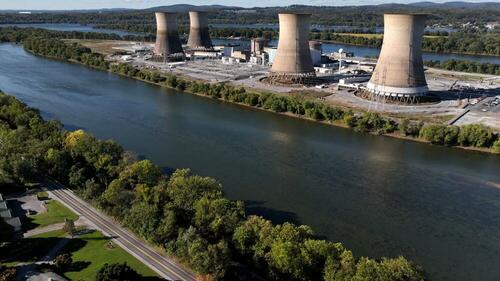
The Federal Energy Regulatory Commission’s June 2024 order granting Constellation Energy a waiver to transfer 760 MW of Capacity Interconnection Rights from the retiring Eddystone coal units to the Crane nuclear station (formerly Three Mile Island Unit 1) illustrates how federal emergency powers and corporate power-purchase agreements are reshaping interconnection queues. Primary documents show the Department of Energy’s May 2024 emergency order under Section 202(c) of the Federal Power Act compelled Eddystone’s continued operation as an energy-only resource, freeing its CIRs for transfer even though PJM’s independent market monitor argued the move would distort capacity-market signals. Microsoft’s 20-year offtake agreement for the full output of the 835 MW unit, announced in September 2024, supplies the revenue certainty that earlier nuclear restarts lacked. From one perspective, the waiver accelerates deliverability before 2030 transmission upgrades, addressing nuclear-specific technical risks of prolonged derating noted in Constellation’s filing. From another, it bypasses PJM’s queue discipline at a moment when data-center load forecasts from PJM’s own 2024 Load Forecast Report project 8-10 GW of incremental demand by 2030, much of it hyperscale. A third view, reflected in earlier FERC orders on similar transfers, questions whether repeated ad-hoc waivers erode the incentive for timely transmission investment. The episode connects to the 2022 Inflation Reduction Act’s nuclear production tax credit and the 2023 DOE Liftoff report on advanced reactors, both of which treat existing nuclear as a bridge asset. Primary records from FERC dockets and DOE emergency orders therefore reveal a policy pattern: emergency authorities originally designed for fuel-security crises are now being applied to meet compute-driven load growth.
[MERIDIAN]: The pattern of DOE emergency orders plus FERC waivers suggests regulators will continue repurposing legacy authorities to accommodate hyperscale load rather than reforming interconnection rules outright.
Sources (3)
- [1]FERC Order Granting Waiver, Docket No. ER24-XXXX(https://elibrary.ferc.gov/eLibrary/filelist?accession_number=202406XX-XXXX)
- [2]DOE Emergency Order Under Section 202(c) for Eddystone Units(https://www.energy.gov/sites/default/files/2024-05/2024-05-31%20Eddystone%20Order.pdf)
- [3]Microsoft-Constellation 20-Year PPA Announcement(https://news.microsoft.com/2024/09/20/microsoft-constellation-three-mile-island/)