Geomagnetic storms produce vivid aurora at Icelandic geothermal site during solar cycle decline
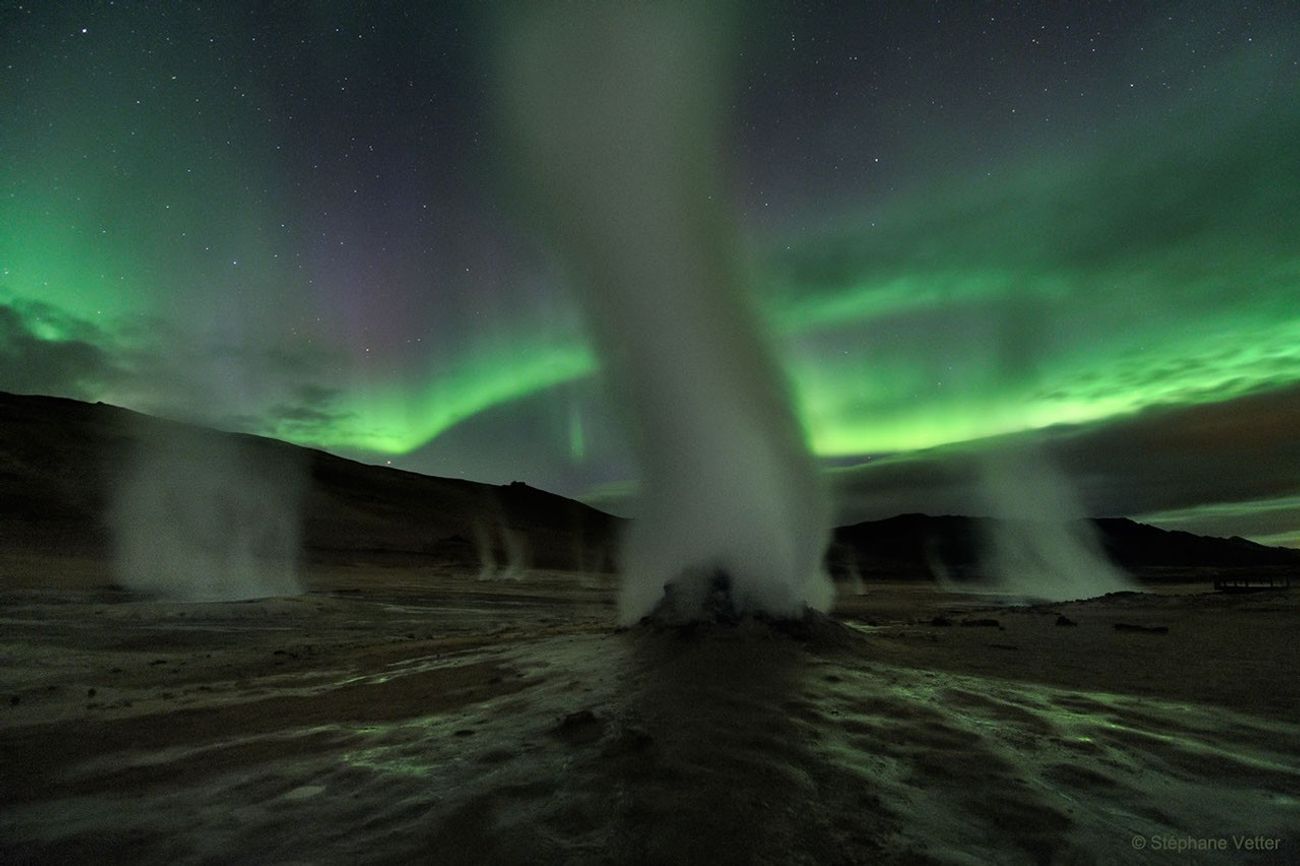
Aurora image from Hverir, Iceland captured during elevated solar activity in late 2026. The display results from geomagnetic storms interacting with Earth's atmosphere above a geothermal field. Solar cycle decline is expected to sustain occasional strong storms into 2027.
The image shows energetic particles from the Sun interacting with Earth's magnetosphere at high latitudes, exciting oxygen atoms to emit the characteristic green light. The photograph was taken at a known volcanic area where geothermal activity supplies the rising steam columns that appear to dance with the aurora. Solar cycle 25 remains in an elevated phase even as it begins to decline from its recent peak.
Solar maximum conditions have produced multiple strong geomagnetic storms in 2025-2026, increasing the frequency of visible aurora at mid-latitudes. This pattern aligns with historical records from previous cycles where the descending phase still delivers significant space weather events for 12-18 months. The Hverir site combines dark skies, geothermal steam, and northern latitude to create repeated opportunities for such images.
Continued monitoring by NOAA and ESA will track whether additional storms reach Kp 6 or higher through winter 2026-2027. Such events directly affect satellite operations, power grids, and high-latitude aviation routes, giving the aurora displays practical stakes beyond visual appeal.
Future observations should include simultaneous ground magnetometer and satellite data to quantify energy input during each storm.
NOAA SWPC: At least three Kp 6+ geomagnetic storms will occur before March 2027 as measured by the planetary K-index.
Sources (3)
- [1]Primary Source(https://science.nasa.gov/image-article/apod-2026-october-31-night-on-a-spooky-planet/)
- [2]Supporting Source(https://www.swpc.noaa.gov/products/solar-cycle-progression)
- [3]Supporting Source(https://www.esa.int/Science_Exploration/Space_Science/Solar_Orbiter)