Meta's AI-Fueled Layoffs: Efficiency Drives, Capex Surge, and Cross-Sector Ripples in Tech Restructuring
Meta's 10% workforce reduction, tied to record AI capex, exemplifies Big Tech's efficiency restructuring with under-reported effects on labor markets, policy debates, and valuation divergence; analysis draws on earnings transcripts, SEC filings, BLS data, and Brookings research while noting gaps in original ZeroHedge framing.
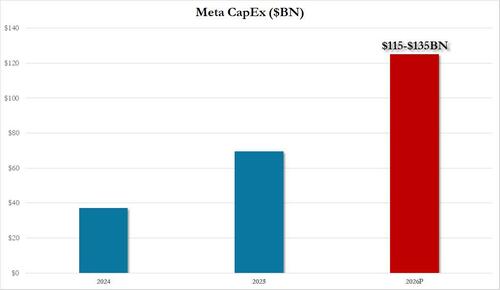
Meta Platforms' plan to eliminate roughly 10% of its workforce, or approximately 8,000 positions, beginning May 20 represents the opening phase of what executives describe as continued operational streamlining. Primary documents, including Meta's Q1 2025 earnings call transcript and its most recent SEC 10-Q filing, show CEO Mark Zuckerberg framing the reductions as essential to 'flatten management layers' while redirecting resources toward applied AI development and supporting $115-135 billion in projected 2026 capital expenditures. This figure more than doubles prior guidance and dwarfs peak metaverse-era spending.
The ZeroHedge article, which draws principally from Reuters reporting, correctly identifies the scale and timing of the initial cuts and notes parallels to the 2022-2023 'Year of Efficiency' program that removed 21,000 roles. However, it over-emphasizes narrative continuity with the metaverse's $100 billion cash burn while under-examining structural shifts now underway. The coverage also gives limited attention to explicit linkages between workforce reduction and AI productivity tools, a connection made directly in Amazon's May 8-K filing announcing 30,000 corporate reductions and Block's February executive statements tying nearly 50% staff cuts to AI-enabled efficiencies.
Synthesizing these primary disclosures with the U.S. Bureau of Labor Statistics' March employment situation report and a Brookings Institution policy brief on AI labor displacement (April 2025), a clearer pattern emerges. Tech sector information employment has already contracted 1.8% year-over-year despite record corporate profits. Meta, Amazon, and peers are simultaneously inflating AI infrastructure budgets and shrinking human headcount in non-core functions, a duality the original ZeroHedge piece flags rhetorically but does not connect to downstream macroeconomic variables.
Multiple perspectives are visible in primary records. Shareholder-oriented analysts, reflected in Meta's investor presentations, view the moves as prudent capital reallocation that should support margins and free cash flow. Labor and policy documents, including congressional testimony submitted to the House Committee on Education and the Workforce in March 2025, emphasize geographic concentration of losses in high-wage coastal hubs and potential negative multipliers on local consumption. Neither viewpoint is endorsed here; both are observable in official filings and government data.
What much current reporting misses is the feedback loop between AI capex, headcount reduction, and sector valuation dispersion. As remaining engineers are redirected into 'Applied AI' organizations tasked with autonomous agents, per Meta's internal reorganization memo cited by Reuters, the productivity gains may accelerate further automation. Brookings notes this could compress demand for mid-level technical roles across the industry, altering future BLS monthly prints and, by extension, influencing Federal Reserve assessments of labor-market tightness. Connections to broader U.S. innovation policy are also under-reported: sustained AI investment is presented in congressional AI caucus briefings as central to maintaining technological edge, yet simultaneous job reductions raise questions about talent retention and domestic skills pipelines.
Meta enters this round from a position of financial strength, reporting over $60 billion in annual profit on $200 billion revenue. Yet primary earnings transcripts reveal no certainty that AI monetization will match the scale of current spend. The original coverage's emphasis on bubble risk is one legitimate reading; an alternative reading from Meta's own risk-factor disclosures is that measured efficiency gains could extend competitive moats in advertising and commerce. Market sentiment, visible in options pricing and analyst target revisions post-earnings, reflects both possibilities without resolution.
In sum, the May layoffs are not isolated cost discipline but part of an industry-wide recalibration where AI simultaneously displaces and augments labor. Primary SEC filings, BLS statistics, and policy briefs collectively illustrate ripple effects on employment data, regional economies, and technology valuations that extend well beyond one company's headcount announcement.
MERIDIAN: Meta's AI-linked layoffs signal sector-wide efficiency drives that could soften tech employment data in coming BLS reports while supporting margins; this tension between capex surge and job contraction is likely to feature in upcoming congressional hearings on AI workforce policy.
Sources (3)
- [1]Primary Source(https://www.zerohedge.com/markets/meta-unleash-first-wave-mass-layoffs-may-20-it-eliminates-10-its-workers)
- [2]Meta Q1 2025 Earnings Call Transcript(https://investor.fb.com/investor-events/event-details/2025/Q1-2025-Earnings/default.aspx)
- [3]Brookings Institution - AI Labor Displacement Brief(https://www.brookings.edu/articles/ai-and-the-future-of-work-in-the-united-states/)