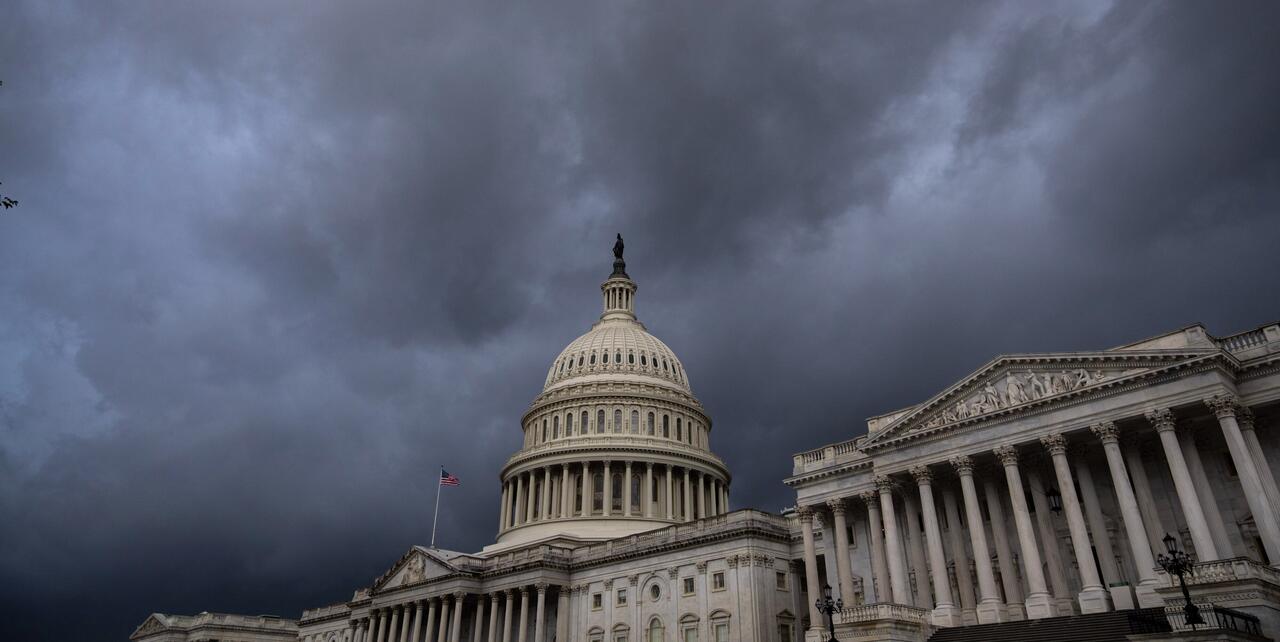
Institutional Guardrails Under Pressure: The Enduring Debate Over Structural Reforms in U.S. Governance
Documented legislative efforts and public statements from 2021–2026 reveal sustained partisan interest in altering Senate composition, judicial size, and procedural rules, with verifiable votes and endorsements from both parties highlighting the strategic stakes in institutional design.
The U.S. constitutional design, rooted in Federalist No. 51's emphasis on ambition counteracting ambition, incorporates mechanisms like equal state Senate representation, the Electoral College, and state-controlled elections to temper transient majorities. Proposals to admit new states via simple legislation, expand the Supreme Court, or alter Senate rules have periodically tested these limits.
In April 2021, the House approved D.C. statehood legislation (H.R. 51) by a 216-208 party-line vote, creating the potential for two additional senators from a jurisdiction that votes overwhelmingly Democratic.
Puerto Rico's November 2024 status plebiscite delivered 58.61% support for statehood among valid votes (620,782 out of 1,059,212), certified in January 2025; the non-binding referendum excluded the current territorial status as an option and saw lower turnout in some opposition areas.
Discussions of Supreme Court expansion resurfaced prominently in 2026, with figures including Kamala Harris and Rep. Jim Clyburn endorsing an increase to 13 justices, citing the number of appellate circuits, while Republican leaders framed it as an institutional power shift.
Senate rules changes have also featured in partisan contests. In January 2022, 48 Democrats supported modifying the filibuster to advance federal election legislation, falling short when two party members joined Republicans in opposition. By late 2025, President Trump repeatedly urged Senate Republicans to eliminate the filibuster during a government shutdown, but Majority Leader John Thune and others resisted, preserving the 60-vote threshold.
These initiatives illustrate how procedural and structural adjustments can recalibrate institutional balances over decades, independent of any single election cycle. Historical parallels, such as Franklin Roosevelt's 1937 court-packing attempt rejected by his own party, underscore the rarity and controversy of such moves. Credible reporting from multiple outlets documents the persistence of these debates into 2026, reflecting ongoing tensions between majoritarian impulses and constitutional safeguards.
Sources (7)
- [1]House Lawmakers Approve D.C. Statehood Bill(https://web.archive.org/web/20210423034126/https://www.nytimes.com/2021/04/22/us/politics/dc-statehood-vote.html)
- [2]Certified Results of Puerto Rico’s 2024 Plebiscite(https://puertoricoreport.com/certified-results-of-puerto-ricos-2024-plebiscite/)
- [3]2024 Puerto Rican status referendum(https://en.wikipedia.org/wiki/2024_Puerto_Rican_status_referendum)
- [4]Republicans warn Supreme Court is at stake if Democrats win Senate(https://www.foxnews.com/politics/republicans-sound-alarm-over-hidden-midterm-stakes-could-reshape-supreme-court-decades)
- [5]Democrats plan to destroy the Supreme Court(https://www.washingtonexaminer.com/op-eds/4784624/court-packing-supreme-court-independence/)
- [6]Senate Dems' filibuster ambitions fall short(https://www.politico.com/news/2022/01/19/democrats-senate-rules-change-527366)
- [7]Trump want to abolish the filibuster; GOP senators say no(https://www.washingtonpost.com/politics/2025/11/07/senate-filibuster-gop-abolish-trump-thune-shutdown/)