Laser Drone Fleet: Pentagon's Directed-Energy Pivot Counters Adversary Saturation Tactics
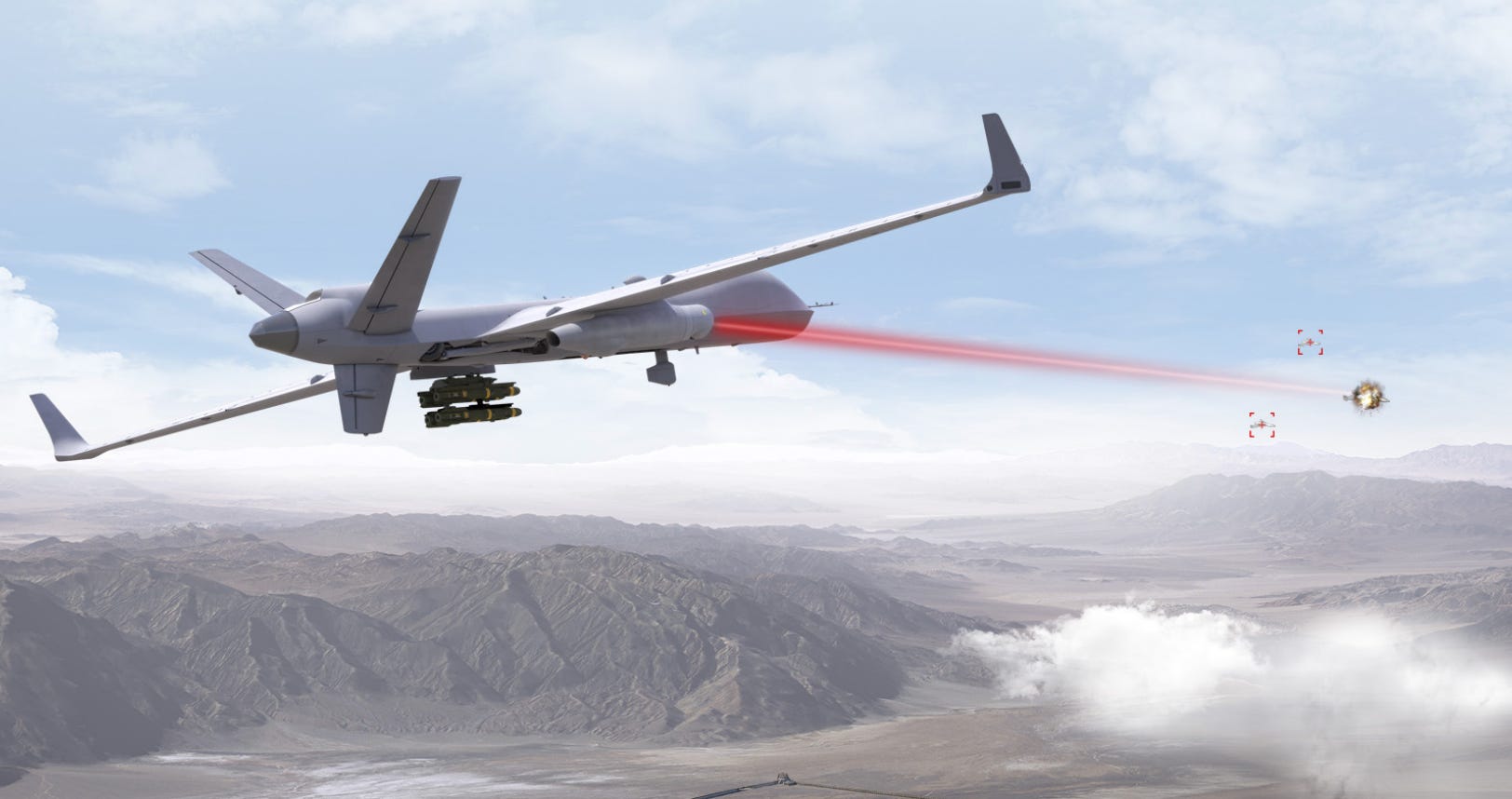
MDA's push for missile-killing laser drones marks a cost-driven strategic shift to directed-energy systems for countering massed threats from Iran, China, and Russia, overcoming past technical hurdles while learning from Ukraine and Red Sea operations.
The MDA director’s April 15 testimony that the agency is 'all in' on integrating high-energy lasers onto unmanned platforms for domestic air defense is more than a budgetary line item—it represents a doctrinal inflection point. Lt. Gen. Heath Collins’ emphasis on using these systems to 'thin the herd' of UAVs and missiles acknowledges that legacy kinetic interceptors cannot economically match the proliferating low-cost drone and missile threats now fielded by Iran, China, and Russia.
Original coverage from Defense News/Laser Wars accurately recycles the troubled history of the YAL-1 Airborne Laser and DARPA’s HELLADS but underplays how combat data from Ukraine and the Red Sea has altered Pentagon calculus. Thousands of Iranian-designed Shahed loitering munitions have exposed the unsustainable cost-exchange ratio: multimillion-dollar air-defense missiles against expendable drones. The piece also glosses over recent solid-state laser breakthroughs—most notably 300 kW-class fiber lasers with adaptive optics that have largely solved the atmospheric turbulence and power-density problems cited by former Undersecretary Michael Griffin in 2020.
Synthesizing a 2024 RAND report on 'Directed-Energy Weapons and the Future of Missile Defense' and a 2025 CSIS assessment titled 'Countering the Drone Swarm Threat from China and Iran,' two patterns emerge. First, peer adversaries have deliberately pursued asymmetric massing tactics precisely because they believe they can exhaust U.S. magazines. Second, directed-energy systems flip that ratio: the marginal cost per shot drops from millions to single digits once the laser is aloft. The Trump administration’s 'Golden Dome for America' initiative explicitly pairs these laser drones with space-based sensors and AI battle management to create a persistent, reconfigurable shield over North America and forward bases.
Yet challenges persist. Laser dwell time still limits simultaneous engagements against dense swarms; thermal management on small UAVs remains non-trivial; and adversaries are already testing aerosol obscurants and reflective coatings. The MDA’s shift to attritable unmanned platforms mitigates risk to crews but introduces new vulnerabilities to electronic warfare and counter-drone intercepts.
This move signals Washington now accepts that homeland defense must be both deep and affordable. By investing in airborne directed-energy 'edge' forces, the U.S. is attempting to restore deterrence by denial against the very systems Beijing, Moscow, and Tehran have spent two decades optimizing to bypass traditional defenses. Success would reshape not only budget priorities but the strategic risk calculations of America’s competitors.
SENTINEL: US pursuit of laser-equipped drone fleets shows recognition that kinetic defenses will be saturated by cheap massed attacks; this economic rebalancing toward directed energy will force adversaries to accelerate countermeasures and could stabilize deterrence if fielded at scale by early 2030s.
Sources (3)
- [1]The US military wants a fleet of missile-killing laser drones(https://www.defensenews.com/industry/techwatch/2026/04/24/the-us-military-wants-a-fleet-of-missile-killing-laser-drones/)
- [2]Directed-Energy Weapons and the Future of Missile Defense(https://www.rand.org/pubs/research_reports/RRA1897-1.html)
- [3]Countering the Drone Swarm Threat from China and Iran(https://www.csis.org/analysis/countering-drone-swarm-threat-china-and-iran)