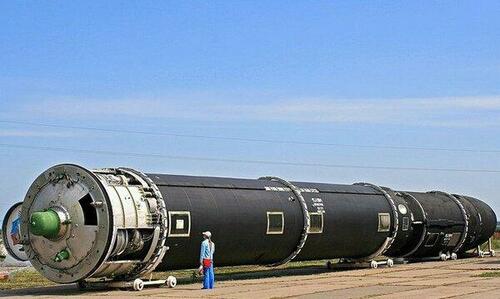
Russia's SATAN II Test Success: Nuclear Escalation and Power Shifts Overlooked by Domestic-Focused Media
Russia's May 2026 successful Sarmat (SATAN II) test and planned 2026 deployment highlight troubled but advancing nuclear capabilities, escalating tensions and signaling strategic shifts often downplayed in favor of domestic stories, amid eroding arms control and historical test failures.
On May 12, 2026, Russia conducted a successful test launch of its RS-28 Sarmat intercontinental ballistic missile, known in the West as SATAN II, marking a significant milestone in its nuclear modernization program. According to reports, Strategic Missile Forces Commander Sergei Karakayev informed President Vladimir Putin that the launch met all objectives, paving the way for the first regiment to enter combat duty by the end of 2026 at the Uzhur division. Putin described the Sarmat as 'the most powerful missile in the world,' capable of carrying multiple independently targetable warheads, hypersonic glide vehicles, and evading conventional missile defenses due to its heavy payload and trajectory flexibility. This test comes after a history of setbacks, including multiple failed launches between 2023 and 2025 that raised questions about production and technical reliability at facilities like Krasmash. While previous Western analyses highlighted these troubles, the latest success signals Russia's determination to replace aging Soviet-era ICBMs like the R-36M with a system that could theoretically target any point on the globe with overwhelming force. Beyond the technical specifications, this development fits into a broader pattern of nuclear saber-rattling amid the ongoing Ukraine conflict and the expiration of key arms control agreements like New START. Mainstream coverage has often subordinated these strategic shifts to domestic political narratives or incremental Ukraine battlefield updates, missing the deeper implication: a potential erosion of mutual deterrence stability as Russia demonstrates 'invincible' capabilities while Western responses remain fragmented. Connections to hypersonic integration and shortened boost phases suggest not just replacement but a qualitative leap that could compress decision-making timelines in any future crisis, raising risks of miscalculation. As Russia prioritizes this 'doomsday' asset, it underscores a multipolar nuclear dynamic where claims of unmatched superiority serve both military and informational purposes, potentially accelerating an arms race that receives less scrutiny than it warrants. Corroborating details from official Kremlin readouts and independent monitoring confirm the test trajectory from Plesetsk to the Kura range, highlighting how such events recalibrate global power balances in ways that extend far beyond immediate headlines.
LIMINAL: Russia's advancing SATAN II deployment will likely force understated NATO nuclear posture adjustments and elevate miscalculation risks in an era of collapsed arms treaties, shifting deterrence toward more unstable multipolar brinkmanship.
Sources (4)
- [1]Putin says Russia will deploy new Sarmat nuclear missile this year(https://www.reuters.com/world/russia-says-it-successfully-tested-its-new-sarmat-strategic-nuclear-missile-2026-05-12/)
- [2]Russia Slates Sarmat ICBM Deployment for Late 2026(https://www.themoscowtimes.com/2026/05/12/russia-slates-sarmat-icbm-deployment-for-late-2026-a92739)
- [3]Putin Vows to Deploy Sarmat Missile After Successful Test(https://www.bloomberg.com/news/articles/2026-05-12/russia-to-deploy-sarmat-missile-after-test-success-putin-says)
- [4]Putin hails Russia's test launch of new ICBM known as Satan II(https://www.cbsnews.com/news/russia-test-launch-missile-satan-ii-calls-putin-worlds-most-powerful/)