China's Strategic Leverage: How Beijing Pressed Iran to Accept US Ceasefire Amid Oil Supply Fears
Multiple credible reports confirm China used its economic and diplomatic leverage to push Iran into a US ceasefire deal, prioritizing energy security and regional stability over escalation risks that could devastate its oil imports and derail its rise.
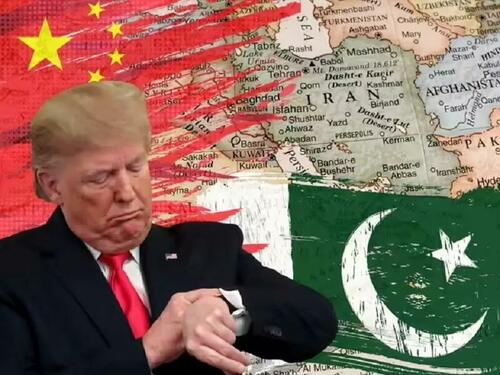
Recent diplomatic maneuvers in the escalating US-Iran conflict have shed light on China's substantial but often understated influence over Tehran, revealing the pragmatic realities of multipolar power dynamics. According to The New York Times, three Iranian officials confirmed that China exerted last-minute pressure on Iran to accept a Pakistani-brokered two-week ceasefire with the United States, urging flexibility to defuse tensions just 90 minutes before President Trump's deadline threatening strikes on Iranian infrastructure. This intervention came after weeks of conflict triggered by US-Israeli strikes beginning in late February 2026, which prompted Iran to blockade the Strait of Hormuz, slashing global oil traffic by up to 90% and sending energy prices soaring.
President Trump explicitly credited China, telling reporters "I hear yes. Yes they were" when asked if Beijing helped bring Iran to the negotiating table. Chinese Foreign Ministry spokeswoman Mao Ning responded obliquely, stating that China had "made its own efforts" in advocating for peace talks and a ceasefire, while publicly emphasizing dialogue over military escalation in multiple briefings. AP News further reported that China quietly pulled strings behind the scenes to find a path to de-escalation, balancing its role as Iran's largest oil customer and diplomatic protector with its extensive economic ties to Persian Gulf states.
The motivations run deeper than public statements. China's economy relies heavily on seaborne oil imports, with a significant portion transiting the Strait of Hormuz from both Iran and Gulf kingdoms. A prolonged conflict risked indefinite disruption, potential resource wars across Afro-Eurasia, global recession, and derailment of Beijing's long-term superpower ambitions. By pressing its ally to compromise, China prioritized energy security and stability over Iran's more confrontational stance, potentially trading short-term ideological solidarity for continued Gulf oil flows and reconstruction support. This episode also facilitated progress toward a US-China summit, postponed amid the crisis but now back on track.
Mainstream coverage from outlets like The New York Times and Newsweek has noted these facts but often frames them narrowly around immediate crisis management. A fuller lens exposes backstage diplomacy: Pakistan's mediation (including Prime Minister Sharif's interventions) may have served as a conduit for Chinese influence, while the outcome constrains Iran's 'petroyuan' ambitions and hardline factions. In the multipolar order, this demonstrates how China acts as a great-power stabilizer within its informal sphere—willing to restrain partners like Iran to avert scenarios that could isolate it economically or invite US 'Fortress America' strategies. It underscores transactional alliances where economic lifelines dictate behavior more than rhetoric, connections frequently overlooked in favor of simpler US-Iran or Israel-Iran narratives. While unambiguous public confirmation from Beijing remains elusive, the convergence of Iranian leaks, Trump's affirmation, and Chinese non-denials paints a clear picture of coordinated de-escalation driven by self-interest. Observers should watch whether this sets a precedent for future crises, as China's leverage grows alongside its global economic footprint.
LIMINAL: China's decisive pressure on Iran shows economic dependencies dictate alliance limits in the multipolar era, allowing Beijing to restrain escalation and protect its rise even as it exposes the transactional nature of ties with Tehran.
Sources (5)
- [1]China Pressed Iran Toward Cease-fire, Iranian Officials Say(https://www.nytimes.com/2026/04/08/world/asia/china-iran-cease-fire.html)
- [2]Trump says he believes China got Iran to come to the negotiating table(https://www.timesofisrael.com/trump-says-he-believes-china-got-iran-to-come-to-the-negotiating-table/)
- [3]How Trump moved from threats to a ceasefire with Iran(https://apnews.com/article/trump-iran-ceasefire-strait-hormuz-eddbcc14e06a6dcb5c7cc41021120fa8)
- [4]China Reacts to Iran Ceasefire After Trump Credits Beijing(https://www.newsweek.com/china-reacts-to-iran-ceasefire-trump-credits-beijing-11797141)
- [5]Foreign Ministry Spokesperson Mao Ning's Regular Press Conference(https://www.fmprc.gov.cn/eng/xw/fyrbt/202604/t20260407_11887704.html)