Kuwait's Detention of American Journalist Signals Strains in US-Gulf Alliances Amid Iran Conflict
Beyond the ZeroHedge report, this analysis connects Shihab-Eldin's detention to historical friendly-fire precedents, Kuwaiti national security laws, and Gulf-wide repression documented by CPJ and NYT, revealing overlooked economic and sectarian drivers that risk eroding U.S. alliances with key oil producers while highlighting competing priorities of transparency versus operational secrecy.
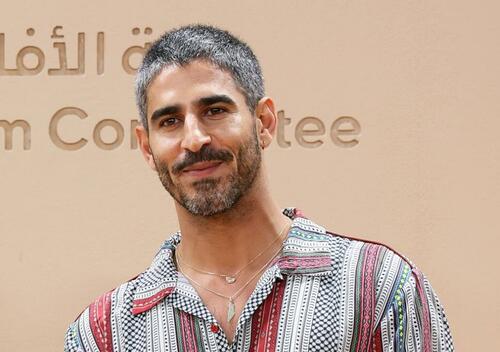
The March 3 arrest of Palestinian-American journalist Ahmed Shihab-Eldin in Kuwait, following his reporting on footage of a U.S. F-15E apparently downed in a friendly-fire incident by Kuwaiti forces, serves as a prism for understanding escalating information controls across the Persian Gulf. While the Consortium News piece by Chris Hedges (republished on ZeroHedge) correctly highlights Shihab-Eldin's credentials and Kuwait's efforts to obscure its role as a launchpad for U.S. strikes on Iran, it underplays the layered diplomatic tightrope Kuwait has walked since the 1980s Iran-Iraq War and misses comparative patterns of allied states suppressing friendly-fire disclosures to preserve operational secrecy.
Primary documents illuminate what initial coverage overlooked. A 2024 Committee to Protect Journalists assessment details Kuwait's 2020-2023 amendments to its national security laws (Law No. 63 of 2020 and subsequent decrees), which broadened 'spreading false information' offenses to include social media posts, resulting in 47 documented arbitrary detentions by late 2024—predominantly targeting dual nationals and citizen journalists. The New York Times dispatch of March 5, 2026 corroborates a coordinated uptick in Gulf detentions, citing parallel cases in Bahrain and Qatar where reporters were held for referencing Iranian missile strikes on U.S. facilities at Ali Al Salem Air Base and Camp Buehring.
U.S. Department of Defense unclassified summaries from the 1991 Gulf War (declassified 2016) record at least 35 friendly-fire incidents involving coalition aircraft, demonstrating that such events are routine yet routinely classified to avoid fracturing political consensus among host nations. Kuwait maintains it fired in self-defense after Iranian strikes on its refinery and oil tanker, per statements released via the Kuwait News Agency on March 4. From Kuwait's perspective, Shihab-Eldin's deleted social media posts risked inflaming its Shia citizenry (roughly 30% of population) and undermining its official stance of 'active neutrality'—a term used in its 2022 diplomatic notes to the UN while simultaneously hosting U.S. Central Command assets.
Conversely, the U.S. State Department's March 7 briefing expressed 'serious concerns' over the detention of a U.S. citizen without consular access, echoing 2018-2021 cases involving American journalists held in Saudi Arabia and Egypt. Reporters Without Borders' 2025 World Press Freedom Index ranked Kuwait 128th globally, noting a 14-place decline since 2022 attributable to expanded cybercrime statutes. What much coverage missed is the economic subtext: Kuwait supplies 7% of U.S. crude imports; any public perception of it as a direct belligerent against Iran could invite retaliatory disruptions, as seen in the 2019 Abqaiq attacks.
Synthesizing these threads reveals a structural tension: Gulf monarchies increasingly view narrative control as integral to regime security during great-power proxy conflicts, even at the cost of irritating Washington. This episode fits a post-Abraham Accords pattern where U.S. partners calibrate visibility of their cooperation with Israel and Washington against Iranian hybrid threats. Absent transparent investigation—ideally via independent verification of the F-15E crash site footage first circulated by Clash Report—the case risks becoming precedent for broader allied censorship rather than an isolated overreach.
MERIDIAN: This detention foreshadows Gulf states tightening narrative control during Iran-related hostilities, likely prompting quiet U.S. policy adjustments on basing transparency to preserve access to Kuwaiti facilities and oil flows without public confrontation.
Sources (3)
- [1]Kuwait Holds American Journalist After Reporting On 'Friendly Fire' Shootdown Incident(https://www.zerohedge.com/geopolitical/kuwait-holds-american-journalist-after-reporting-friendly-fire-shootdown-incident)
- [2]Gulf States Increase Detentions to Suppress Iran War Information(https://www.nytimes.com/2026/03/05/world/middleeast/gulf-journalist-detentions-iran.html)
- [3]Kuwait: Media Freedom Under Threat(https://cpj.org/reports/2024/12/kuwait-media-freedom-under-threat/)