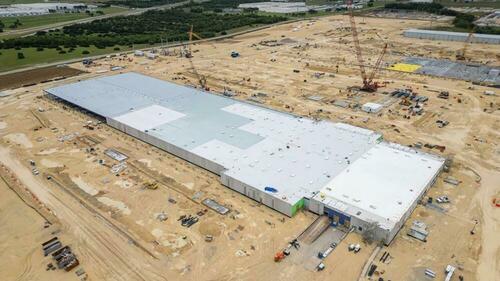
ERCOT Data Center Tripping Risks Signal Imminent Spain-Style Blackouts as AI Demand Overwhelms Grid Physics
ERCOT testing shows clusters of AI data centers and crypto loads failing voltage ride-through, capable of shedding Boston-scale demand instantly and mirroring the voltage control and disconnection dynamics that caused the 2025 Spain-Portugal blackout. Official reports from ERCOT, ENTSO-E, and NERC warnings reveal this as an imminent systemic risk driven by explosive hyperscale growth colliding with legacy grid physics, rather than a distant planning abstraction.
The Electric Reliability Council of Texas (ERCOT) has documented concrete evidence that hyperscale data centers and crypto facilities are failing voltage ride-through tests, creating the demand-side equivalent of the factors that triggered the April 28, 2025 Iberian blackout. In a May 21, 2025 report, ERCOT simulations revealed that four clusters of proposed large electronic loads (LELs) would each disconnect more than 5,000 MW during routine voltage disturbances—equivalent to the instantaneous loss of a city the size of Boston. Since 2023, at least 26 real-world disconnection events involving data centers or crypto operations have already occurred.[1][1]
This is not abstract modeling. ERCOT is currently reviewing roughly 20 GW of large-customer applications, with several gigawatts slated to come online before peak summer periods, while the overall large-load interconnection queue has ballooned beyond 200 GW—predominantly AI-driven data centers. Official ERCOT presentations and stakeholder meetings in 2025 explicitly elevated LEL voltage ride-through performance as a top priority, acknowledging that traditional assumptions about industrial load behavior no longer hold when server farms and mining rigs equipped with sensitive UPS systems trip offline to self-protect.[2][3]
The parallel to Spain is striking. The ENTSO-E final expert panel report on the 2025 Iberian Peninsula blackout concluded that a combination of oscillations, gaps in voltage and reactive power control, differences in how inverter-based resources responded to disturbances, and cascading generator disconnections—not simply renewable overproduction—led to fast voltage increases and system collapse. Natural gas units ultimately aided recovery. The physics lesson was clear: inverter-based resources and electronically-coupled loads respond differently than the synchronous machines the grid was engineered around, offering less inherent inertia and requiring tighter coordination of protection settings.[4][5]
U.S. operators are now confronting the mirror-image risk on the load side. NERC has characterized sudden, large-scale data center disconnections as a "high likelihood, high impact" threat capable of driving frequency excursions that trip conventional generation or trigger cascading outages. A single 450 MW facility has been observed ramping down to single-digit MW levels in under 40 seconds during AI training cycles; clusters of such behavior during a transmission fault can create immediate generation surpluses and over-frequency conditions. Belfer Center analysis and ERCOT’s own constraint reports document how this demand tsunami—projected to add tens of GW in Texas alone by 2030—is compressing decades of historical load growth into years while aging infrastructure retires and spare capacity shrinks.[6][7]
Mainstream coverage often treats AI electricity demand as a policy or investment challenge. The deeper pattern revealed by ERCOT’s testing, NERC alerts, and the Iberian investigation is more visceral: the grid’s fundamental stability assumptions are being invalidated in real time by both new supply (inverter-heavy renewables) and new demand (sensitive, high-density electronic loads). Without accelerated enforcement of robust ride-through standards, updated interconnection requirements, and better dynamic modeling of LEL behavior, routine disturbances that the system was designed to absorb will increasingly escalate. Texas has begun implementing stricter rules and even gained legal authority for emergency curtailment of large loads, but the scale of queued demand suggests these measures are racing against physics already in motion. The Spain event served as a warning; ERCOT’s internal flags indicate the U.S. version may arrive not as theory but as tripped servers cascading into regional instability.
LIMINAL: Exploding AI data center demand is converting theoretical grid instability into concrete, near-term cascading outage risks by exposing incompatible load behavior during routine disturbances, outpacing regulatory fixes and making Spain-style events probable in high-growth U.S. regions within the next 24-36 months.
Sources (5)
- [1]Texas grid flags risks as data centers, crypto sites fail voltage tests(https://www.reuters.com/business/energy/texas-grid-flags-risks-data-centers-crypto-sites-fail-voltage-tests-2026-06-05/)
- [2]ENTSO-E Publishes Expert Panel Final Report on 28 April 2025 Blackout in Spain and Portugal(https://www.entsoe.eu/news/2026/03/20/entso-e-publishes-expert-panel-final-report-on-28-april-2025-blackout-in-spain-and-portugal/)
- [3]Data Centers and Large-Scale Electric Growth - Belfer Center(https://www.belfercenter.org/research-analysis/data-centers-texas-virginia-comparison)
- [4]AI power demand creates 'high likelihood, high impact' grid risks(https://www.eenews.net/articles/ai-power-demand-creates-high-likelihood-high-impact-grid-risks/)
- [5]Texas data center explosion creates planning problems for ERCOT(https://www.texastribune.org/2025/10/30/texas-ercot-power-grid-data-centers-puc/)