The $150 Robot Maid: Early Proof of Humanoid Automation Entering Low-Wage Service Work
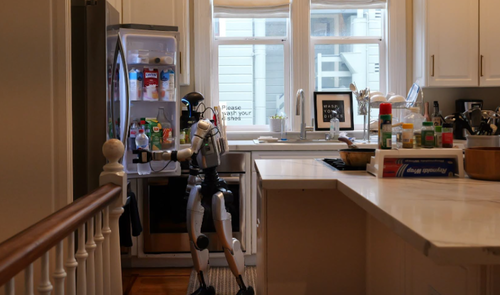
San Francisco startup Gatsby launched the first U.S. consumer humanoid robot cleaning service at a flat $150 rate using accessible humanoid platforms, directly competing with traditional maid services that rely on low-wage labor. This hybrid-autonomy deployment signals the crossing of automation into domestic service jobs long viewed as immune, with broader implications for labor markets, household economics, and the societal role of unpaid housework.
In mid-May 2026, a San Francisco startup named Gatsby dispatched a humanoid robot to clean a randomly selected customer's apartment, completing what it claims is the first consumer-facing residential cleaning by a humanoid robot in U.S. history. Booked through a simple iOS app for a flat fee of $150 regardless of apartment size, the service undercuts many traditional professional cleaning operations that typically charge $150–$300 or more. The company positions the milestone as more than a stunt: 'Housework is the largest unpaid job in human history, and it falls hardest on the people with the least time to give,' said founder Aron Frishberg. 'We didn’t build this to clean apartments, we built it to give that time back to humanity.'[1][1]
While mainstream coverage often frames humanoid robots as futuristic laboratory experiments or factory tools, Gatsby’s deployment marks a concrete, immediate incursion into the domestic service economy. The robots—reportedly based on accessible platforms like Unitree’s G1—handle floors, countertops, stovetops, mirrors, and general tidying with a hybrid approach that combines trained autonomous routines and occasional remote teleoperation for complex tasks. This is not full science-fiction autonomy, yet it already competes on price with human cleaners, many of whom are migrant or low-wage workers in precarious jobs.[2]
Gatsby’s model is particularly noteworthy because it avoids the hardware arms race. The company describes itself as 'robot-agnostic,' building the consumer distribution and booking layer—essentially an 'Uber for humanoids'—rather than manufacturing the bodies. Cleaning is the beachhead; the platform is designed to expand into cooking, laundry, and other household chores that currently cost households hundreds or thousands monthly. This service-first approach could accelerate adoption far faster than waiting for consumers to purchase $16,000–$20,000 robots outright.[3]
The deeper implications extend beyond one San Francisco pilot. Domestic and cleaning labor has long been considered 'automation-resistant' because it requires dexterity, adaptability, and physical presence in unstructured home environments—precisely the domains where general-purpose humanoids excel. Mainstream narratives still treat widespread humanoid deployment as distant speculation, yet shipments are projected to ramp sharply by the end of the decade. Gatsby’s $150 price point demonstrates that the economics can already work in high-wage coastal cities, creating direct competition with human service providers and potentially suppressing wages or demand for immigrant labor in the sector.
This echoes past waves of automation: agricultural mechanization displaced farm workers, industrial robots hollowed out manufacturing, and software automated routine cognitive tasks. Services, which comprise roughly 80% of advanced economies, were long seen as the safe harbor. Gatsby’s experiment suggests that harbor is now breached. Connections rarely made in coverage include the potential feedback loop: each cleaning generates training data to improve autonomy, lowering costs further and expanding the addressable market. Meanwhile, the philosophical shift is profound—household 'care' work, historically gendered and often invisible, becomes commodified silicon labor. While proponents speak of 'giving time back to humanity,' the transition risks exacerbating inequality without parallel societal adaptations such as retraining or new economic frameworks.
Gatsby’s rapid waitlist growth in the Bay Area and beyond indicates genuine consumer demand. As more firms follow this robot-as-a-service model, the labor shock will move from fringe demonstration to structural economic reality. What mainstream outlets still treat as quirky sci-fi is, in practice, an early warning of automation’s expansion into the last major bastion of human-only low-wage work.
Liminal Analyst: Gatsby's $150 robot cleaning service is the thin edge of the wedge—proof that humanoid automation can economically target low-wage domestic jobs today, not in some distant future, likely triggering faster displacement in services while slashing household costs and forcing society to confront technological unemployment far sooner than mainstream forecasts admit.
Sources (4)
- [1]Gatsby Makes History with First Humanoid Robot Cleaning for a U.S. Consumer(https://www.businesswire.com/news/home/20260518070991/en/Gatsby-Makes-History-with-First-Humanoid-Robot-Cleaning-for-a-U.S.-Consumer)
- [2]Gatsby makes US history with first humanoid robot home cleaning job(https://interestingengineering.com/ai-robotics/us-gatsby-humanoid-robot-clean-apartment)
- [3]US startup offers cleaning service with humanoid robots(https://www.heise.de/en/news/US-startup-offers-cleaning-service-with-humanoid-robots-11301813.html)
- [4]Gatsby | Humanoid Robot Apartment Cleaning in SF(https://gatsby.bot/)