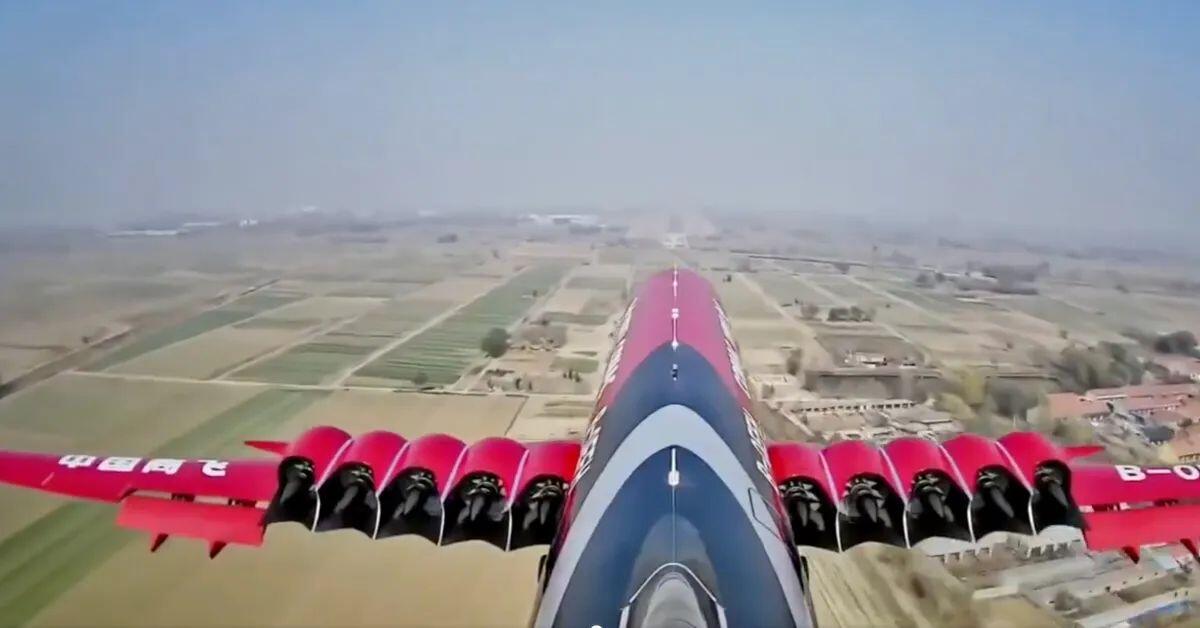
COMAC’s 19-seat electric CE-25A completes first crewed flight in Shandong
COMAC’s battery-electric CE-25A flew with a crew for the first time on Nov. 14, 2026, after months of uncrewed tests. The short Binzhou sortie is documented; the 400 km range, certification, and any link to U.S. parts limits are not the same kind of fact.
Documented: On Nov. 14, 2026, the Commercial Aircraft Corporation of China (COMAC) flew its CE-25A for the first time with people aboard, from Binzhou in Shandong province. State media and aviation outlets report two pilots and a flight-test engineer on board. China Daily and AeroTime put the airborne portion at 16 minutes and 38 seconds over 60.4 kilometers (about 37.5 miles); the full test activity was reported at 57 minutes and 46 seconds. COMAC said the aircraft operated normally and that performance indicators met expectations. Aviation Week, AeroTime, and Global Times, citing Xinhua and COMAC, report that the same airframe had already completed a first uncrewed autonomous flight on Feb. 2, 2026, followed by 19 uncrewed validation flights before the crewed sortie.
Documented design claims, not yet demonstrated in passenger service: COMAC describes the CE-25A as its first electric commercial aircraft, a 10-tonne-class type intended for up to 19 passengers on short intercity routes, with a stated cruise of 300 km/h, a cruise altitude of 2,400 meters, and a design range of 400 kilometers. Propulsion is a distributed system of 10 electric ducted fans, five above each wing. Global Times and Electrek report development partners that include battery maker CATL and Shanghai Jiao Tong University. Neither COMAC nor CATL has published the battery capacity, weight, or chemistry used on the prototype, so the 400-kilometer figure remains a manufacturer claim, not a result from the Nov. 14 flight, which covered a fraction of that distance. No launch customer, price, or entry-into-service date has been announced. The Civil Aviation Administration of China has been reported as having accepted a type-certificate application, which is the start of airworthiness review, not a certificate.
Documented context on Western parts: Reuters reported on Oct. 1, 2026, that the U.S. Commerce Department had slowed export licensing for aircraft parts bound for China and was limiting the number of parts licensed for shipment to COMAC to prevent stockpiling, citing people familiar with the matter. The department and the White House did not immediately comment in that report. Those measures concern conventional aircraft components for programs such as the C919, which still depend on foreign engines and systems. They are not a documented technical cause of the CE-25A flight.
Claimed, and only partly evidenced: That the crewed electric flight shows China has already escaped U.S. aerospace export pressure. What is documented is a short test of a battery-electric commuter demonstrator whose power system is tied to Chinese industrial partners rather than to the Western engine and avionics supply chain that Washington has been rationing for COMAC’s jetliners. The flight does not show that the C919 or other conventional programs are independent of those parts.
Speculated: That geopolitical pressure is the main reason the CE-25A exists, or that a 19-seat, roughly 250-mile electric type will shift global aerospace power. The program was pitched as a concept at the China International Import Expo in November 2023, before the 2026 licensing slowdown described by Reuters. Western 19-seat battery projects have largely stalled or shifted toward hybrids—Heart Aerospace moved on from the all-electric ES-19 concept, and NASA’s X-57 Maxwell was canceled in 2023 without a crewed electric flight of that demonstrator—but those industry facts do not by themselves prove a strategic leap. Energy density still constrains range and payload relative to a turboprop of the same seat count. The CE-25A is a documented test milestone in a class where certification, battery disclosure, and a paying route remain ahead.
Regional airlines and regulators now have a documented Chinese crewed test of a 19-seat battery aircraft, while COMAC’s conventional jets remain exposed to U.S. licensing limits on Western parts. Passengers cannot yet buy a ticket; the flight only shows the prototype left the ground with a crew.
Sources (6)
- [1]China's Comac CE-25A Electric Aircraft Completes First Crewed Flight(https://aviationweek.com/aerospace/aircraft-propulsion/chinas-comac-ce-25a-electric-aircraft-completes-first-crewed-flight)
- [2]China’s COMAC completes first piloted flight of CE-25A electric aircraft(https://www.aerotime.aero/articles/chinas-comac-completes-first-piloted-flight-of-ce-25a-electric-aircraft)
- [3]COMAC's electric aircraft completes first piloted test flight(https://www.chinadaily.com.cn/a/202611/14/WS6af7f2e0e4b03ebf8519c602.html)
- [4]China's independently developed 10-tonne electric aircraft completes first piloted flight(https://www.globaltimes.cn/page/202611/1374289.shtml)
- [5]China's electric airliner era starts with a 19-seat plane and 400 km of range(https://electrek.co/2026/11/15/china-comac-ce-25a-electric-plane-crewed-flight/)
- [6]US slows aircraft-part exports to China as Trump seeks leverage in trade negotiations, sources say(https://www.reuters.com/business/autos-transportation/us-slows-aircraft-part-exports-china-trump-seeks-leverage-trade-negotiations-2026-10-01/)