Official 'Ironclad' Claims on Hormuz Blockade Obscure Evasion Networks and Oil Market Volatility
Despite US claims of an effective 'ironclad' blockade of Iranian ports, maritime data and reporting from Al Jazeera, WSJ, BBC, and AP reveal ongoing shadow fleet evasion, reduced but persistent transits (8-20 daily), and rising global oil disruptions, highlighting potential gaps between official messaging and operational realities with wider implications for markets and geopolitics.
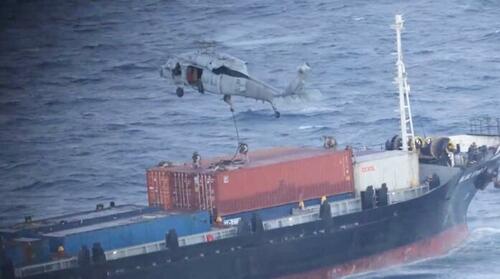
In April 2026, following the collapse of diplomatic talks with Iran, the Trump administration imposed a naval blockade targeting vessels entering or departing Iranian ports in the Strait of Hormuz. Defense Secretary Pete Hegseth has repeatedly characterized the operation as 'ironclad,' claiming it is 'tightening by the hour,' has turned back dozens of vessels, and is expanding globally to cut off Iran's nuclear ambitions and oil revenue. However, independent maritime tracking data and investigative reporting reveal a more complex picture of partial enforcement, systematic evasion, and significant economic leakage that challenges these assertions.
Windward maritime intelligence and similar trackers show daily transits through the Strait of Hormuz fluctuating between 8 and 20 vessels in late April, with patterns of AIS signal disabling, flag hopping, and use of the 'shadow fleet'—tactics Iran has refined over years of sanctions. While US Central Command reports intercepting over 40 vessels and impounding millions of barrels of oil, Al Jazeera's investigation details how fake flags, shell companies, and disabled tracking have enabled dozens of crossings since the blockade's start on April 13. This mirrors evasion methods seen in other sanctioned regimes, suggesting the blockade functions more as pressure than absolute seal.[1]
Mainstream coverage from the Wall Street Journal and BBC confirms Hegseth's statements on redirected ships but notes persistent traffic, including Iran-linked vessels slipping through. NPR has highlighted the inherent difficulty of enforcing large-scale blockades, citing historical precedents where results proved 'unpredictable at best.' The Associated Press reports that while Iran's own oil exports are squeezed, the dual disruptions (Iran's retaliatory measures and the US counter-blockade) are magnifying global energy shortages, driving up prices and exposing vulnerabilities in the 20% of world oil that typically flows through Hormuz.[2]
Deeper analysis reveals patterns mainstream outlets often under-emphasize: the blockade's selective impact benefits certain intermediaries in dark shipping networks while punishing open commerce. Hegseth's public criticism of European and Asian 'free riding' underscores transatlantic tensions, yet the continued flow—estimated at hundreds of transits over two weeks despite reduced volumes—indicates elite narratives may overstate control to project strength amid stalled diplomacy. This disconnect between Pentagon rhetoric and AIS-derived realities echoes past foreign policy messaging gaps, where inflated efficacy claims masked prolonged market distortions and unintended escalation risks. Global oil markets have reacted with volatility, threatening supply chains far beyond the Persian Gulf and potentially enriching shadow operators tied to non-Western alliances.
The episode underscores broader issues of informational asymmetry in great power competition. As prize law and VBSS operations play out, the gap between declared 'total halt' objectives and observable shipping data suggests the blockade may prolong tensions, inflate energy costs worldwide, and incentivize further innovation in evasion technologies—connections frequently glossed over in favor of simpler threat narratives.
LIMINAL: Persistent gaps between 'ironclad' rhetoric and documented shadow fleet successes will likely sustain oil price spikes and evasion economies, eroding coercive leverage while exposing elite messaging as a tool for managing domestic perception rather than achieving decisive strategic outcomes.
Sources (5)
- [1]Hegseth Says ‘Ironclad’ Blockade Is Growing(https://www.wsj.com/livecoverage/iran-war-us-trump-2026/card/hegseth-says-ironclad-blockade-is-growing-OZB2ZtsdXTFvoEF2NxPJ)
- [2]Tracking the shadow fleet: How Iran evaded the US naval blockade in Hormuz(https://www.aljazeera.com/economy/2026/4/30/tracking-the-shadow-fleet-how-iran-evaded-the-us-naval-blockade-in-hormuz)
- [3]Why and how is US blockading Iranian ports in Strait of Hormuz(https://www.bbc.com/news/articles/c5yv6xr6me3o)
- [4]Analysis: Why a US blockade threatens Iran's oil industry(https://apnews.com/article/iran-israel-us-war-oil-strait-hormuz-blockade-a00baaa69fe8ea01c1109582a13ea075)
- [5]What to know about naval blockades as U.S. patrols Strait of Hormuz(https://www.npr.org/2026/04/16/nx-s1-5783870/strait-of-hormuz-naval-blockade)