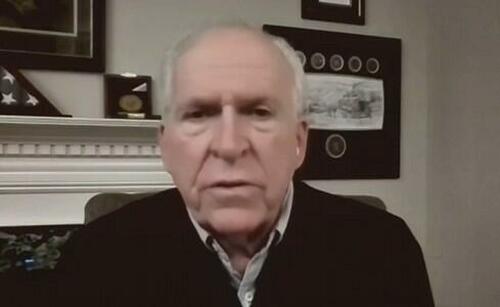
Brennan's Admission Reveals Enduring 'Legion' of Institutional Resistance in U.S. Intelligence and Justice Agencies
Brennan's MSNBC admission of a 'legion' of anti-Trump professionals in DOJ, FBI, and CIA validates concerns over entrenched bureaucratic resistance. Synthesizing the interview with historical patterns of intelligence politicization, current Trump-era purges, and academic studies on national security bureaucracy reveals underreported continuity in agency bias that transcends administrations and challenges executive authority.
Former CIA Director John Brennan's recent appearance on MSNBC's 'Deadline: White House' with Nicolle Wallace has brought renewed attention to claims of embedded opposition within the DOJ, FBI, and CIA against the second Trump administration. In the May 11, 2026 interview, Brennan described 'a legion of professionals in the law enforcement environment, the Department of Justice, as well as the CIA and other places' who are 'refusing to follow politically motivated prosecutions' and resisting Trump administration actions deemed inconsistent with agency authorities and responsibilities. This statement, captured by RealClearPolitics, frames such resistance not as sabotage but as a safeguard for institutional norms.[1]
Viewed through the lens of persistent 'deep state' dynamics, Brennan's comments inadvertently confirm long-standing heterodox critiques of political bias and bureaucratic overreach in U.S. intelligence circles—patterns mainstream outlets have often contextualized as mere 'resistance to politicization' while downplaying evidence of weaponization during the first Trump term. These include the origins of the Russia investigation, Crossfire Hurricane, and subsequent probes that multiple reviews later criticized for procedural failures and confirmation bias. Connections emerge to earlier episodes, such as the 2017-2021 bureaucratic pushback documented in academic analyses of national security state resistance, where career officials leveraged procedural tools, leaks, and selective enforcement to constrain executive policy. A 2018 law review article on bureaucratic resistance highlights similar clashes, including Trump-era tensions with DOJ and FBI over the Russia probe, underscoring how unelected actors can function as de facto checks beyond constitutional design.
In the current 2026 landscape, the Trump administration has pursued aggressive reforms: Kash Patel's reported removal of roughly 10% of perceived problematic personnel at the FBI, collaborative efforts by Tulsi Gabbard and John Ratcliffe at NSA and CIA, and Marco Rubio's NSC and State Department cleanup. These moves echo earlier attempts to install loyalists, yet Brennan's remarks suggest 'legions' remain, potentially including legacy Obama/Biden-era hires and 'sleeper' recommendations from establishment Republicans. The quiet 2025 departures of figures like Morgan Ortagus (with her USAID and intelligence-adjacent background) and Mike Waltz align with warnings from conservative analysts that such personnel often prioritize institutional continuity over disruptive mandates like intelligence declassification or foreign policy realignment.
This persistence points to deeper structural issues: the fusion of intelligence analysis with lawfare tactics, revolving doors between agencies and media (evident in Wallace's interview circle), and a post-2016 realignment where elements of the permanent bureaucracy view certain electoral outcomes as existential threats. While left-leaning coverage frames these professionals as bulwarks against 'naked' authoritarianism, the heterodox view sees a self-perpetuating class insulated from democratic accountability, prone to overreach in surveillance, narrative control, and selective prosecution. Official reviews, such as those tied to Durham's inquiry, provide partial corroboration of past biases, yet accountability has been limited—fueling ongoing cycles of distrust. As reforms accelerate, the risk of intensified leaks, internal sabotage, or legal warfare grows, highlighting why media often minimizes these 'legions' as conspiracy rather than observable institutional inertia.
Bureaucracy Analyst: Brennan's open acknowledgment likely accelerates Trump's push for deeper agency housecleaning but risks escalating leaks and institutional sabotage, prolonging internal gridlock on national security priorities through 2026-2027.
Sources (4)
- [1]John Brennan: "Legion Of Professionals" In DOJ, FBI, CIA Are Still Resisting Trump's Influence(https://www.realclearpolitics.com/video/2026/05/11/brennan_legion_of_professionals_in_doj_fbi_cia_still.html)
- [2]Bureaucratic Resistance and the National Security State(https://ilr.law.uiowa.edu/sites/ilr.law.uiowa.edu/files/2023-02/ILR-104-1-Ingber.pdf)
- [3]MAGA fans erupt over 'communist mole' John Brennan's 'unbelievable' MS NOW interview(https://www.rawstory.com/trump-maga-2676880117/)
- [4]The Press Versus the President, Part One(https://www.cjr.org/special_report/trumped-up-press-versus-president-part-1.php/)