From Periphery to Pivot: Turkey Exploits Trump-Era NATO Skepticism to Remake European Security Architecture
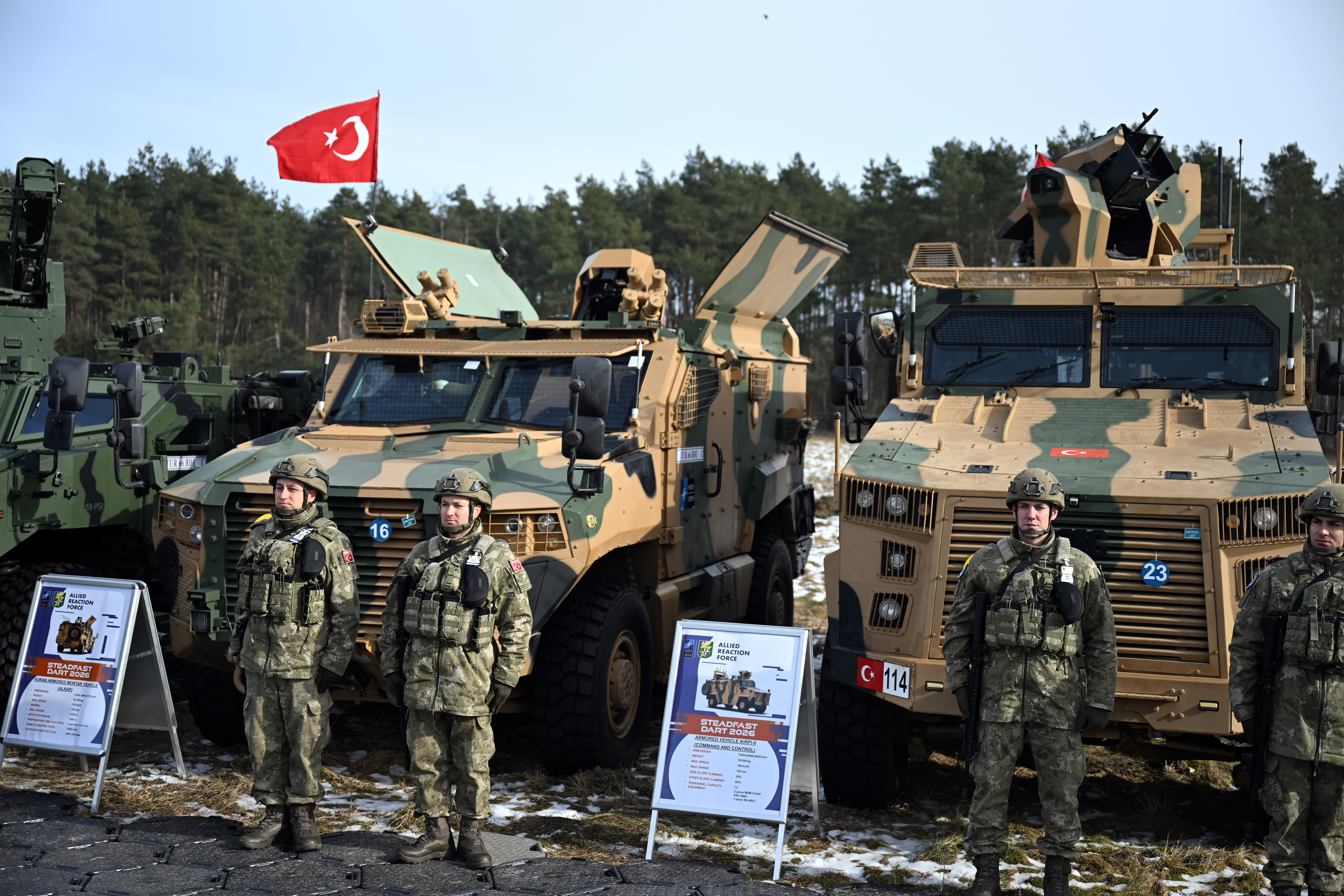
Turkey is capitalizing on Trump’s renewed NATO skepticism to demand deeper integration into European defense structures, leveraging its military capacity, combat experience, and defense industry. This signals a fundamental reconfiguration of Western security toward variable geometry alliances, exposing EU internal divisions and challenging traditional power centers in Paris, Berlin, and Washington.
While the Defense News report accurately captures Defense Minister Yaşar Güler’s remarks at the April 2026 SETA Foundation event, it stops short of exploring the deeper strategic calculus and historical patterns that make Turkey’s gambit significant. Güler’s assertion that Turkey is no longer a ‘flank country’ but a ‘central ally’ is not mere rhetoric; it reflects Ankara’s reading of a fracturing transatlantic security order. As President Trump once again questions NATO’s utility and hints at conditional Article 5 commitments, Turkey is opportunistically positioning itself as the indispensable bridge between a potentially retreating United States and a Europe struggling toward strategic autonomy.
This move fits a consistent pattern. Since the 2010s, Turkey has pursued a transactional foreign policy—purchasing Russia’s S-400 despite U.S. objections, mediating in Ukraine while supplying Bayraktar TB2 drones to Kyiv, and leveraging its control of migration flows and the Black Sea straits. What the original coverage underemphasizes is how Turkey’s defense industrial surge, particularly in armed UAVs, precision munitions, and naval platforms, now gives it genuine leverage that did not exist a decade ago. European states facing Russian aggression and southern instability increasingly view Turkish capabilities as pragmatic necessities rather than political liabilities.
Synthesizing reporting from the original Defense News dispatch, a March 2026 IISS Strategic Survey on European rearmament, and a Carnegie Europe policy brief on EU-Turkey security relations reveals critical omissions in mainstream coverage. The IISS analysis shows that by 2025, nine European NATO members still failed to meet 2% GDP defense spending targets, while Turkey’s effective combat power and rapid industrial output have positioned it among the top three contributors to alliance initiatives. Carnegie’s paper highlights how France and Germany’s resistance to Turkish inclusion in PESCO and the European Defence Fund is not merely bureaucratic but rooted in a deeper vision of ‘EU-only’ strategic autonomy that implicitly treats Turkey as a rival rather than partner—echoing Athens and Nicosia’s veto strategy.
The original piece correctly notes Greek and Cypriot vetoes on Military Mobility but misses the larger implication: these intra-European disputes risk accelerating a two-tiered Western security system. Turkey’s impending command of NATO’s Allied Reaction Force (2028-2030) and its offer to backfill potential U.S. force reductions signal a future where European defense architecture may evolve into ‘variable geometry’—with NATO handling high-end collective defense and parallel EU-Turkey bilateral or minilateral arrangements addressing hybrid and southern threats.
This carries profound risks and opportunities. On one hand, deeper Turkish integration could bolster Europe’s industrial base and deterrence posture against both Russian revanchism and Mediterranean instability. On the other, it introduces dependencies on an actor with a track record of unilateral actions in Syria, Libya, and the Eastern Mediterranean, potentially undermining EU cohesion. Ankara’s gambit also exposes NATO’s original sin: an alliance designed for Cold War bipolarity is ill-equipped for today’s multipolar pressures where members hedge between Washington, Brussels, and their own national interests.
The 2026 NATO Summit in Ankara, therefore, emerges as a pivotal inflection point. Rather than merely celebrating the alliance’s 77th anniversary, the summit may ratify a new burden-sharing reality in which Turkey trades operational relevance for reduced political isolation. Europe’s security future is no longer solely written in Washington or Brussels; Ankara is forcing its way into the authorship. The question Western capitals must now confront is whether marginalizing Turkey further will ultimately weaken the very resilience Güler claims the EU is undermining.
SENTINEL: Turkey’s assertive bid will accelerate Europe’s fragmented path toward strategic autonomy, creating a hybrid security architecture that relies more on Ankara’s capabilities while deepening rifts with Greece, France, and Germany. Expect increased bilateral defense deals outside formal EU structures by 2028, further eroding NATO’s centrality.
Sources (3)
- [1]Turkey pushes for larger role in Europe’s defense as Trump questions NATO(https://www.defensenews.com/global/europe/2026/04/13/turkey-pushes-for-larger-role-in-europes-defense-as-trump-questions-nato/)
- [2]Strategic Survey 2026: European Rearmament and Alliance Cohesion(https://www.iiss.org/publications/strategic-survey/2026/european-rearmament)
- [3]Turkey and the EU’s Defense Ambitions: Cooperation or Containment?(https://carnegieeurope.eu/2026/02/12/turkey-and-eu-defense-ambitions-pub-91845)