OPEC's UAE Exit Signals a Historic Shift for Gold and Global Finance
The UAE’s exit from OPEC and potential shift away from dollar-based oil trade signal a historic challenge to the Petrodollar system, boosting gold’s appeal as a safe-haven asset. This analysis explores overlooked inflationary risks, geopolitical realignments, and energy-commodities interconnections, while weighing counterarguments on the Petrodollar’s relevance.
The United Arab Emirates’ recent departure from OPEC, coupled with its signaled intent to sell oil in non-dollar currencies, marks a pivotal moment in global finance with profound implications for gold as a safe-haven asset. This move, as reported by ZeroHedge, underscores a broader erosion of the Petrodollar system—a cornerstone of U.S. dollar hegemony since 1974. While the original coverage highlights the connection between de-dollarization and gold’s appeal, it overlooks critical nuances in geopolitical dynamics, historical parallels, and the broader commodities market context. This analysis aims to bridge those gaps.
First, the UAE’s exit must be understood within the post-2022 geopolitical landscape following U.S. sanctions on Russia. As trust in a weaponized dollar wanes, OPEC nations are increasingly aligning with BRICS+ countries, a trend evidenced by Saudi Arabia and the UAE joining the bloc in 2023. The UAE’s move to trade oil in rupees with India since 2024 and its latest signal to diversify away from the dollar reflect a calculated pivot toward China and other non-Western markets. This is not merely a transactional shift but a strategic realignment, as Middle Eastern oil producers see diminishing returns in U.S. military protection promises amid regional instability and a perceived decline in American influence.
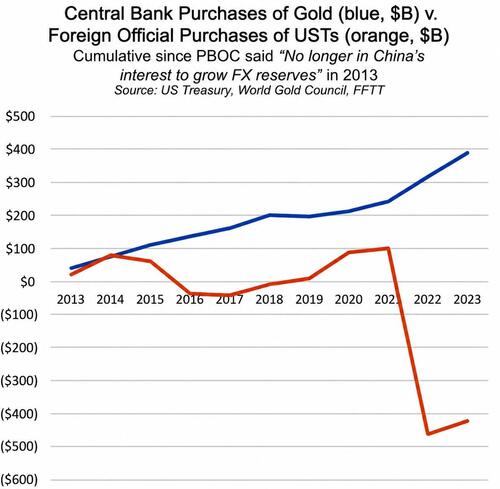
Second, the original coverage misses the inflationary feedback loop this creates. The Petrodollar system allowed the U.S. to export inflation by ensuring global oil trade recycled dollars into U.S. Treasuries. With this mechanism weakening, dollar liquidity will face downward pressure, potentially accelerating inflation in the U.S. and beyond. Historical parallels to the 1970s—when gold surged after the Nixon Shock ended the Bretton Woods system—suggest that precious metals could see sustained demand as a hedge. The World Gold Council’s 2023 report notes a 55% increase in central bank gold purchases since 2022, a trend likely to intensify as nations seek alternatives to dollar reserves.
Third, the ripple effects extend into energy and commodities markets. While ZeroHedge focuses on gold, it underplays how OPEC’s fracturing could destabilize oil prices, further fueling inflation and safe-haven demand for metals. If other OPEC members follow the UAE’s lead, oil market volatility could spike, as seen during the 1973 oil crisis. This interplay between energy policy and precious metals investment is critical: rising oil prices historically correlate with gold rallies, as evidenced by data from the U.S. Energy Information Administration showing synchronized spikes in both assets during geopolitical shocks.
However, counterperspectives warrant consideration. Some analysts, citing U.S. shale production data, argue that America’s energy independence reduces the Petrodollar’s strategic importance. Others, including OPEC’s own statements, suggest the UAE’s exit is more about internal cartel disputes than a deliberate anti-dollar stance. Yet, these views risk underestimating the symbolic and systemic impact of even one major player breaking from the dollar-based oil trade.
In sum, the UAE’s OPEC exit is a microcosm of a larger de-dollarization wave, with gold positioned as a beneficiary amid inflationary pressures and geopolitical uncertainty. Energy policies and commodities markets are more interconnected than ever, and investors ignoring these linkages may miss critical signals.
MERIDIAN: The UAE’s OPEC exit could accelerate de-dollarization, driving central banks and investors toward gold as a hedge against inflation and currency risk over the next 12-18 months.
Sources (3)
- [1]OPEC Just Signaled A Historic Gold Tailwind(https://www.zerohedge.com/precious-metals/opec-just-signaled-historic-gold-tailwind)
- [2]World Gold Council: Central Bank Gold Buying Trends 2023(https://www.gold.org/goldhub/research/central-bank-gold-reserves-survey-2023)
- [3]U.S. Energy Information Administration: Historical Oil Price Data(https://www.eia.gov/dnav/pet/hist/LeafHandler.ashx?n=PET&s=RWTC&f=D)