Corn managed money positions flip to net short after 88% liquidation of speculative longs
Speculative liquidation has removed war and weather premiums from corn, yet structural supply constraints from El Niño, Brazilian fertilizer access, and potential Chinese purchases remain intact. Primary records indicate risks have been deferred into the 2026-27 crop year rather than eliminated.
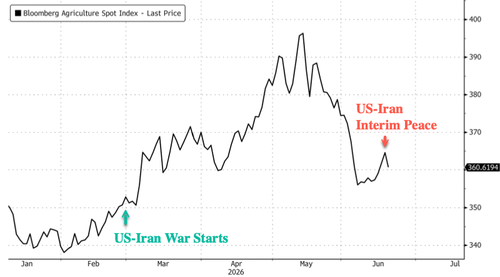
The Bloomberg Agriculture Spot Index reversed prior gains tied to US-Iran tensions after an interim deal reopened the Strait of Hormuz. Fertilizer and energy prices declined while improved US rainfall reduced immediate weather premiums. Daryna Kovalska at BofA Global Research documented the positioning washout but noted that risks have shifted rather than resolved.
USDA crop condition data show Nebraska corn ratings 20 percent below average amid severe drought, with South Dakota and Kansas also vulnerable. The Australian Bureau of Meteorology maintains its historic El Niño warning, projecting potential 10 percent year-on-year decline in Brazilian corn output for 2026-27. Brazilian nitrogen imports remain 15 percent below prior year levels, with peak dispatch timing critical before July.
US-China agricultural purchase commitments of at least $17 billion annually create a potential demand shock that could offset current oversupply signals. Corn exports from the US to China could rise from zero in 2025 to 5.5 million tonnes in 2026 under Phase One-style implementation. These flows would tighten domestic balances beyond what current speculative positioning reflects.
Deferred weather and logistics risks point to renewed price pressure in the second half of 2026 once Brazilian planting data and US export volumes are confirmed. Kovalska trimmed the 2026 corn upside target to $5.50 per bushel while retaining a constructive stance.
BofA Global Research: December 2026 corn settles above $5.20 per bushel by December 2026 if Brazilian first-crop output falls more than 8 percent year-over-year.
Sources (3)
- [1]BofA Global Research Corn Market Note(https://www.bofaml.com/research)
- [2]USDA Crop Progress and Condition Report(https://www.nass.usda.gov)
- [3]Australian Bureau of Meteorology El Niño Update(http://www.bom.gov.au)