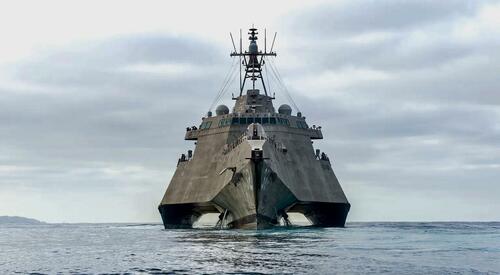
No Confirmed Mines in Strait of Hormuz Despite Months of Searches Reveal Gaps in Threat Assessments and Global Oil Fragility
NBC sources confirm zero verified mines found in Hormuz after three months despite initial intel, Trump claims, and economic fallout, exposing intelligence gaps and the strait’s role in global oil fragility.
Despite early US and allied intelligence assessments that Iran had deployed naval mines in the Strait of Hormuz at the outset of the 2026 conflict, the US military has failed to definitively identify or confirm a single mine after extensive searches using aerial and undersea drones, robotic systems, and manned aircraft. Two US officials and a person familiar with the matter told NBC News that objects resembling mines were spotted but none verified, with one source stating the threat "has been far less robust than we had feared." This stands in contrast to President Trump's recent claims that the US Navy had detonated "numerous" Iranian mines and earlier CBS reports citing officials claiming at least 10-12 mines identified. The discrepancy highlights significant gaps in official threat assessments that drove initial escalation and shaped allied responses. A classified Pentagon briefing in April projected up to six months to clear the strait, fueling insurance underwriters' decisions to pull coverage and impose prohibitive rates on shipping, effectively disrupting one of the world's most critical energy chokepoints. The strait carries roughly 20% of global petroleum and a third of fertilizer trade; even unconfirmed mine fears have exposed the extreme fragility of just-in-time oil supply chains, mirroring broader vulnerabilities seen in prior energy crises. Further context from reporting shows Iran itself has struggled to locate mines it purportedly laid, according to US officials, while the UK Royal Navy has prepared mine-sweeping assets primarily as a post-peace gesture rather than an active combat mission. This episode suggests potential threat inflation in the lead-up to US-Israeli strikes on Iran's nuclear program—despite Tehran's reported concessions—and raises questions about how unverified intelligence can paralyze global commerce more effectively than actual deployed weapons. The absence of confirmed mines does not eliminate risks from drones or missiles, but it underscores how perceptions alone can weaponize critical maritime infrastructure. Connections to prior analyses of oil-supply fragility reveal a pattern: modern economies remain one rumor away from energy shock, with Hormuz serving as exhibit A for heterodox views on systemic chokepoint vulnerabilities that official assessments repeatedly miscalibrate.
LIMINAL: Unverified mine threats have disrupted global shipping and insurance far more than any confirmed weapons, exposing how fragile oil chokepoints amplify minor intelligence uncertainties into major economic shocks.
Sources (4)
- [1]U.S. has not confirmed that Iran placed mines in the Strait of Hormuz, sources say(https://www.nbcnews.com/politics/national-security/us-not-confirmed-iran-placed-mines-strait-hormuz-sources-say-rcna346955)
- [2]Britain prepares mine-clearing operation for Strait of Hormuz(https://apnews.com/article/iran-us-britain-navy-hormuz-mines-9e79d2fef14886d36881883f64b45bca)
- [3]Iran Unable to Find Mines It Planted in Strait of Hormuz, U.S. Says(https://www.nytimes.com/2026/04/10/us/politics/iran-mines-strait.html)
- [4]Iran deploys more mines in the Strait of Hormuz, sources say(https://www.axios.com/2026/04/23/iran-strait-hormuz-mines-trump)