Small Boat Swarm Attack on Cargo Ship Near Hormuz Exposes Asymmetric Vulnerabilities and Fragile Ceasefire Risks to Global Oil Chokepoint
A May 3 cargo ship attack by small Iranian-linked craft east of the Strait of Hormuz marks the first escalation since April 22 amid a tenuous US-Iran ceasefire. It reveals Iran's asymmetric boat tactics as a persistent threat to global oil flows, vulnerabilities often underemphasized in favor of diplomatic narratives, with risks of renewed conflict and energy market disruption.
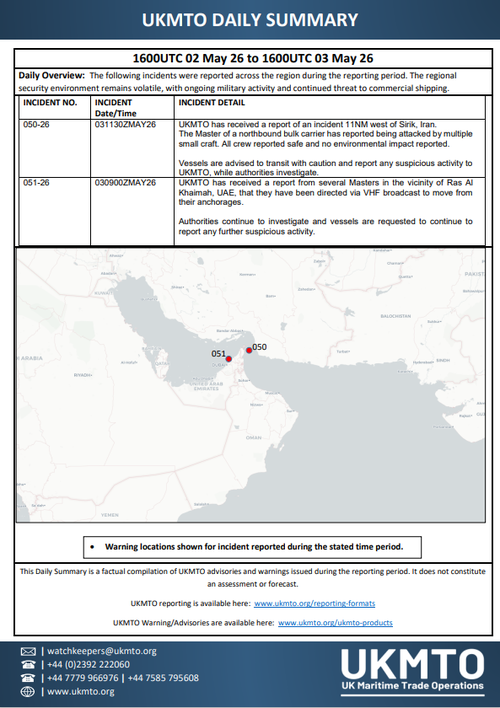
On May 3, 2026, a large northbound cargo ship approximately 11 nautical miles west of Sirik, Iran, reported being attacked by multiple small craft in the Strait of Hormuz, according to the UK Maritime Trade Operations (UKMTO) center. All crew were reported safe with no immediate claim of responsibility, marking the first reported escalation of its kind since April 22.[1][2] This incident occurs against the backdrop of an ongoing Iran conflict that has seen at least two dozen attacks in and around the strait since hostilities began, Iranian assertions of control requiring tolls for non-US/Israeli affiliated vessels, and a fragile three-week ceasefire that President Trump has indicated could end with further strikes.[3]
While mainstream reporting often frames developments around diplomatic talks, US naval blockades, and high-level ceasefires, this event underscores a deeper pattern of asymmetric warfare that receives less scrutiny: Iran's deployment of small, nimble patrol boats powered by outboard motors. These vessels are difficult to detect and counter effectively despite Trump's prior orders to US forces to "shoot and kill" boats deploying mines. Such tactics allow Tehran to harass international shipping, enforce de facto tolls, and project power over one of the world's most vital energy arteries—through which roughly 20% of global oil trade passes—without triggering full-scale naval confrontation. Earlier April 22 incidents involved multiple vessels being fired upon, stopped in the water, or seized, further illustrating Iran's strategy of incremental disruption amid the US blockade that has already cost Iran billions in oil revenue.[4][5][6]
Connections missed in broader narratives include the economic cascading effects: rising insurance premiums for tanker traffic, potential rerouting around Africa adding weeks and costs to supply chains, and the risk of even limited closures spiking global oil prices at a time of already strained markets. The UKMTO has issued repeated warnings of critical threat levels, with historical 2026 attacks including projectiles causing fires and evacuations on vessels like the Mayuree Naree.[7] Iranian state media and FARS reports of vessel captains being warned to vacate anchorages in UAE waters add to the climate of intimidation. This low-intensity campaign highlights how mainstream geopolitical stories centered on Trump statements or peace plan details often downplay the tangible vulnerabilities in maritime trade routes that could rapidly escalate into broader supply shocks if the ceasefire fully collapses. The pattern suggests Iran is testing boundaries, leveraging its geographic control of Hormuz as leverage against the US blockade initiated in April.
LIMINAL: These repeated small-boat incidents show Iran's asymmetric control of Hormuz is holding despite the ceasefire, likely forcing Trump administration escalation that could spike global oil prices 30-50% and expose just how fragile chokepoint-dependent energy trade remains.
Sources (5)
- [1]A cargo ship near Strait of Hormuz reports being attacked(https://www.latimes.com/world-nation/story/2026-05-03/cargo-ship-near-strait-of-hormuz-reportedly-attacked)
- [2]Cargo ship attacked by small craft near Strait of Hormuz, UK maritime agency says(https://www.foxnews.com/world/cargo-ship-attacked-small-craft-near-strait-hormuz-uk-maritime-agency-says)
- [3]Two ships attacked in Strait of Hormuz, UK says, after U.S. extends Iran ceasefire(https://www.cnbcafrica.com/2026/two-ships-attacked-in-strait-of-hormuz-uk-says-after-u-s-extends-iran-ceasefire/)
- [4]How Iran raised Hormuz stakes by capturing ships(https://www.aljazeera.com/news/2026/4/23/how-iran-raised-hormuz-stakes-by-capturing-ships)
- [5]Six vessels attacked in Gulf, Strait of Hormuz as war puts merchant ships on front lines(https://www.reuters.com/world/cargo-ship-hit-by-projectile-strait-hormuz-crew-evacuates-2026-03-11/)