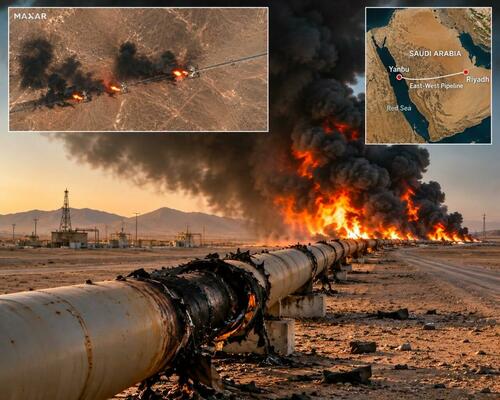
US Energy Secretary States Saudi East-West Pipeline Repairs Could Restore 4-5 Million bpd Flow Within Days
Wright’s assessment provides the first concrete repair timeline for the East-West pipeline after last week’s attack. The outage compounds Saudi Arabia’s already reduced August output and forces European refiners to seek substitute grades. Both Riyadh and Washington gain supply flexibility at the cost of accelerated repairs and continued military commitments.
The 1,200-kilometer East-West line had carried 4-5 million barrels daily around the Strait of Hormuz before the outage. Saudi crude output had already fallen to 6 million barrels per day in August, the lowest level in over three decades according to IEA data. Aramco canceled late-September cargoes to European buyers including Poland’s Orlen, forcing those refiners to source North Sea and U.S. grades. Wright’s timeline, issued after consultations with Saudi officials, revises earlier estimates of multi-week repairs and arrives before Yanbu inventories become the binding constraint on exports.
Saudi Arabia gains an immediate alternative export route that reduces dependence on Hormuz transits amid ongoing regional constraints. The United States secures a faster supply response that limits price spikes above $108 Brent and supports its interest in stable global markets. Both parties incur costs: Saudi Arabia accelerates repair spending and exposes the pipeline to follow-on attacks, while the U.S. commits military assistance for Hormuz movements without resolving the underlying security threat.
Primary records show no Saudi official statement on exact restart dates; Wright’s remarks remain the only public timeline. Vortexa and Argus tracking confirm zero departures from Yanbu since September 11. The IEA August report documents the prior 2.3 million barrel monthly drop in Saudi supply. These data points indicate the pipeline outage compounds an already reduced export baseline rather than creating an isolated disruption.
A restart by late September would allow Saudi exports to test whether buyers shift back from alternative crudes or maintain diversified sourcing. Sustained flows above 4 million barrels daily would also reveal whether Hormuz constraints persist or ease under U.S. naval coordination.
IEA: Saudi crude exports exceed 7 million bpd by October 15 if pipeline flows reach 4 million bpd by September 25
Sources (3)
- [1]IEA Oil Market Report August 2024(https://www.iea.org/reports/oil-market-report-august-2024)
- [2]Argus Media Saudi Crude Loadings Data(https://www.argusmedia.com/en/news/2601234-saudi-crude-exports-september)
- [3]Vortexa Tanker Tracking Yanbu Departures(https://www.vortexa.com/insights/saudi-arabia-yanbu-september-2024)