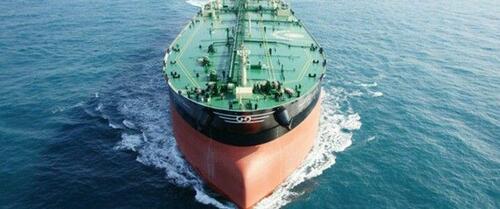
Iran Conflict Turns VLCC Tankers Into Record-Breaking Assets Amid Hormuz Premiums
VLCC spot earnings have hit unprecedented highs (~$650k/day) due to Iran war risks at Hormuz, limited vessel availability, and layered shipping costs, corroborated across Bloomberg, Reuters, and maritime outlets; this creates windfalls for willing operators while pressuring oil flows and highlighting bypass needs.
Geopolitical tensions from the ongoing Iran conflict have transformed Very Large Crude Carriers (VLCCs) into extraordinarily valuable assets, with benchmark earnings on the Saudi Arabia-to-China route surging to record levels of approximately $647,000 per day as of late August 2026—more than ten times year-ago figures and up sharply from $510,000 just days prior, according to Baltic Exchange data.
This spike stems from increased Gulf crude shipments through the Strait of Hormuz despite risks, creating a severe shortage of willing vessels. Few owners accept the hazard, forcing exporters to pay premiums. Ship-to-ship (STS) transfers outside the Gulf add layered costs, effectively doubling freight for some cargoes. TotalEnergies CEO Patrick Pouyanne noted earlier that moving a VLCC through Hormuz costs about $20 million (roughly $10 per barrel on a 2-million-barrel cargo), with market participants indicating further rises.
Rates on secondary routes have also climbed, such as Oman-to-China at ~$220,000/day (up from $131,000 a month earlier). Houthi Red Sea disruptions have redirected some Saudi barrels around Africa, extending voyages by ~30 days. Outflows through Hormuz are estimated at 6-8 million barrels per day, or about two-thirds of pre-war levels per Goldman Sachs.
Deeper market dynamics include Sinokor Group's aggressive positioning with its large VLCC fleet, driving elevated fixtures, and rising interest in multi-year time charters (e.g., Frontline locking in rates up to $120,000/day for newbuilds and $75,000–$90,000/day longer-term). Lloyd's List reports the Baltic TD3C MEG-China index hitting new highs near $656,000/day, alongside increased idle time for STS operations and asset value surges. Alternative bypasses like Saudi pipelines are expanding but insufficient to offset the immediate squeeze. Crude moves profitably due to deep discounts ($50–$60/barrel inside the Gulf vs. Brent >$90), unlike refined products where costs become prohibitive.
These developments underscore how conflict-induced risk premiums and tonnage constraints are reshaping global oil logistics, with direct implications for supply chains and energy prices.
[Shipping Market Analyst]: Sustained high VLCC rates and Hormuz premiums are likely to add several dollars per barrel to delivered Asian crude costs over the next 12 months, accelerating investment in bypass infrastructure while favoring owners with risk-tolerant fleets.
Sources (5)
- [1]Gulf Oil Tankers Near $650,000 a Day as Iran War Disrupts Flows(https://gcaptain.com/gulf-oil-tankers-near-650000-a-day-as-iran-war-disrupts-flows/)
- [2]Shipping Oil Through Hormuz Costs $20 Million, TotalEnergies CEO Says(https://www.bloomberg.com/news/articles/2026-08-24/shipping-oil-through-hormuz-costs-20-million-total-ceo-says)
- [3]Hormuz ‘storm’ propels VLCC spot market, asset prices and long-term rates(https://www.lloydslist.com/LL1158317/Hormuz-storm-propels-VLCC-spot-market-asset-prices-and-longterm-rates)
- [4]Frontline secures multi-year cover for VLCC quartet(https://splash247.com/frontline-secures-multi-year-cover-for-vlcc-quartet/)
- [5]TotalEnergies profitably moving heavily discounted oil through Strait of Hormuz, says CEO(https://www.reuters.com/business/energy/totalenergies-will-invest-expand-fujairah-oil-export-pipeline-abu-dhabi-ceo-says-2026-08-24/)