Black Budget Veil: White House Iran War Cost Opacity Signals Fiscal Recklessness in Era of Great-Power Confrontation
White House evasion on Iran war costs while demanding a $1.5T military budget highlights dangerous transparency failures, historical cost underestimation patterns, and risks to U.S. fiscal health and readiness for great-power conflict with China.
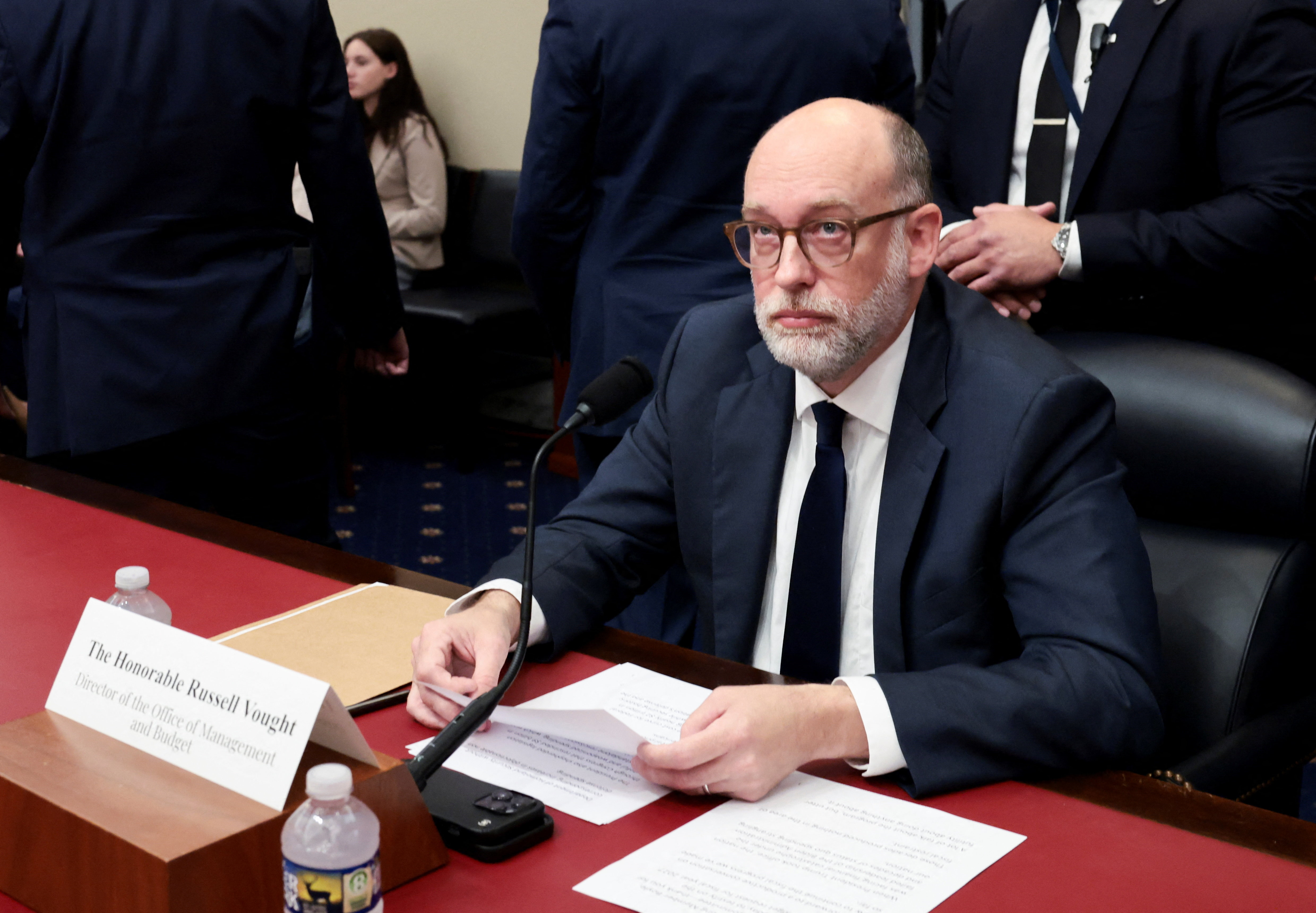
The White House's refusal to provide even a ballpark estimate for the ongoing war with Iran, as revealed in OMB Director Russell Vought's April 15 testimony before the House Budget Committee, represents more than bureaucratic delay. It exposes a deliberate pattern of fiscal opacity at a moment when the Pentagon is requesting a $1.5 trillion annual budget—a $500 billion surge that the administration frames as essential for great-power competition but which is already being consumed by conflict in the Middle East. This is not mere accounting ambiguity; it echoes the catastrophic underestimation of costs in Iraq and Afghanistan, where initial projections of $50-60 billion ballooned into over $8 trillion when including long-term veteran care, interest on debt, and regional destabilization, according to Brown University's Costs of War Project.
What the Defense News coverage captured in Vought's evasive responses—but failed to contextualize—is the systemic connection between Pentagon audit failures and the risk of strategic overextension. The Department of Defense has failed every comprehensive audit since Congress mandated them in 1990; the most recent 2024 attempt again produced a 'disclaimer of opinion' due to inability to track assets worth trillions. Republican Rep. Glenn Grothman's frustration about Pentagon 'arrogance' aligns with decades of GAO reports documenting billions in undocumented transactions. Yet the administration's push for this surge, even while slashing non-defense programs by 10%, suggests a prioritization of immediate kinetic needs over sustainable posture against China.
Synthesizing the primary Defense News reporting with the Congressional Budget Office's 2025 Long-Term Budget Outlook and analysis from the Watson Institute's Costs of War project reveals a troubling trajectory. CBO projections already show the 2017 tax cuts extended via the 'One Big Beautiful Bill Act' adding $4.7 trillion to deficits over a decade. Layering on Iran war costs—initially requested at $200 billion but clearly far higher given Israeli integration, Red Sea operations, and proxy escalation—threatens to push annual interest payments on U.S. debt above $1.2 trillion by 2029. Historical patterns from the Global War on Terror demonstrate how supplemental funding bills become de facto permanent fixtures, crowding out investment in next-generation systems critical for deterring Beijing over Taiwan.
The original coverage missed the intelligence dimension: opacity on costs may serve dual purposes. It shields the administration from midterm political liability amid public concern over inflation and energy prices, but it also conceals the scale of resources being diverted from Indo-Pacific Command. U.S. officials have privately warned that sustained Iran operations risk degrading munitions stocks already strained by Ukraine support, a vulnerability Chinese PLA planners are undoubtedly monitoring. Furthermore, Vought's dismissal of GAO findings as 'partisan' undermines the very oversight mechanisms needed when entering an era of potential simultaneous conflicts.
This raises profound questions about long-term fiscal impacts of great-power conflict. Unlike the unipolar moment of the early 2000s, today's $36 trillion national debt means any major war carries risk of economic coercion by adversaries holding U.S. Treasuries. The administration's claims of finding 'inefficiencies' ring hollow absent a completed audit. If the Iran conflict expands—potentially drawing direct Iranian strikes on Gulf oil infrastructure or cyber campaigns against U.S. financial systems—the lack of transparent baseline costing makes responsible congressional oversight impossible.
Ultimately, this episode fits a broader pattern: great powers that lose fiscal discipline in peripheral conflicts often find themselves strategically hollowed when facing peer competitors. The White House's current stance doesn't just fail the transparency test; it signals to allies and adversaries alike that Washington is repeating the financial mistakes of the post-9/11 era at the worst possible geopolitical moment.
SENTINEL: White House stonewalling on Iran war costs while surging Pentagon funding indicates both political evasion and preparation for protracted conflict; this fiscal opacity risks hollowing out U.S. economic resilience precisely when great-power adversaries are poised to exploit debt vulnerabilities.
Sources (3)
- [1]White House offers no hint of Iran war cost as it seeks military funding surge(https://www.defensenews.com/news/pentagon-congress/2026/04/16/white-house-offers-no-hint-of-iran-war-cost-as-it-seeks-military-funding-surge/)
- [2]Costs of War Project(https://watson.brown.edu/costsofwar/)
- [3]CBO Long-Term Budget Outlook 2025(https://www.cbo.gov/publication/61198)