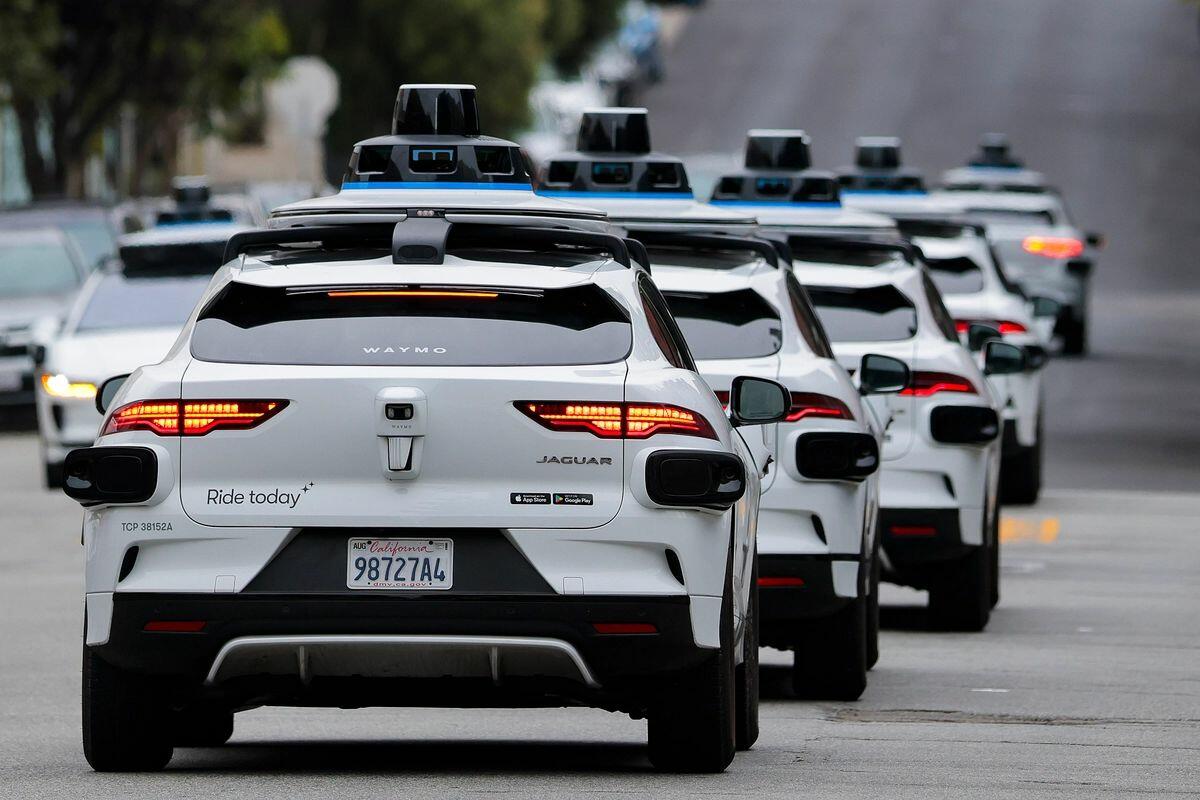
AVs Safer Than Humans but Trigger Riskier Tailgating and Cut-Ins in Mixed Traffic, New Study Finds
Real study and IIHS data confirm AVs drive more safely but induce human tailgating and cut-ins; points to need for better mixed-traffic design amid rising AV adoption.
A new peer-reviewed study published in Communications Engineering confirms that automated vehicles (AVs) exhibit safer and smoother car-following behavior than human drivers, yet their conservative driving style can prompt nearby humans to tailgate more closely and accept smaller safety margins. Researchers Yueying Chu and Peng Liu from Zhejiang University, along with Ying Gao and Zhigang Xu from Chang’an University, analyzed real-world datasets from Lyft, Waymo, and adaptive cruise control systems. AVs maintained larger gaps and more consistent speeds, aligning with traffic laws, which reduced their own crash involvement. However, human drivers following AVs showed reduced time headways and time-to-collision values, increasing tailgating risks—an effect attributed to the predictability of AV speed profiles. The study also noted higher rates of cut-ins into the larger gaps AVs leave ahead. This paradox aligns with broader evidence from the Insurance Institute for Highway Safety (IIHS), which reported Waymo’s Level 4 driverless vehicles had 68% fewer police-reportable crashes per mile than human drivers in comparable conditions, including 91% fewer rear-end strikes and 40% fewer being rear-ended. Related research on mixed traffic highlights behavioral adaptation, with some studies showing humans becoming less aggressive overall while others document exploitation of AV conservatism or increased volatility at higher AV penetration rates. Transportation officials, including U.S. DOT references, emphasize the need for coexistence strategies as AV deployment grows, underscoring implications for traffic safety, insurance models, and public trust in autonomous systems.
[Safety Analyst]: Predictable AV behavior may accelerate human adaptation risks in mixed fleets, requiring updated traffic models and public awareness campaigns to mitigate tailgating before widespread deployment.
Sources (4)
- [1]Robot Drivers Behave Safely, But They Make Humans Behind Them Drive Worse(https://scienmag.com/robot-drivers-behave-safely-but-they-make-humans-behind-them-drive-worse/)
- [2]Waymo’s driverless cars crash less often than people(https://www.iihs.org/news/detail/waymos-driverless-cars-crash-less-often-than-people)
- [3]AVs Drive More Safely—but Can Lead Nearby Human Drivers to Take Risks: Study(https://www.ntd.com/avs-drive-more-safely-but-can-lead-nearby-human-drivers-to-take-risks-study_1178253.html)
- [4]Characterizing car-following behaviors of human drivers when following automated vehicles using the real-world dataset(https://www.sciencedirect.com/science/article/abs/pii/S0001457522001257)