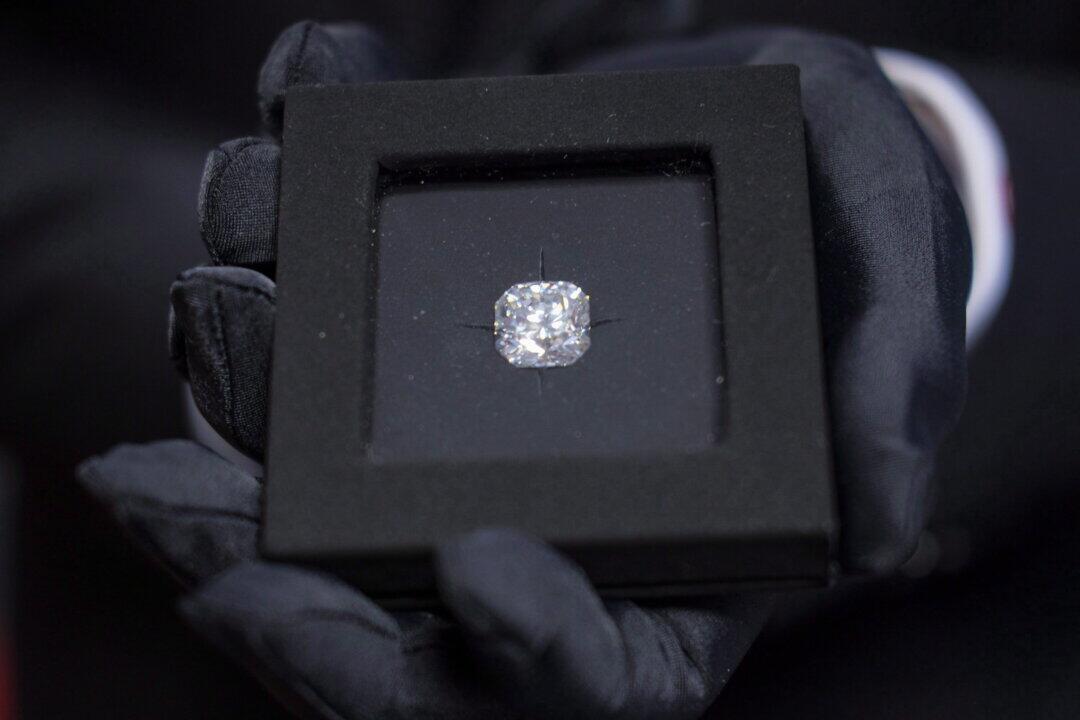
Lab-grown diamonds undercut De Beers pricing power as stones trade near $100 a carat
A commentary argues De Beers’ century-old diamond supply system has lost its pricing power because lab-grown stones are chemically identical and have been observed selling near $100 a carat. The documented history is restriction of supply plus the 1947 “A Diamond Is Forever” campaign. Mined-stone producers lose the scarcity premium; buyers and lab producers gain on price.
Jeffrey A. Tucker, writing in The Epoch Times and republished by ZeroHedge, says the longest-running industrial resource cartel has come apart. The resource is diamonds. The firm is De Beers. The mechanism is laboratory production that yields stones chemically identical to mined diamonds; only specialists distinguish them by inclusions. Tucker reports watching live TikTok auctions in which a diamond changed hands at $100 a carat, against a figure he had heard of $1,000, which he describes as a 50 to 90 percent decline. That price is his observation, not an exchange print.
The record the column uses is marketing and supply control, not a new filing. By 1900, Tucker writes, De Beers controlled about 90 percent of world supply. Ernest Oppenheimer took the company in the 1920s and held output back to support price. In 1947, copywriter Frances Gerety at N.W. Ayer coined “A Diamond Is Forever,” tying the stone to engagement and discouraging resale. A “two months’ salary” rule of thumb pushed spending higher. The gain for the cartel was a cultural hold on a non-essential gem. The cost was dependence on buyers paying a premium for origin.
The competing interests show up in price, not in a communique. Producers of mined stones — De Beers and the partners that built revenue on restricted supply — lose the scarcity rent if buyers treat lab and natural stones as substitutes. Laboratory producers and retailers gain volume at lower unit prices. Buyers gain a cheaper identical carbon crystal and lose the status premium the 1947 campaign sold. Tucker’s point is the old water-diamond puzzle: economic value tracks judgment and circumstance, not intrinsic merit. He cites no central-bank series, De Beers production report, or official index for the $100 figure.
The trade that priced a wedding custom as if supply were fixed is the party exposed. Mining jurisdictions whose fiscal take depends on rough-diamond sales face a weaker scarcity claim if retail will not pay for “natural.” Luxury retailers holding mined inventory carry a premium the column says the eye cannot verify. Laboratory capacity, once dismissed as fake, now sets a ceiling because composition matches. The piece is commentary: a marketing history and an auction anecdote, not a dated order dissolving the cartel or a current De Beers market-share figure.
Mined-diamond producers and the public revenues tied to rough sales lose pricing power if buyers will not pay extra for origin; households buying engagement stones pay less for the same chemistry.
Sources (1)
- [1]The Spectacular End Of The Diamond Cartel(https://www.zerohedge.com/commodities/spectacular-end-diamond-cartel)