Beyond the Headlines: Trump's Hormuz Blockade as Operational Reality, Not Political Theater
Trump's order to blockade the Strait of Hormuz is analyzed as a genuine operational escalation with severe energy, economic, and military consequences. Mainstream views as political theater miss the naval feasibility, legal challenges, historical parallels, and risks of igniting wider conflict involving China and Iranian asymmetric assets.
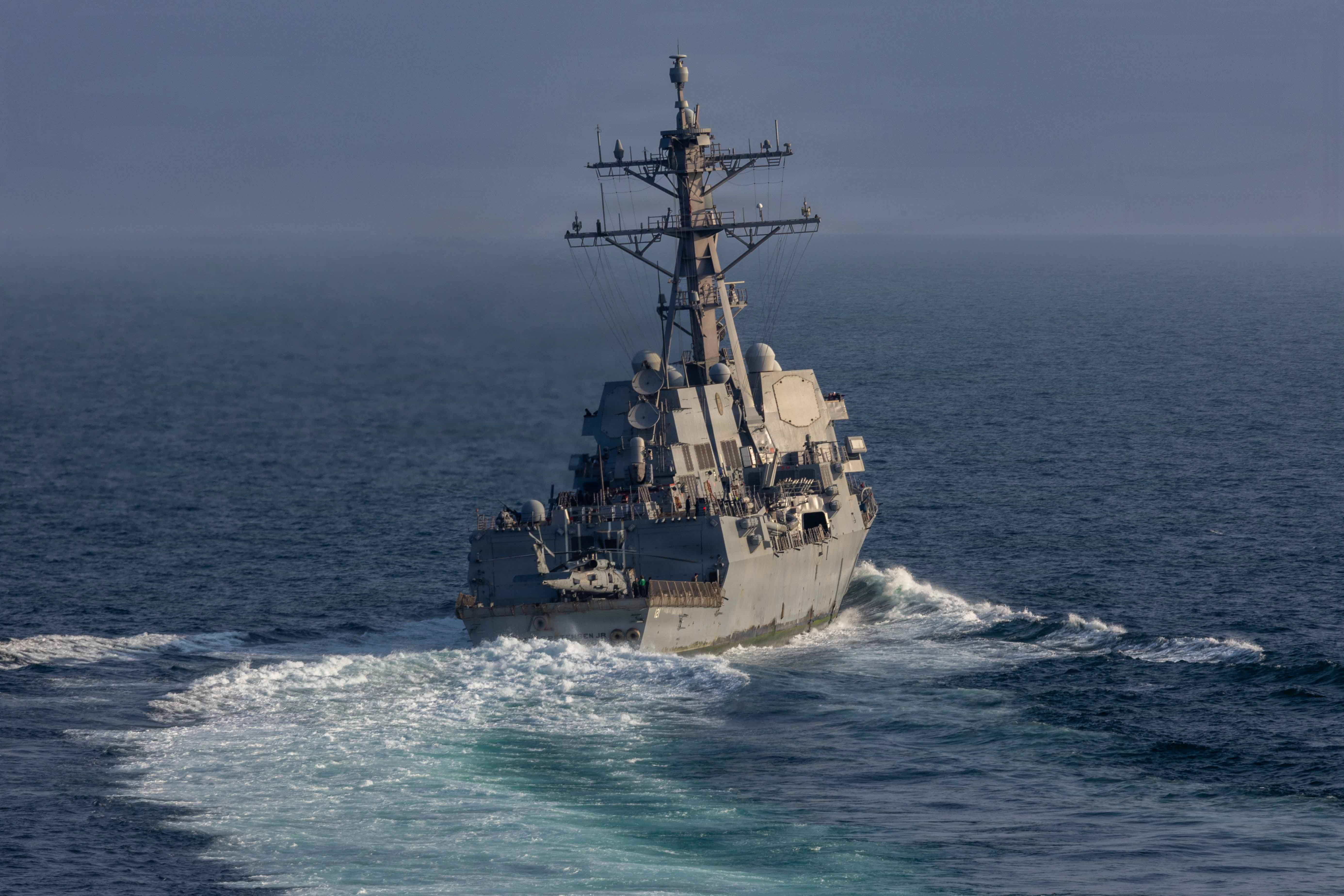
President Trump's announcement of an immediate U.S. Navy blockade of the Strait of Hormuz, coupled with orders to interdict vessels that paid Iranian tolls and destroy mines, marks a decisive shift from diplomatic maneuvering to kinetic enforcement. While mainstream outlets frame this as rhetorical escalation following the collapse of talks in Islamabad, the operational implications reveal a high-stakes gamble that could reshape global energy security, naval doctrine, and great-power conflict patterns for years.
The original Defense News coverage accurately reports the Trump Truth Social statement and the context of failed U.S.-Iran talks after six weeks of fighting that began with U.S.-Israeli strikes on February 28. However, it underplays the logistical reality: the U.S. Fifth Fleet, already forward-deployed with carrier strike groups, Arleigh Burke destroyers, and mine countermeasures squadrons out of Bahrain, possesses the immediate capacity to execute this. What the coverage misses is the precedent from Operation Earnest Will (1987-88), when the U.S. Navy escorted tankers through the same waters during the Tanker War. Today's environment is far more lethal, with Iranian Shahed drones, anti-ship ballistic missiles like the Khalij Fars, and swarming fast-attack craft presenting asymmetric threats that overwhelmed even advanced defenses in recent Red Sea engagements.
Synthesizing reporting from Defense News, a concurrent Bloomberg analysis on energy markets, and a CSIS wargame update from late 2025 on chokepoint vulnerabilities, several patterns emerge that mainstream coverage ignored. First, Iran's demand for formal control of the Strait and war reparations reflects not just negotiating tactics but a long-term strategy to revise the 1982 UN Convention on the Law of the Sea, which classifies Hormuz as an international strait. Trump's interdiction of "toll-paying" vessels directly challenges this, effectively declaring Iran's revenue model illegal under freedom of navigation principles. Second, the fragile two-week ceasefire was already undermined by parallel Israeli operations against Hezbollah in Lebanon—a critical disconnect the Vance delegation failed to bridge, as Iranian Parliamentary Speaker Qalibaf noted regarding trust deficits.
The economic dimension is profound: roughly 21 million barrels of oil transit Hormuz daily, representing 20-21% of global supply. With prices already surging past $140 per barrel amid the six-week conflict, a sustained blockade risks $200+ crude, stagflation in Europe, and direct energy coercion against China, which sources over 40% of its imports through this route. Beijing's muted response so far masks likely contingency planning for escorted convoys or pressure on Russia to open alternative routes via the Northern Sea Path.
Original coverage treated the nuclear impasse as the sole deal-breaker. It missed the integrated nature of Iran's demands linking the nuclear file, Lebanese ceasefire, and Hormuz sovereignty. By enforcing a blockade, the U.S. is now betting that superior naval power can compel Iranian concessions without triggering a full regional war. History suggests caution: the 1980s precedent saw 546 attacks on shipping and significant U.S. losses, including the USS Stark. Modern Iranian capabilities have advanced dramatically.
This is no theater. It represents a power shift toward militarized chokepoint control at a time when U.S. naval resources are stretched across the Indo-Pacific, Arctic, and Mediterranean. The risk of miscalculation is extreme— an Iranian missile strike on a U.S. destroyer or a mining incident could rapidly widen into direct superpower involvement. Intelligence patterns from recent months indicate Iran has prepositioned coastal defense systems and activated proxy networks in Iraq and Yemen. The true test will not be Trump's declaration but the first successful (or failed) interdiction operation in the coming 72 hours.
SENTINEL: This is not bluster. A U.S. blockade of Hormuz will trigger Iranian swarm tactics within days, drive oil toward $200, and force China to decide between energy crisis or naval confrontation, widening a conflict already spanning Lebanon to the Persian Gulf.
Sources (3)
- [1]US Navy to blockade Strait of Hormuz ‘effective immediately,’ Trump says(https://www.defensenews.com/news/pentagon-congress/2026/04/12/us-navy-to-blockade-strait-of-hormuz-effective-immediately-trump-says/)
- [2]Oil Surges Past $140 as Hormuz Talks Collapse, Blockade Looms(https://www.bloomberg.com/news/articles/2026-04-12/oil-prices-spike-hormuz-blockade-trump-iran)
- [3]Wargaming the Next Tanker War: Hormuz Vulnerabilities Revisited(https://www.csis.org/analysis/wargaming-next-tanker-war-hormuz-2025-update)