Precision Eradication: How US-Israeli Strikes Neutralized Iran's Dual-Use CBW Infrastructure as a Major Nonproliferation Victory
Despite coverage framing CBW strikes as secondary, integrated US-Israeli operations have dismantled Iran's dual-use chemical and biological infrastructure, yielding a significant nonproliferation victory that disrupts proxy warfare options, sets back capabilities by over a decade, and reshapes Middle East deterrence dynamics.
While the Defense News report frames recent US and Israeli strikes on Iranian chemical and biological facilities as something of an afterthought — a secondary line of effort overshadowed by nuclear and ballistic missile targeting — this characterization misses the strategic coherence and long-term impact of the campaign. Far from a peripheral concern, the dismantling of key sites affiliated with the Ministry of Defense, IRGC, SPND headquarters, and Malek Ashtar University of Technology represents one of the most effective nonproliferation operations in the post-Cold War era. These actions have degraded Iran's ability to maintain even a latent 'threshold' CBW capability, with ripple effects across regional deterrence postures that few analysts have fully connected.
The original coverage correctly notes that US intelligence assessments have long described Iran's program in cautious terms — 'maintains the capability' rather than possessing large stockpiles — and that Tehran remains a signatory to both the Chemical Weapons Convention and Biological Weapons Convention. However, it underplays the deliberate ambiguity Iran has cultivated through dual-use research. Facilities hit in the 2025-2026 strikes were not merely nuclear or missile adjuncts; they sat at the intersection of pharmaceutical, defensive research, and offensive weaponization pathways. Jim Lamson's own prior tracking of these sites, referenced in the piece, actually reveals a more troubling pattern when synthesized with other reporting: incremental advances in aerosolization techniques, fentanyl derivatives, and genetically sequenced pathogens that could be rapidly scaled.
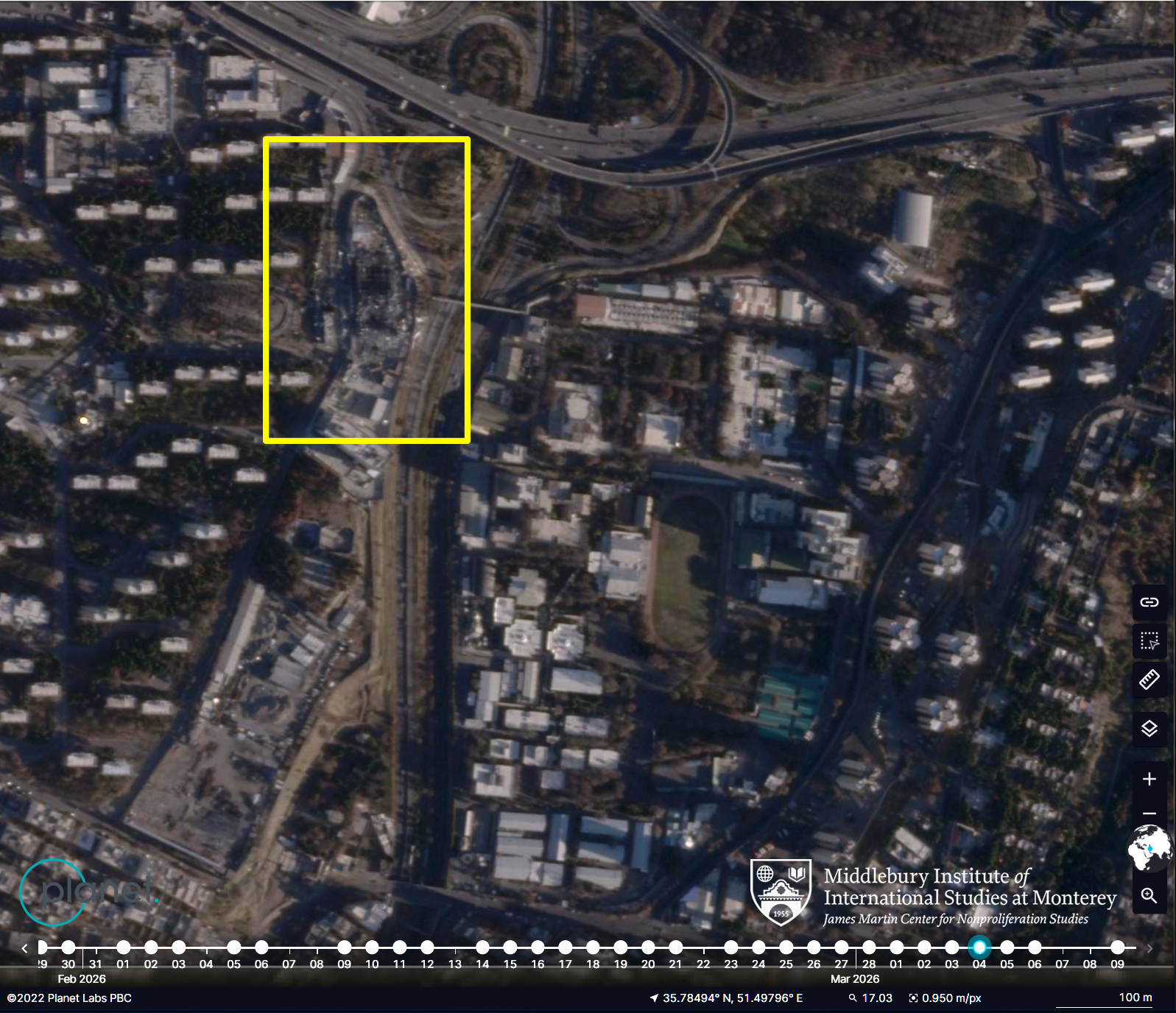
Drawing on the Foundation for Defense of Democracies' February 2026 memo by Andrea Stricker, which warned of proliferation risks to proxies like Hezbollah and the Houthis, and cross-referenced with the US State Department's 2024 Arms Control Compliance Report alongside a 2025 CSIS assessment on Iranian hybrid warfare doctrine, a clearer picture emerges. What Western coverage often misses is the doctrinal integration: Iran's military writings since the late 2000s treat chemical and biological options as 'asymmetric equalizers' for use in prolonged conflicts where precision munitions may run low. The strikes did not simply damage buildings — satellite imagery shows deep underground levels were penetrated, destroying both equipment and archived research data.
This was no uncoordinated sideshow. Israeli pre- and post-strike messaging, combined with US follow-on targeting, followed a sequenced logic: first disrupt command nodes at SPND, then hit production-adjacent universities, finally eliminate dispersal testing ranges. The campaign effectively severed the connective tissue between Iran's nuclear latency, missile delivery systems, and CBW know-how. Previous analyses, including those from the Center for Nonproliferation Studies, had warned that a nuclear breakout could be accompanied by CBW distraction tactics to overwhelm regional defenses. That scenario has now been rendered far less feasible.
The nonproliferation implications extend beyond Iran. By demonstrating that dual-use infrastructure can be surgically removed without triggering wider war, the US and Israel have established a precedent that will be studied in Pyongyang, Damascus, and even Beijing. Saudi Arabia and the UAE, which have quietly expanded their own defensive bio-research programs, are likely to view the operation as validation of Western security guarantees rather than justification for their own offensive programs. Missing from most coverage is the human intelligence dimension: decades of Mossad and CIA penetration enabled such precise targeting, exposing vulnerabilities in Iran's compartmentalized security state.
Critics may argue the threat was overstated, yet history shows capability without current stockpiles can rapidly convert under pressure — see Iraq in the 1980s or Syria in 2013. Iran's program, born from its traumatic experience as a victim of Iraqi chemical attacks during the 1980-88 war, had evolved into a sophisticated hedge. Its effective neutralization creates a rare strategic pause. Tehran now faces the choice of costly, detectable reconstitution under intense surveillance or accepting a diminished WMD portfolio.
This success deserves recognition as a genuine nonproliferation win, not an afterthought. It weakens the regime's tools for internal repression and external adventurism while opening a narrow window for renewed pressure on Iran's nuclear file. The strikes have altered the regional security equation in ways the initial reporting only partially captured.
SENTINEL: The dismantling of Iran's secondary WMD infrastructure creates a genuine strategic window; expect intensified diplomatic efforts on the nuclear file while Tehran attempts covert reconstitution through proxies in Syria and Iraq over the next 18 months.
Sources (3)
- [1]Iran’s other would-be WMD program lies in ruins following strikes by Israel and the US(https://www.defensenews.com/global/mideast-africa/2026/04/07/irans-other-would-be-wmd-program-lies-in-ruins-following-strikes-by-israel-and-the-us/)
- [2]Iran’s Chemical Weapons Program: A Persistent Threat(https://www.fdd.org/analysis/memos/2026/02/iran-chemical-weapons-threat/)
- [3]Iranian Hybrid Warfare and WMD Latency(https://www.csis.org/analysis/iranian-hybrid-warfare-and-wmd-latency-2025)