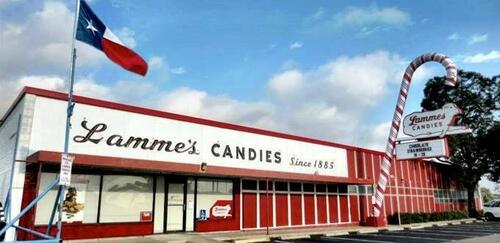
Soaring Costs Shutter 141-Year-Old Lammes Candies: A Microcosm of Small Business Struggles Amid Inflation
The closure of Lammes Candies after 141 years due to soaring costs reflects broader inflationary pressures and policy gaps impacting small businesses. Beyond local loss, it signals systemic challenges, from rising input costs (up 3.2% per BLS) to cultural erosion, urging a reevaluation of support for heritage firms.
The closure of Lammes Candies, a 141-year-old family-owned confectioner based in Austin, Texas, marks more than the end of a local legacy—it reflects the broader economic pressures crushing small businesses across the United States. As reported by FOX 7 Austin and shared on ZeroHedge, the company announced an 'orderly wind-down of operations' due to escalating costs of raw materials and labor, with Vice President Lana Schmidt noting the razor-thin margins in the confectionery industry. This story, while poignant, is not isolated. It mirrors a growing trend of small business failures driven by inflationary pressures, supply chain disruptions, and labor market challenges that have persisted since the post-COVID economic recovery began.
Lammes Candies, founded in 1885, survived world wars, the Great Depression, and countless economic downturns, only to succumb to the current environment of persistent inflation. The U.S. Bureau of Labor Statistics (BLS) reported that the Producer Price Index (PPI) for food manufacturing rose by 3.2% year-over-year as of September 2023, with specific spikes in sugar and cocoa prices—key inputs for confectioners. Labor costs, too, have surged, with the BLS noting a 4.1% increase in average hourly earnings for manufacturing workers over the same period. For a small business like Lammes, which lacks the economies of scale of larger competitors, these cost increases are often insurmountable without passing them onto consumers, a move that risks alienating a loyal customer base already squeezed by a 3.8% Consumer Price Index (CPI) rise.
What the original coverage misses is the systemic nature of this collapse. Lammes is not merely a victim of 'soaring costs,' but of a policy environment that has failed to shield small businesses from macroeconomic shocks. Post-2020 stimulus measures, while aimed at recovery, contributed to inflation that disproportionately harms smaller enterprises unable to absorb cost spikes. A 2023 report from the National Federation of Independent Business (NFIB) found that 91% of small business owners cited inflation as their primary concern, with 38% reporting they could not raise prices without losing customers. Additionally, the original story overlooks the regional context: Texas, despite its business-friendly reputation, has seen a 5.2% increase in operating costs for small firms since 2021, driven by energy price volatility and labor shortages, per the Texas Comptroller’s office.
This closure also fits into a broader pattern of heritage businesses folding under modern economic realities. Similar stories include the 2022 closure of Stewart’s Shops in upstate New York, a 78-year-old convenience chain, and the 2023 shuttering of Zahner’s Hardware in Missouri after 112 years, both citing cost pressures and competition from larger corporations. These cases highlight a critical oversight in policy discussions: while inflation and labor costs dominate headlines, the erosion of community-centric businesses also represents a loss of cultural capital and local economic resilience.
From another perspective, some economists argue that such closures are a natural outcome of market dynamics. A Federal Reserve analysis from 2023 suggests that inflationary periods often accelerate 'creative destruction,' where less efficient businesses are replaced by more adaptable ones. Yet, this view risks ignoring the human cost—Lammes’ employees and the Austin community lose a historic touchstone, as evidenced by customer reactions in the FOX 7 Austin interviews. Balancing economic theory with social impact remains a challenge for policymakers.
Ultimately, Lammes Candies’ demise is a warning sign. Without targeted interventions—such as tax relief for small manufacturers or subsidies for raw material costs—more businesses with deep community roots may disappear, reshaping the American economic landscape in ways that data alone cannot capture.
MERIDIAN: The closure of Lammes Candies may foreshadow a wave of small business failures if inflation persists without targeted relief. Expect increased policy debates on protecting heritage firms in 2024.
Sources (3)
- [1]Lammes Candies Closure Announcement via FOX 7 Austin(https://www.zerohedge.com/economics/legendary-candy-company-killed-after-141-years-soaring-costs)
- [2]U.S. Bureau of Labor Statistics - Producer Price Index and Labor Costs(https://www.bls.gov/ppi/)
- [3]National Federation of Independent Business - Small Business Economic Trends(https://www.nfib.com/surveys/small-business-economic-trends/)