CME's AI Compute Futures: Financializing the 'New Oil' or Priming a Speculative Bubble in Emerging Tech?
CME and Silicon Data's pending launch of GPU compute futures commoditizes AI infrastructure like oil, promising hedging and transparency but carrying overlooked risks of amplified volatility, speculative distortion of physical resources, and regulatory gaps in overseeing this hybrid tech-finance asset class.
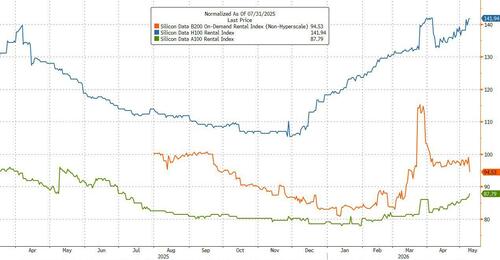
While mainstream coverage celebrates CME Group's new partnership with Silicon Data as a pragmatic step toward hedging AI-driven demand for graphics processing power, a closer examination reveals a deeper transformation: the full financialization of compute as an asset class, one that could amplify volatility, strain physical infrastructure allocation, and expose significant regulatory blind spots in an era of rapid technological convergence. Announced on May 12, 2026, the futures contracts—pending CFTC review—will be underpinned by Silicon Data's daily GPU rental rate benchmarks, allowing traders, AI firms, cloud providers, and financial institutions to bet on future pricing of the computational resources essential for training large models. CME CEO Terry Duffy framed compute as 'the new oil of the 21st century,' echoing sentiments from BlackRock's Larry Fink and DRW's Don Wilson, who sees it becoming the world's largest commodity. Official statements emphasize transparency, liquidity, and risk management for a multi-trillion-dollar market plagued by fragmented, opaque pricing across providers and regions.
Yet this development goes far beyond operational efficiency. By creating standardized futures tied to hourly H100 GPU rental indices, the exchange is inviting speculative capital into a domain previously governed by physical constraints—chip manufacturing bottlenecks, energy-intensive data centers, and geopolitical chip export controls. History shows that commoditizing vital resources (think oil futures or electricity markets) often decouples paper trading from underlying supply realities, leading to heightened volatility that can distort real-world allocation. In AI's case, this could mean hedge funds exacerbating GPU shortages during hype cycles or triggering artificial gluts, indirectly influencing which AI labs secure capacity and accelerating market concentration among a few hyperscalers.
Mainstream reports from Bloomberg and the Financial Times focus on the innovation and hedging benefits, but underreported connections emerge when linking this to broader trends. Prior 2025 discussions already positioned compute as needing its own tradable market akin to crude oil, yet regulators have been playing catch-up on AI's integration into derivatives. CFTC inquiries into artificial intelligence in regulated markets have highlighted risks of systemic instability, market manipulation via opaque algorithms, and 'monoculture' effects where correlated AI-driven strategies amplify shocks. Introducing a novel asset class like compute futures—neither traditional commodity nor simple security—raises unresolved questions about benchmark integrity (Silicon Data is backed by DRW Holdings), oversight of cross-border GPU pricing, and whether financial speculation will drive up costs for actual AI innovation rather than stabilize them.
This move also intersects with surging data center energy demands and supply chain vulnerabilities, areas where financial layering could mask or magnify physical limits. As compute shifts from operational expense to tradable derivative, it risks mirroring past financial innovations that promised efficiency but delivered amplified crises when regulatory frameworks lagged. Far from pure tech hype, CME's launch underscores a heterodox reality: AI's future may be increasingly dictated not just by algorithms, but by the speculative dynamics of Wall Street's latest commodity contract.
[LIMINAL]: Framing compute as tradable 'new oil' invites speculative capital that may worsen AI resource shortages and price swings, forcing regulators to confront novel systemic risks at the volatile nexus of derivatives markets and exponential tech growth.
Sources (4)
- [1]CME Group and Silicon Data Partner to Launch First Compute Futures(https://www.cmegroup.com/content/cmegroup/en/media-room/press-releases/2026/5/12/cme_group_and_silicondatapartnertolaunchfirstcomputefutures.html)
- [2]CME to Create Futures Market for Computing Power Backing AI(https://www.bloomberg.com/news/articles/2026-05-12/cme-to-create-futures-market-for-computing-power-backing-ai)
- [3]CME plans to launch futures market for AI computing power(https://www.ft.com/content/3e6b81e3-954d-4ac1-936b-00ea865bc98d)
- [4]Artificial Intelligence in Financial Markets: Systemic Risk and Market Abuse Concerns(https://www.sidley.com/en/insights/newsupdates/2024/12/artificial-intelligence-in-financial-markets-systemic-risk-and-market-abuse-concerns)