Systemic Fiscal Mismanagement: Improper US Government Payments Surge to $186 Billion in 2025
Improper U.S. government payments reached $186 billion in 2025, a $24 billion increase from 2024, driven by errors in Medicaid, Medicare, and other programs. Beyond accounting failures, this reflects systemic fiscal mismanagement with potential to impact national debt and investor confidence. Legislative inertia and historical patterns of post-crisis errors compound the issue, signaling a need for structural reform.
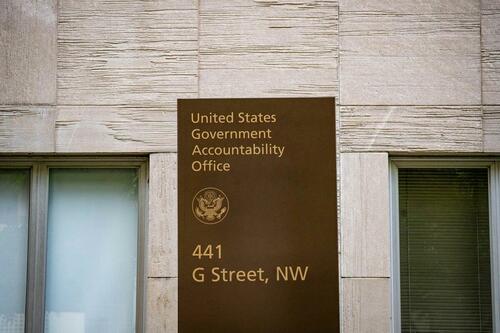
The U.S. Government Accountability Office (GAO) reported a staggering $186 billion in improper payments across federal programs for fiscal year 2025, a $24 billion increase from the previous year. This figure, representing overpayments, underpayments, and fraudulent distributions across 64 programs in 15 agencies, underscores a chronic issue of fiscal mismanagement that has persisted for over two decades. Since 2003, cumulative improper payments are estimated at $3 trillion, though the GAO acknowledges the true amount could be significantly higher. Major contributors include Medicaid ($37 billion), Traditional Medicare ($28.8 billion), and Medicare Advantage ($23.7 billion), collectively accounting for over 50% of the erroneous payments. Other significant programs include the Earned Income Tax Credit (EITC) at $21 billion and the Supplemental Nutrition Assistance Program (SNAP) at $10 billion. Notably, the Shuttered Venue Operators Grant (SVOG) program reported a 70% improper payment rate, with nearly $10 billion in erroneous distributions.
Beyond the raw numbers, this surge in improper payments signals deeper systemic issues in federal financial oversight, which could have broader implications for national debt and investor confidence. The original reporting by The Epoch Times via ZeroHedge focused on the headline figures and specific program failures but overlooked critical contextual factors and historical patterns. For instance, the spike in Medicaid errors tied to post-COVID-19 eligibility redeterminations highlights a recurring challenge: temporary policy flexibilities often lead to long-term administrative breakdowns when they are phased out. This pattern was evident during the unwinding of similar emergency measures post-2008 financial crisis, where SNAP and unemployment insurance programs also saw spikes in improper payments due to rushed eligibility processes (GAO Report, 2010).
Moreover, the original coverage missed the geopolitical and economic ripple effects of such fiscal mismanagement. With the U.S. national debt surpassing $35 trillion as of 2025, consistent improper payments of this magnitude could erode trust among international creditors and investors, particularly as Treasury yields remain sensitive to perceptions of fiscal discipline. A 2023 Congressional Budget Office (CBO) report warned that persistent inefficiencies in government spending could contribute to higher borrowing costs, a concern amplified by the current improper payment trends. This is not merely an accounting issue but a potential trigger for broader economic instability, especially as the U.S. competes for global capital against rising economies with stricter fiscal controls.
Another underreported angle is the political inertia surrounding accountability. The GAO noted that Congress has yet to mandate reporting requirements for programs like Temporary Assistance for Needy Families (TANF), despite suspected significant improper payments. This legislative delay, coupled with the Small Business Administration’s halting recovery efforts for SVOG overpayments (only one demand letter issued as of March 2025), suggests a lack of urgency that contrasts sharply with public rhetoric on fiscal responsibility. Historically, such inaction often stems from competing priorities—lawmakers avoid pushing for stringent oversight during economic recovery periods to prevent backlash from constituents or industries reliant on federal funds, a dynamic observed during the post-COVID stimulus rollout (CBO, 2021).
Synthesizing these perspectives, the $186 billion figure is not just a snapshot of error but a symptom of structural flaws in program design, inter-agency coordination, and political will. Addressing this requires more than recovery of funds—it demands a reevaluation of how emergency programs are scaled and monitored, alongside legislative reforms to enforce accountability. Without such measures, improper payments risk becoming a normalized cost of governance, further straining public finances at a time when fiscal credibility is paramount.
MERIDIAN: The trajectory of improper payments suggests a persistent challenge for U.S. fiscal policy. Without systemic reforms, annual figures could exceed $200 billion by 2027, further straining public finances and investor trust.
Sources (3)
- [1]GAO Report on Improper Payments for Fiscal Year 2025(https://www.gao.gov/products/gao-25-106678)
- [2]Congressional Budget Office: Long-Term Budget Outlook 2023(https://www.cbo.gov/publication/59014)
- [3]GAO Historical Report on Improper Payments Post-2008 Crisis(https://www.gao.gov/products/gao-10-443)