Social Security's 2032 Insolvency Tipping Point Signals Broader Entitlement Crisis and Fiscal Reckoning
Updated 2026 trustees projections advance Social Security OASI insolvency to late 2032, underscoring interconnected entitlement shortfalls amid demographic and policy shifts with implications for U.S. fiscal sustainability.
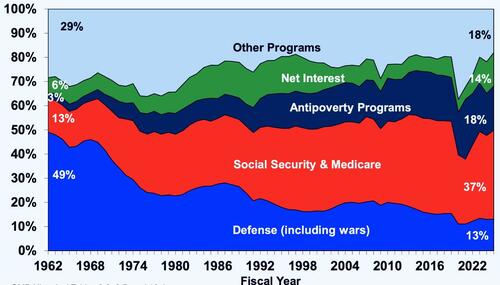
The 2026 Social Security Trustees Report, released June 9 by the Social Security Administration, projects the Old-Age and Survivors Insurance (OASI) trust fund will be depleted in the fourth quarter of 2032—one quarter earlier than the prior year's estimate—with scheduled benefits then payable at only 78% absent congressional action. This accelerates a longstanding trajectory of shortfalls driven by demographic headwinds, including persistently low fertility rates shrinking the worker-to-beneficiary ratio, reduced immigration inflows, and revenue impacts from the 2025 One Big Beautiful Bill Act's tax provisions benefiting beneficiaries. Official SSA data confirms the OASI reserve depletion date moved forward from 2033, while the combined OASDI funds remain projected for 2034 exhaustion, triggering a 17% across-the-board cut under current law. Analyses from the Committee for a Responsible Federal Budget (CRFB) and Bipartisan Policy Center highlight how this timeline compresses reform windows for the 119th Congress and beyond, intersecting with parallel pressures on Medicare's Hospital Insurance trust fund (projected depletion Q2 2033) and mounting federal debt dynamics. Unlike isolated program fixes, these shortfalls reflect systemic pay-as-you-go imbalances exacerbated by aging populations and slower economic growth assumptions, with long-term actuarial deficits now at 4.42% of payroll—the widest in decades. Potential interventions range from payroll tax cap adjustments and eligibility age hikes to means-testing expansions or general revenue infusions, echoing the 1983 bipartisan accord but facing steeper political constraints amid voter demographics. Failure to act risks amplifying entitlement-driven fiscal instability, crowding out discretionary spending and heightening vulnerability to interest rate shocks in an era of elevated debt-to-GDP ratios.
[CRFB Analyst]: The six-year horizon to insolvency will force entitlement reforms into the 2028 election cycle, likely prioritizing incremental revenue and age adjustments over structural overhauls to preserve program solvency amid rising debt service costs.
Sources (5)
- [1]Trustees Report Summary(https://www.ssa.gov/oact/trsum/)
- [2]Analysis of the 2026 Social Security Trustees' Report(https://www.crfb.org/papers/analysis-2026-social-security-trustees-report)
- [3]2026 Social Security Trustees Report, Explained(https://bipartisanpolicy.org/explainer/2026-social-security-trustees-report-explained/)
- [4]The 2026 OASDI Trustees Report(https://www.ssa.gov/oact/TR/2026/)
- [5]Social Security Trust Fund Now Projected to Run Dry in 2032(https://401kspecialistmag.com/2026-social-security-trustees-report-moves-insolvency-to-2032/)