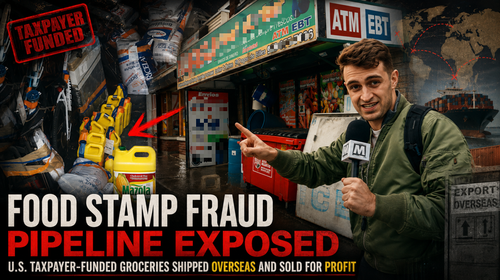
Longstanding SNAP Diversion Pipeline: U.S. Taxpayer Food Shipped to Dominican Republic Markets Despite Years of Warnings and Prosecutions
Investigative reporting and federal prosecutions reveal a persistent scheme where SNAP and pantry food bought or obtained in Massachusetts and New York Dominican communities is packed into barrels and shipped to the Dominican Republic for resale, diverting U.S. benefits overseas in a practice documented since at least 2013 and tied to identity fraud rings wiring proceeds abroad.
A years-old pattern of fraud involving U.S. Supplemental Nutrition Assistance Program (SNAP) benefits has persisted, with investigators documenting how recipients in Dominican communities purchase groceries with EBT cards or obtain free items from pantries, pack them into blue barrels, and ship the goods overseas for resale. The practice, first prominently reported in New York City over a decade ago, mirrors recent undercover findings in Lawrence, Massachusetts—one of the state's highest SNAP enrollment areas with a large Dominican immigrant population—and distribution hubs in the Bronx and Port Newark.
In 2013, the New York Post documented how Caribbean immigrants, including those from the Dominican Republic, used food stamps to fill 50-gallon barrels with up to $2,000 worth of non-perishable goods. These barrels were shipped to the Dominican Republic, Haiti, and Jamaica, where the contents were often sold on the black market for profit rather than consumed by family members. One seller in Santiago told reporters it was "a really easy way to make money, and it doesn't cost me anything." Shipping costs were offset by the zero or low out-of-pocket expense for the food acquired via benefits.[1][2]
The economics only make sense when the food is taxpayer-subsidized or donated. A 50-pound bag of rice that costs around $30 domestically can fetch higher prices abroad after shipping, turning welfare into an informal remittance system. Similar observations have surfaced in Lawrence, where delivery drivers and home health workers described residents openly collecting pantry items and EBT-purchased goods for export, with roughly half of some caseloads reportedly involved. Blue barrels were observed stacked outside EBT-accepting corner stores. From there, shipments consolidated in New York facilities before departing East Coast ports for Santo Domingo bodegas.
This connects to broader, documented enforcement failures. Federal prosecutors in Massachusetts have brought multiple cases against Dominican nationals for large-scale SNAP trafficking, identity theft, and benefit fraud. In one 2026 case, a ring of Dominican individuals allegedly used stolen identities to obtain over $1 million in SNAP and pandemic benefits across states, purchasing bulk food to stock restaurants at taxpayer expense before wiring proceeds to the Dominican Republic and Venezuela. Lawrence residents were named among the defendants in related identity fraud prosecutions tied to SNAP. Another case involved stores with anomalously high redemptions selling donated humanitarian food packets—intended for starving children overseas—for profit domestically, illustrating misdirection of aid streams.[3][4]
USDA and DOJ data show SNAP fraud remains under-prosecuted relative to its scale, with trafficking estimates historically ranging from hundreds of millions to over a billion annually before recent modernization efforts. High-concentration immigrant enclaves with elevated enrollment rates, combined with lax verification of residency, income, and intent, create opportunities for systemic abuse. Recipients in these schemes often view benefits as entitlements transferable to home countries, bypassing the program's goal of feeding struggling Americans. Despite raids on Lawrence stores in past years and ongoing federal priority on benefit fraud, the barrel pipeline appears resilient.
The pattern reveals deeper issues: welfare programs functioning as de facto foreign aid, enforcement hampered by jurisdictional limits and under-resourcing, and mainstream oversight that rarely connects localized fraud to remittance flows or port-level logistics. Without stricter eligibility screening, real-time transaction monitoring, and consequences for diversion, taxpayer funds will continue leaking abroad while domestic food insecurity persists.
[LIMINAL]: This exposes how weak eligibility enforcement and identity verification allow welfare to operate as an offshore remittance channel, draining U.S. funds while mainstream coverage ignores the scale and cultural entitlement dynamics fueling it.
Sources (4)
- [1]NYC welfare food is shipped in barrels to the Dominican Republic – then sold on the black market(https://nypost.com/2013/07/28/nyc-welfare-food-is-shipped-in-barrels-to-the-dominican-republic-then-sold-on-the-black-market/)
- [2]Two Massachusetts Men Charged with Large-Scale SNAP Benefits Trafficking(https://www.justice.gov/usao-ma/pr/two-massachusetts-men-charged-large-scale-snap-benefits-trafficking)
- [3]U.S. Attorney announces $1M SNAP, Medicaid fraud bust in Massachusetts(https://www.bostonherald.com/2026/03/26/u-s-attorney-announces-1m-snap-medicaid-fraud-bust-in-massachusetts/)
- [4]Four charged in multi-state SNAP and PUA fraud conspiracy(https://www.irs.gov/compliance/criminal-investigation/four-charged-in-multi-state-snap-and-pua-fraud-conspiracy)