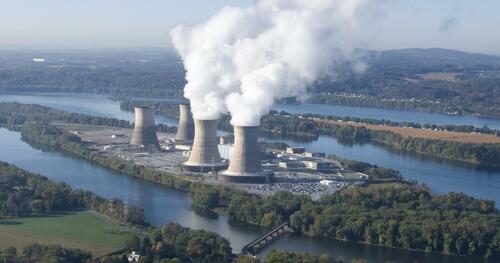
PJM Transmission Delays Push Three Mile Island Restart to 2031 Amid Surging Electricity Demand
PJM grid delays for the Three Mile Island restart to 2031 highlight systemic U.S. transmission constraints coinciding with AI-driven demand growth, synthesizing PJM queue data, DOE transmission studies, and IEA reports while noting regulatory reforms often overlooked in secondary coverage.
PJM Interconnection has indicated that full deliverability for Constellation Energy's restarted Three Mile Island Unit 1 (rebranded Crane Clean Energy Center) could extend to 2031 due to required transmission system upgrades, despite the operator's target of late 2027 operations under its power purchase agreement with Microsoft. This timeline shift, building on earlier projections of 2028 grid connection, reflects the complexity of integrating 835 MW of nuclear capacity into an evolved regional grid since the plant's 2019 shutdown. Primary documents from PJM's interconnection queue reports document a backlog exceeding 300 GW of projects, with transmission constraints affecting both generation and load additions. The U.S. Department of Energy's 2023 National Transmission Needs Study identifies the PJM footprint as facing high congestion costs and identifies multiple 'critical' transmission corridors requiring reinforcement. Perspectives differ on causation and remedies: grid operators and utilities cite decades-long underinvestment in high-voltage lines, lengthy NEPA reviews, and local siting opposition as structural barriers, while data center developers argue that predictable baseload supply like nuclear is essential for reliability. The IEA's Electricity 2024 report notes over 2,500 GW of stalled projects globally, with U.S. queues particularly impacted by similar permitting bottlenecks seen in both renewable and conventional resources. Original coverage correctly identifies underinvestment but understates ongoing regulatory adjustments, including FERC Order 2023 reforms to interconnection processes and Order 1920 on regional transmission planning, which aim to address queue backlogs. Related patterns include delayed renewable integrations in PJM and parallel load growth challenges in ERCOT and CAISO driven by hyperscale computing. This case illustrates competing priorities between rapid AI infrastructure deployment, nuclear revival incentives via the $1 billion DOE loan guarantee, and the slower pace of collective grid modernization, without a singular causal narrative.
MERIDIAN: PJM delays for Three Mile Island reveal persistent gaps between generation revival timelines and transmission buildout that affect both nuclear and renewable projects across multiple RTOs.
Sources (3)
- [1]PJM Interconnection Queue Status Report Q3 2025(https://www.pjm.com/-/media/documents/reports/2025-pjm-interconnection-queue.ashx)
- [2]U.S. Department of Energy National Transmission Needs Study(https://www.energy.gov/gdo/national-transmission-needs-study)
- [3]IEA Electricity 2024 Report(https://www.iea.org/reports/electricity-2024)