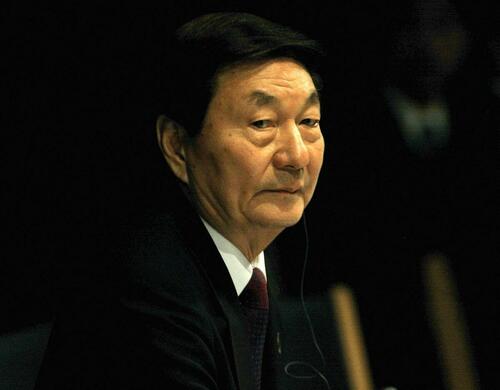
Zhu Rongji, Architect of China’s Economic Rise, Dies at 97 as Legacy Faces Scrutiny
Zhu Rongji’s death prompts reflection on his pivotal reforms—tax centralization, SOE overhaul, and WTO entry—that propelled China’s growth, alongside their long-term costs and evolving political context.
Former Chinese Premier Zhu Rongji, widely regarded as the 'economic tsar' who drove market-oriented reforms in the 1990s, died on August 12, 2026, in Beijing at age 97 after medical treatment failed. Official announcements from Xinhua and joint statements by CCP bodies confirmed the death, with a state funeral held on August 18 at Babaoshan Revolutionary Cemetery attended by top leaders including Xi Jinping.[1][2]
Zhu’s tenure as vice premier (1991–1998) and premier (1998–2003) under Jiang Zemin included centralizing tax revenue through the 1994 tax-sharing reform, which strengthened Beijing’s fiscal control but contributed to local governments’ reliance on land sales, fueling later property sector imbalances. He oversaw aggressive restructuring of state-owned enterprises, resulting in tens of millions of layoffs as inefficient firms were closed or privatized to prepare for global competition.[3][4]
A signature achievement was leading China’s accession to the World Trade Organization in December 2001 after years of negotiations, which accelerated export-led growth and integrated China into global supply chains, though critics note it also entrenched trade imbalances. Zhu earned a reputation for bluntness, coining the term 'tofu-dreg project' in 1998 after inspecting flood-damaged Yangtze River dikes built with substandard materials and corruption.[5][6]
Accounts from Falun Gong sources describe Zhu meeting practitioners during the April 25, 1999, appeal in Beijing and initially opposing a crackdown, though Jiang Zemin ultimately launched the suppression campaign weeks later. His economic legacy is now contrasted with more recent policy shifts under Xi Jinping, including greater state control.[7]
Analyst: Zhu’s reforms laid the structural foundation for China’s manufacturing dominance and global integration, but their partial reversal under current leadership highlights ongoing tensions between market liberalization and state-centric control, potentially influencing future policy debates amid economic slowdowns.
Sources (8)
- [1]Death of Zhu Rongji - Wikipedia(https://en.wikipedia.org/wiki/Death_of_Zhu_Rongji)
- [2]Zhu Rongji, Chinese Premier Who Overhauled Economy, Dies - Bloomberg(https://www.bloomberg.com/news/articles/2026-08-12/zhu-rongji-chinese-premier-who-overhauled-economy-dies-at-98)
- [3]Zhu Rongji, Former Premier Who Pushed China to a Market Economy, Dies at 97 - The New York Times(https://www.nytimes.com/2026/08/12/world/asia/zhu-rongji-dead.html)
- [4]Zhu Rongji, Engineer of China’s Economic Overhaul, Dies at 97 - WSJ(https://www.wsj.com/world/china/zhu-rongji-engineer-of-chinas-economic-overhaul-dies-at-97-0df84c86)
- [5]Zhu Rongji, the ‘economic czar’ who helped turn China into a powerhouse, dies at 97 | CNN(https://www.cnn.com/2026/08/12/china/zhu-rongji-china-economic-tsar-obituary-intl-hnk)
- [6]Zhu Rongji, who helped turn China into a trading giant, dies at 97 - BBC(https://www.bbc.com/news/articles/c75g9777wwxo)
- [7]Tofu-dreg project - Wikipedia(https://en.wikipedia.org/wiki/Tofu-dreg_project)
- [8]The Economic Tsar Who Built Modern China... - The Epoch Times(https://www.theepochtimes.com/opinion/the-economic-tsar-who-built-modern-china-and-whose-reforms-the-ccp-is-dismantling-6076873)