Trump's Troop Pullout from Germany Signals the End of the Post-WWII Transatlantic Order
Trump's withdrawal of 5,000+ troops from Germany, tied to disputes over the Iran conflict and Merz's criticism, has stunned EU leaders who see it as both a wake-up call for European NATO contributions and a sign of deepening transatlantic fractures. This reflects a major shift away from unconditional U.S. security guarantees, exposing Europe's long-term defense vulnerabilities and risking NATO cohesion amid Russian threats.
In a move that has sent ripples through European capitals, the Trump administration announced the withdrawal of approximately 5,000 U.S. troops from Germany, with President Trump himself stating that cuts will go "a lot further" than the initial figure. The Pentagon indicated the reductions would occur over the next 6-12 months, affecting a longstanding presence of nearly 40,000 American personnel that has served as the backbone of U.S. European Command, Africa Command, and key hubs like Ramstein Air Base.[1][2]
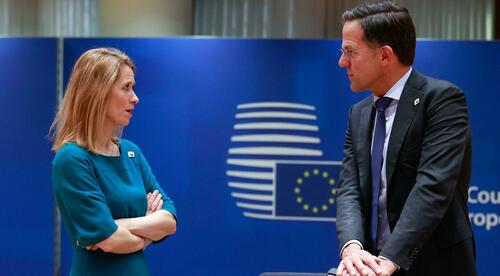
European leaders, caught off guard during a summit in Yerevan, Armenia, offered measured but telling responses. EU foreign policy chief Kaja Kallas noted the timing came as a surprise despite long-standing talk of withdrawals, adding that it underscored the need to "strengthen the European pillar in NATO." NATO Secretary-General Mark Rutte acknowledged that "Europeans have gotten the message" and must assume a bigger role. German Defence Minister Boris Pistorius framed it as a spur for Europe to take more responsibility, claiming Germany is "on the right track" with expanded forces and procurement. Norwegian Prime Minister Jonas Gahr Støre downplayed the numbers as "not dramatic" if handled within NATO, while Polish leaders warned of a "disastrous trend" and "ongoing disintegration" of the transatlantic alliance.[1]
Mainstream coverage has largely presented this as a predictable "nudge" for burden-sharing. However, the timing reveals deeper fault lines. The decision follows sharp public exchanges between Trump and German Chancellor Friedrich Merz over the U.S.-Iran conflict that began in late February 2026. Merz criticized the U.S. approach as leaving America "humiliated" by Iranian leadership during ceasefire talks, while many European allies offered only limited support for U.S. operations. Trump has openly linked European security commitments to their willingness to share global burdens, particularly as U.S. attention pivots toward the Middle East and long-term competition with China.[1]
This is no mere symbolic adjustment but a manifestation of a fundamental geopolitical shift under Trump's influence. For decades, the massive U.S. footprint in Germany represented the post-WWII and Cold War order—an implicit guarantee that America would subsidize European security while the continent enjoyed a "peace dividend." That contract is fraying. Europe's vulnerabilities are now exposed: despite years of rhetoric about strategic autonomy, most NATO members remain far from the 2% GDP defense spending target in practice when accounting for readiness, and political will for conscription or industrial-scale rearmament is uneven. A reduced U.S. presence risks signaling weakness to Russia amid the grinding Ukraine conflict, potentially inviting hybrid or direct probes on NATO's eastern flank.
Connections often missed by conventional analysis include the linkage between theaters: U.S. frustration over Europe's reluctance in the Strait of Hormuz or Iran operations mirrors broader America First recalibration. As Washington sheds old commitments, Europe faces uncomfortable choices—massive spending that could strain economies and unity, deeper integration via an EU defense pillar that challenges NATO's primacy, or fragmentation where frontline states like Poland seek bilateral deals. Republican concerns in Congress, including warnings from Senators about undermining deterrence against Putin, highlight domestic U.S. divisions as well.[2]
The irony is stark: even as European officials hype a "new Cold War" with Russia, the legacy architecture of the original one is being dismantled. This development may ultimately accelerate Europe's militarization and force a multipolar alliance structure, but at the cost of immediate deterrence gaps and heightened global instability. Mainstream framing often stops at "Europe must do more," yet the deeper implication is a weakening of the unified Western bloc that has defined the international order since 1945.
LIMINAL: This marks the accelerating erosion of America's post-WWII security umbrella over Europe, likely forcing costly rearmament, greater strategic autonomy, and a looser NATO that exposes the continent to Russian opportunism while allowing the US to redirect focus toward Asia and the Middle East.
Sources (5)
- [1]As US plans fewer troops in Germany, Europe sees need for bigger role within NATO(https://apnews.com/article/europe-us-nato-troops-trump-germany-56adb70f611da5314bba9178bd4388b1)
- [2]Germany says US troop drawdown should spur Europe, but top Republicans worried(https://www.reuters.com/business/aerospace-defense/us-troop-drawback-underlines-european-defence-responsibility-german-minister-2026-05-02/)
- [3]Europe rattled by 'disastrous trend' as Trump pulls 5000 troops from Germany(https://www.nbcnews.com/world/europe/europe-rattled-disastrous-trend-trump-pulls-5000-troops-germany-rcna343189)
- [4]Germany and Europe Have Bigger Trump Problems Than Troop Withdrawal(https://www.wsj.com/world/europe/u-s-troop-withdrawal-expands-yawning-rift-between-u-s-and-europe-2f5c49cc)
- [5]Kallas: US troop withdrawal 'comes as a surprise'(https://www.politico.eu/article/kaja-kallas-us-troop-withdrawal-comes-as-a-surprise-germany-europe/)