Starmer's Resignation Cements UK's Pattern of Rapid Leadership Turnover Amid Governance Strain
Starmer's June 22, 2026 resignation, verified across major outlets, extends the UK's decade-long streak of seven prime ministers, driven by party infighting and by-election shocks, signaling systemic governance challenges rather than isolated events.
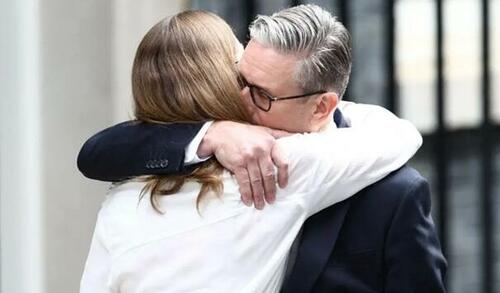
British Prime Minister Keir Starmer announced his resignation as Labour Party leader on June 22, 2026, outside 10 Downing Street, confirming he had informed King Charles III and instructing the party's National Executive Committee to establish a swift succession process with nominations opening July 9 and a new leader in place before Parliament reconvenes in September.[1][2] This marks the seventh change in UK prime minister in a decade, following the sequence from David Cameron (2010–2016) through Theresa May, Boris Johnson, Liz Truss, Rishi Sunak, and Starmer himself since the 2016 Brexit referendum.[3][4] The trigger was internal Labour Party pressure intensified by Andy Burnham's victory in the Makerfield by-election on June 18, positioning the former Greater Manchester mayor as the frontrunner in the upcoming leadership contest.[2] Starmer framed his exit as prioritizing the country, acknowledging his parliamentary party's view that he was not best placed to lead into the next general election.[5] Multiple outlets, including NPR, AP, BBC, CNN, The New York Times, and Sky News, corroborated the announcement and timeline in real time.[1][6] This rapid churn—four prime ministers in just over four years in some counts—reflects deeper institutional fatigue, policy volatility on issues like immigration, energy, and post-Brexit economics, and eroding public trust, patterns that extend beyond individual leaders to questions of parliamentary discipline, party cohesion, and the sustainability of short-term mandates in a fragmented political landscape.[3] Wikipedia entries on the 2026 Labour leadership crisis and the list of prime ministers document the continuity of this turnover.[2][4] The episode highlights how by-election results and internal mutinies can accelerate leadership changes, with implications for policy continuity and international perceptions of UK stability.
LIMINAL: The entrenched pattern of short tenures risks entrenching reactive policymaking and weakening long-term institutional resilience, potentially amplifying volatility in economic and international affairs unless structural reforms address root causes of party fragmentation.
Sources (5)
- [1]Keir Starmer announces resignation as UK prime minister(https://www.npr.org/2026/06/22/nx-s1-5866231/keir-starmer-resigns)
- [2]2026 Labour Party leadership crisis(https://en.wikipedia.org/wiki/2026_Labour_Party_leadership_crisis)
- [3]Live updates: Keir Starmer announces resignation(https://apnews.com/live/keir-starmer-resignation-uk-prime-minister-updates-06-22-2026)
- [4]List of prime ministers of the United Kingdom(https://en.wikipedia.org/wiki/List_of_prime_ministers_of_the_United_Kingdom)
- [5]Why the U.K. has had 6 prime ministers in 10 years(https://www.cbsnews.com/news/uk-prime-minister-keir-starmer-resignation-possible-after-6-leaders-in-10-years/)