France's Strike Ambitions Signal Europe's Fractured Rearmament and the High Cost of Strategic Autonomy
France's rocket artillery tests and €1B ballistic missile program with hypersonic glide vehicle reflect urgent preparation for 2030 high-intensity attrition warfare. This is part of a wider European rearmament push for strategic autonomy that mainstream outlets treat as isolated buys, missing links to Macron doctrine, SIPRI-documented spending surges, and the need for organic deep-strike independence from U.S. supply chains.
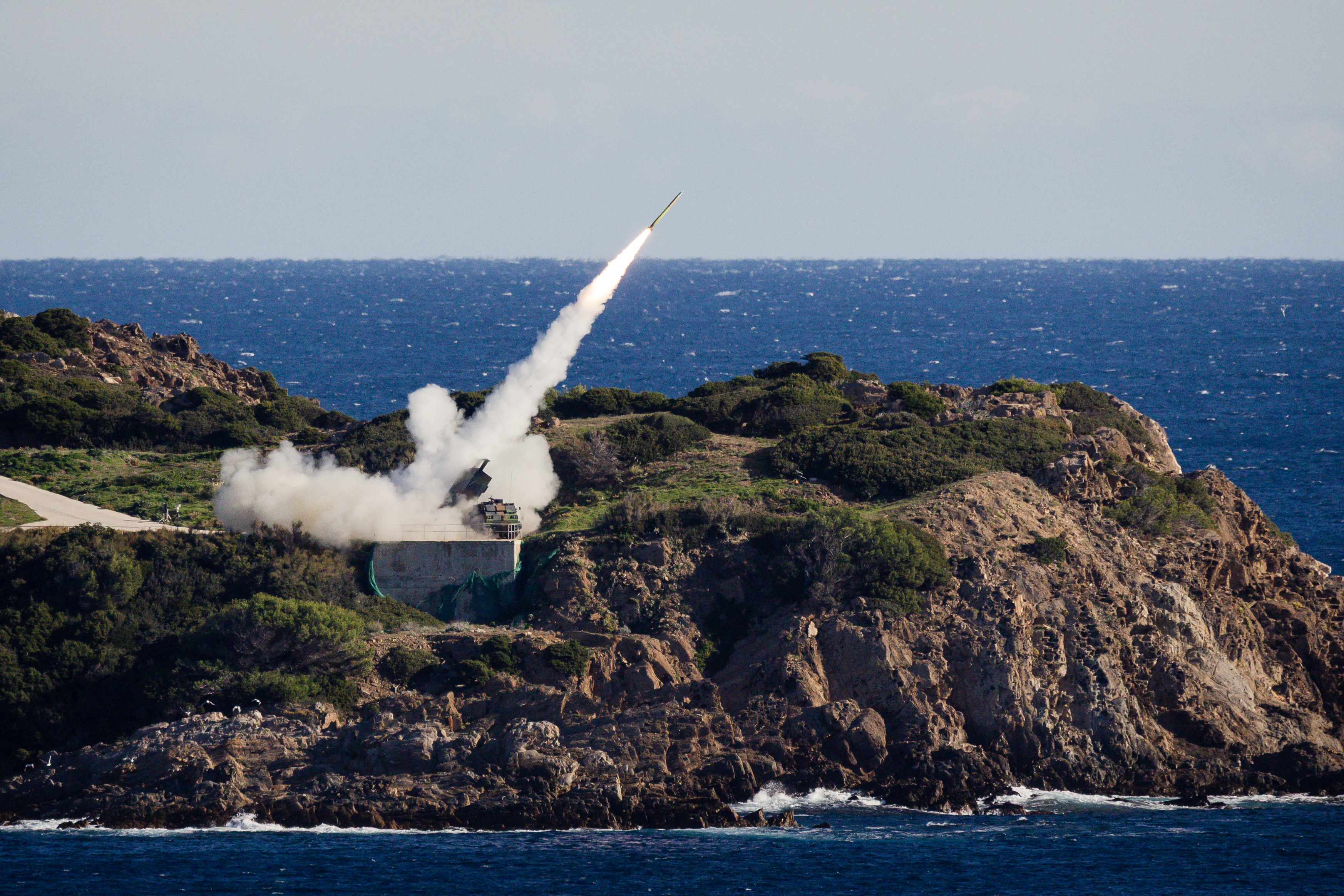
France’s imminent rocket artillery decision and its €1 billion head start on a 2,500 km land-based ballistic missile tipped with a maneuverable hypersonic glide vehicle are not isolated capability upgrades. They mark a deliberate acceleration of European strategic autonomy efforts that mainstream defense reporting continues to treat as simple procurement stories. While the Defense News article accurately captures Patrick Pailloux’s parliamentary testimony on test results, timelines, and the army’s “absolute priority” for deep fires, it underplays the broader geopolitical and industrial pattern now visible across the continent.
The original coverage correctly notes the tension between sovereignty and speed, yet misses how this dilemma sits inside a post-2022 European consensus that the next major conflict may arrive by 2030 and will be defined by industrial attrition. Pailloux’s blunt statement—“the side that still has ammunition left wins”—echoes classified assessments shared inside NATO and EU defense circles since the early months of Russia’s full-scale invasion of Ukraine. France is therefore not merely replacing its nine remaining LRU launchers before their 2027 retirement; it is racing to field organic long-range strike that cannot be turned off by Washington or delayed by export-control politics.
Two additional sources illuminate what the initial reporting omits. SIPRI’s 2024 Yearbook documents that European military expenditure rose 13 percent in real terms in 2023, with France and Germany leading a shift from overseas deployments toward high-intensity warfighting stocks. A concurrent Council on Foreign Relations analysis of EU strategic autonomy initiatives shows Paris systematically using national champions—Safran, MBDA, ArianeGroup—to anchor supply chains that Germany and Central European states still partially outsource to South Korea (Chunmoo) or the United States (HIMARS). The French choice of a hypersonic glide vehicle over simpler ballistic or cruise options further reveals an attempt to compress the cost-performance curve while signaling to Moscow that Paris can hold Russian rear areas at risk without relying on U.S. systems.
This program cannot be divorced from parallel French decisions: the Rafale F5 upgrade spiral, the new T-REX engine, accelerated Stratus RS and Comet missile efforts, and a €6 billion munitions procurement wave. Together they form a national deep-strike ecosystem designed to survive the opening weeks of a peer conflict—the exact window Ukrainian forces have shown is decisive. By accepting an initial 2030 operating capability without full anti-jamming, then layering resilience later, the DGA is applying lessons from slow-moving collaborative programs such as FCAS and MGCS. Sovereignty, in this calculus, is measured in weeks of independent combat endurance rather than perfect specifications on paper.
The strategic implication is larger still. A French 2,500 km ground-launched ballistic missile fundamentally changes the European deterrence map. Forward-deployed in Poland or Romania under bilateral arrangements, it places much of western Russia under threat without invoking NATO’s nuclear threshold immediately. This is classic Macronist logic: create facts on the ground that force both Washington and Brussels to treat France as the indispensable European framework nation. Yet it also risks industrial fragmentation. If every major capital pursues its own rocket artillery or hypersonic glide vehicle, the economies of scale that SIPRI and the European Defence Agency repeatedly call for will remain elusive.
Mainstream coverage has framed these moves as “France shopping for rockets.” The deeper reality is a continent re-learning that credible conventional deterrence now requires organic deep munitions production, sovereign command links, and the political willingness to spend billions before the first shots are fired. France is betting that industrial sovereignty purchased today will translate into autonomy tomorrow. Whether its neighbors follow that logic or continue cherry-picking U.S. and Korean systems will determine if Europe’s rearmament becomes additive power or merely expensive duplication.
SENTINEL: France accelerating a 2,500 km land-based ballistic missile to near-2030 IOC is a calculated hedge against waning U.S. reliability and expected attrition war with Russia; expect other European capitals to quietly launch parallel sovereign deep-strike programs by 2028, fragmenting NATO procurement but hardening the continent's industrial base.
Sources (3)
- [1]France nears rocket artillery decision, plans ballistic missile by 2035(https://www.defensenews.com/global/europe/2026/04/17/france-nears-rocket-artillery-decision-plans-ballistic-missile-by-2035/)
- [2]SIPRI Yearbook 2024: Armaments, Disarmament and International Security(https://www.sipri.org/yearbook/2024)
- [3]Europe’s Strategic Autonomy and the Future of Transatlantic Relations(https://www.cfr.org/report/europes-strategic-autonomy)