US Naval Blockade in Hormuz: Tactical Interception Masks Strategic Gamble Toward Wider Conflict
The U.S. interception of an Iranian vessel enforcing a unilateral blockade signals a dangerous shift from diplomacy to kinetic posturing in the Strait of Hormuz. Historical patterns, economic exposure, and alliance fractures suggest higher risk of miscalculation and broader conflict than original reporting acknowledges.
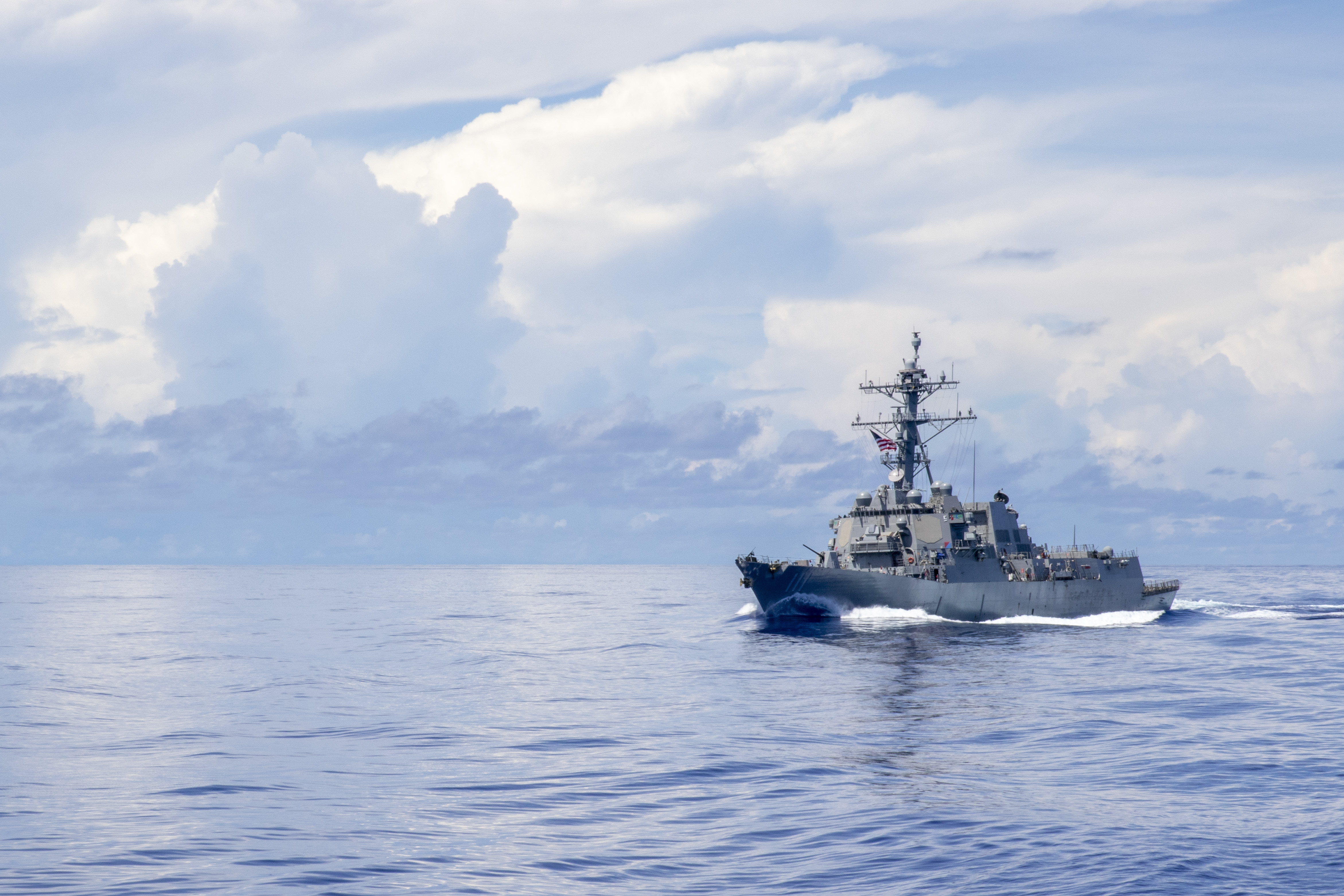
The USS Spruance’s redirection of an Iranian-flagged cargo vessel on 14 April 2026, as reported by Defense News, is being framed as a routine enforcement of a new U.S. maritime blockade. This narrow lens misses the larger picture: Washington has crossed a threshold from sanctions pressure to physical blockade of a sovereign state’s ports, an act that fundamentally alters the risk calculus in the Persian Gulf and echoes the miscalculations that turned the 1980s Tanker War into a prolonged international crisis.
CENTCOM’s announcement that ten vessels have been turned away since Monday is technically accurate but strategically incomplete. The original coverage fails to note that the blockade was announced unilaterally by President Trump immediately after the collapse of talks in Islamabad—talks that, per leaked elements of the Vance-Witkoff-Kushner negotiating brief, demanded not only irreversible dismantling of Iran’s enrichment infrastructure but also Tehran’s withdrawal from its Russia-supplied air-defense upgrades. Iran’s refusal was predictable; what was not adequately covered is the two-week “ceasefire” established on 7 April already functioned more as a deployment window for U.S. amphibious and air assets than a genuine diplomatic off-ramp.
Synthesizing the Defense News dispatch with a 2023 CSIS report on Strait of Hormuz closure scenarios and a contemporaneous Reuters reconstruction of the Islamabad track, several overlooked connections emerge. First, the presence of the America-class USS Tripoli and over 100 combat and surveillance aircraft signals preparations for potential IRGCN swarm or drone attacks—tactics Iran refined in 2019 against Japanese and Norwegian tankers and again in 2024-25 Red Sea operations via Houthi proxies. Second, the economic lever is immense: 21% of global liquefied natural gas and roughly one-fifth of seaborne oil transit this 21-mile-wide chokepoint. Bloomberg terminals recorded Brent crude jumping 9% in after-hours trading on the blockade announcement, yet mainstream coverage has underplayed insurance-rate spikes already hitting 400% for vessels with any Iranian port exposure.
The original story also glosses over the legal and alliance fragility. Unlike the 1987-88 U.S. reflagging operation conducted under UN auspices, this blockade rests on a unilateral presidential declaration. China, which purchased 87% of Iran’s exported crude in Q1 2026, has already labeled the move “economic coercion” through state media. Beijing’s quiet naval deployment of two Type-055 destroyers into the Indian Ocean last month now looks prescient rather than coincidental.
Historical patterns suggest escalation is more likely than containment. During the Tanker War, Iran laid mines and used silkworm missiles against neutral shipping once it concluded the U.S. was not neutral. Today, Tehran’s arsenal includes advanced anti-ship ballistic missiles, loitering munitions, and cyber tools tested against Saudi infrastructure. The risk of a miscalculation—perhaps an IRGC speedboat ignoring a warning shot, or a proxy strike on a Gulf desalination plant—is rising sharply.
What U.S. planners appear to be betting on is that Iran’s economy, already strained by years of sanctions and currency collapse, cannot sustain prolonged closure. Yet this underestimates the domestic rallying effect such blockades historically produce for hardline elements in Tehran. The nuclear file, far from being frozen, now risks becoming secondary to a direct sovereignty confrontation over freedom of navigation—precisely the scenario crisis-gaming exercises at the Naval War College have repeatedly flagged as the highest-probability trigger for direct U.S.-Iran combat since 2018.
In short, the Spruance interception is not an isolated maritime enforcement action. It is the visible tip of a rapidly militarizing crisis that threatens to transform the Strait of Hormuz from a commercial artery into a contested battlespace, with cascading effects on global energy security, great-power competition, and the fragile architecture of Middle East ceasefires.
SENTINEL: This blockade marks the transition from sanctions theater to direct military containment; expect Iranian asymmetric responses within 72-96 hours, likely via proxies or unmanned systems, driving oil volatility above $110/barrel and testing U.S. escalation dominance.
Sources (3)
- [1]US Navy destroyer intercepts Iranian-flagged vessel trying to skirt blockade(https://www.defensenews.com/news/your-military/2026/04/15/us-navy-destroyer-intercepts-iranian-flagged-vessel-trying-to-skirt-blockade/)
- [2]Closing the Strait: Iranian Mine and Missile Threats to Maritime Commerce(https://www.csis.org/analysis/closing-strait-iranian-mine-and-missile-threats-maritime-commerce)
- [3]Inside the collapsed US-Iran talks in Islamabad(https://www.reuters.com/world/middle-east/inside-collapsed-us-iran-talks-islamabad-2026-04-13/)