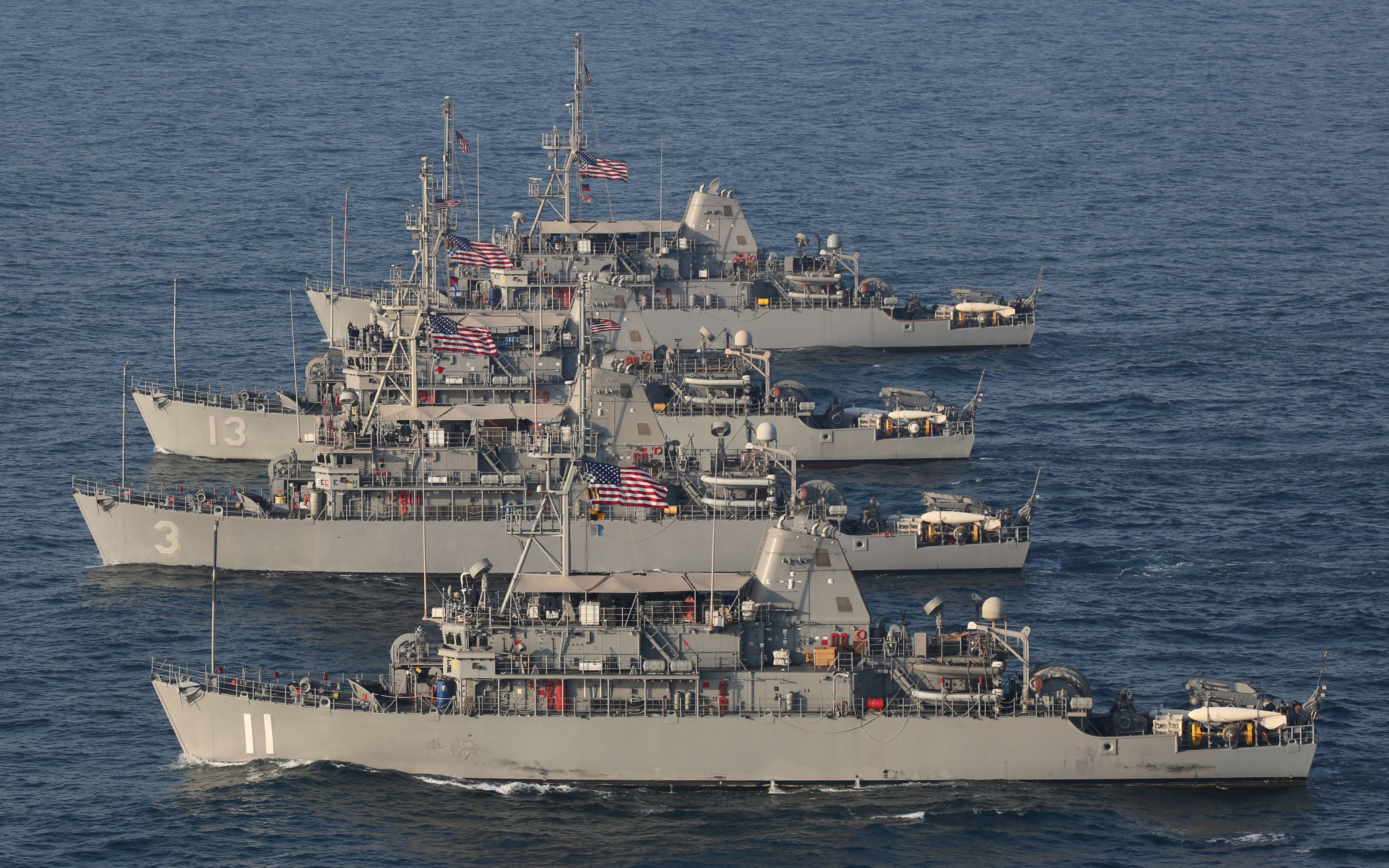
US Hormuz Demining Ops Expose Hybrid Warfare playbook and Global Energy Chokepoint Fragility
US deployment of unmanned systems to clear Iranian mines in the Strait of Hormuz reveals deeper hybrid conflict patterns, asymmetric cost imposition, and critical vulnerabilities in global energy chokepoints that link current Iran tensions to Red Sea precedents and future Taiwan Strait scenarios.
The Defense News report on US mine-clearing operations in the Strait of Hormuz accurately catalogs the shift from Cold War-era Avenger-class sweepers and diver teams to littoral combat ships, Archerfish remote mine-disposal systems, unmanned surface vessels, and MH-60R helicopters equipped with laser mine-detection. Yet it frames the mission largely as a technical problem of detection, classification, and neutralization. This misses the deeper strategic reality: Iran's deliberate use of maritime mines is not an isolated disruption but a calibrated hybrid tactic embedded in a larger pattern of anti-access/area-denial (A2/AD) operations that exploit the asymmetric economics of naval warfare.
Synthesizing the primary Defense News dispatch with a March 2026 Reuters investigation confirming Iran's deployment of approximately a dozen mines and a 2024 CSIS report on Iranian naval modernization reveals consistent patterns. Tehran has invested in cheap, hard-to-attribute systems—bottom influence mines, moored contact mines, drifting variants, and limpet mines—precisely because they cost tens of thousands while forcing the US Navy to expend millions per clearance day while exposing high-value assets to coastal missiles, drone swarms, and fast-attack craft. The original coverage underplays this cost-imposition logic and fails to connect it to parallel campaigns: Houthi mining and drone attacks in the Red Sea since 2023 that have already forced rerouting of 15 percent of global shipping.
Historical context further illuminates what was omitted. During the 1980s Tanker War, Iran laid over 200 mines, prompting Operation Earnest Will; US forces still lost ships and spent months clearing fields under fire. Today's environment is more complex. Iranian mines are now paired with GPS jammers, loitering munitions, and submarine drones acquired via Russian and Chinese supply networks. The Trump administration's weekend claim that all Iranian minelaying vessels have been sunk provides political theater but ignores the pre-positioned fields, drifting mines, and covert commercial vessel deployment options that remain viable.
The mission's multi-week timeline—search, identify, neutralize, verify—creates a persistent vulnerability window Tehran seeks to exploit. Littoral combat ships may keep crews outside the immediate danger zone, yet the vessels themselves, operating in narrow waters 21 miles across at the choke point, remain vulnerable to layered A2/AD. This directly ties into larger patterns of hybrid conflict preparedness: Beijing's similar mining doctrine for the Taiwan Strait, Moscow's mining of Ukrainian ports, and the Houthis' Red Sea campaign demonstrate that state and proxy actors now routinely weaponize chokepoints where 20 percent of global oil transits.
What Western coverage consistently misses is the preparatory signaling. Iran's mining followed immediately after US-Israeli strikes, forming part of an escalatory ladder that tests US bandwidth across multiple theaters. Clearance success will not be measured merely in tons of explosives removed but in whether commercial shipping returns at scale—an outcome still uncertain given insurance rates and crew risk thresholds. Genuine analysis must therefore view this operation through the lens of sustained hybrid deterrence: technological modernization of mine countermeasures is necessary but insufficient without integrated offensive options, allied burden-sharing (UK, Australia, Gulf partners), persistent overhead surveillance, and cyber disruption of Iranian launch platforms.
The Strait of Hormuz episode underscores a structural shift. Great-power competitors have internalized that disrupting energy flows via gray-zone tools yields strategic effect at acceptable risk. US demining efforts, while tactically impressive, risk becoming a costly attritional sideshow unless paired with credible escalation dominance and diplomatic initiatives that address root Iranian threat perceptions. Global markets are already pricing in prolonged disruption; failure to resolve the mine threat swiftly will further erode confidence in the security of maritime commons and accelerate diversification away from Gulf energy—ironically a long-term strategic win for Iran.
SENTINEL: US drone and LCS clearance in Hormuz will take weeks not days, allowing Iran to impose sustained economic pain at minimal cost. This hybrid playbook—cheap mines versus expensive countermeasures—mirrors Red Sea disruptions and foreshadows how adversaries will contest every global chokepoint.
Sources (3)
- [1]How the US military could clear mines from the Strait of Hormuz(https://www.defensenews.com/news/your-military/2026/04/16/how-the-us-military-could-clear-mines-from-the-strait-of-hormuz/)
- [2]Iran deploys mines in Gulf waters after Israeli strikes - sources(https://www.reuters.com/world/middle-east/iran-deployed-about-dozen-mines-strait-hormuz-sources-2026-03-28/)
- [3]Iranian Naval and Maritime Strategy: Mining the Gulf(https://www.csis.org/analysis/iranian-naval-forces-and-maritime-strategy-2024)