Voter Roll Inaccuracies Confirmed by DOJ but Actual Fraud Remains Rare, Shaping 2026 Election Security Debate
DOJ under AG Dhillon has documented hundreds of thousands of deceased and potentially ineligible registrants on U.S. voter rolls, confirming maintenance problems. However, rigorous studies from Brookings, Heritage, MIT, and Brennan Center show actual proven voter fraud occurs at rates far below 0.01% and has not altered election outcomes. The gap between roll inaccuracies and cast fraudulent ballots remains wide, yet fuels policy shifts and public distrust heading into 2026 midterms.
Recent claims of widespread Democratic voter fraud, including algorithmic generation of ghost voters and systematic mail-in ballot manipulation, have resurfaced ahead of the 2026 midterms. Interviewed on USAWatchdog, Dr. Jerome Corsi alleged that 29 states are resisting DOJ access to voter databases precisely because they contain massive numbers of ineligible entries, enabling hidden records to be activated for fraudulent voting. He further contended that without executive intervention, including potential National Guard deployment to secure rolls, Democrats would face catastrophic losses.
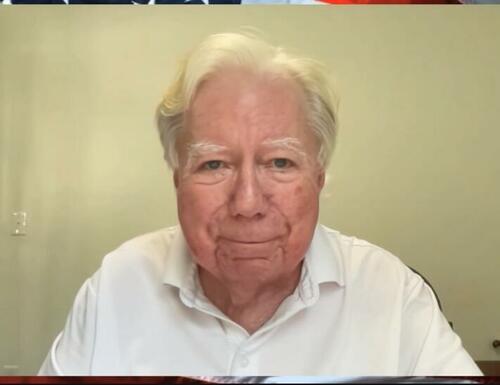
However, a deeper examination reveals a nuanced reality. In 2026, Assistant Attorney General Harmeet Dhillon reported that DOJ review of roughly 60 million voter records from cooperating jurisdictions identified at least 350,000 deceased individuals still listed on rolls and referred approximately 25,000 cases of individuals lacking citizenship records to DHS for further scrutiny. These findings occurred even in states attempting to comply, underscoring long-standing deficiencies in list maintenance under the National Voter Registration Act. Yet Dhillon and DOJ statements emphasize that actual instances of noncitizens casting illegitimate ballots number only in the dozens despite broad access to rolls.
This distinction between registration inaccuracies and proven fraudulent votes is critical. Multiple independent analyses confirm that while dead voters and ineligible registrations persist due to outdated systems, incomplete purging, and administrative errors, the incidence of actual voter fraud capable of altering outcomes is exceedingly low. The Heritage Foundation's database, a leading conservative tracker, has logged roughly 1,500 proven cases nationwide over more than four decades—an average of about 33 per year across billions of ballots cast. Academic and nonpartisan reviews, including MIT studies and Brennan Center analyses, place fraudulent voting rates between 0.00006% and 0.0025%, with no documented instances of widespread schemes flipping statewide or national results.
Brookings Institution analysis of Heritage data across battleground states found fraud rates as low as 0.0000845% in Arizona over 25 years and 39 cases in Pennsylvania across 100+ million votes over three decades. NPR and other outlets have consistently reported that courts, government commissions, and prosecutorial records align: impersonation, double voting, and noncitizen balloting occur but are statistically insignificant and often stem from mistakes rather than coordinated conspiracy. Claims of embedded "algorithms" creating and concealing fake voter profiles lack independent verification in peer-reviewed forensic audits or official election security reports.
The narrative around these issues nonetheless exerts outsized influence. Public perception surveys show 30-40% of registered voters, particularly Republicans, view noncitizen voting, mail-ballot fraud, and drop-box tampering as common. This erodes institutional trust and drives policy: aggressive DOJ lawsuits against the 29 non-compliant states and D.C., renewed focus on ERIC interstate data-sharing for roll cleaning, stricter ID and maintenance laws, and debates over executive authority. Connections often missed include how even tiny error rates in massive databases can amplify anxiety in polarized environments, and how partisan control of election administration fuels mutual accusations. While roll hygiene is a legitimate governance concern warranting continued investigation and NVRA enforcement, equating registration bloat with "legion" outcome-determining fraud risks overstating evidence and further polarizing democratic norms. As 2026 approaches, the tension between documented administrative flaws and rarity of impactful fraud will likely define battles over election security executive orders and legislation.
LIMINAL: Administrative flaws in voter registration lists are real and being actively litigated by DOJ, but the leap to claims of algorithmic mass fraud sufficient to decide elections lacks corroboration; this persistent gap sustains distrust while prompting tangible policy tightening on roll maintenance and eligibility verification.
Sources (5)
- [1]Trump DOJ's voter rolls grab has unearthed a tiny number of illegitimate votes(https://www.democracydocket.com/news-alerts/trump-dojs-voter-rolls-grab-has-unearthed-a-tiny-number-of-illegitimate-votes/)
- [2]How widespread is election fraud in the United States? Not very(https://www.brookings.edu/articles/how-widespread-is-election-fraud-in-the-united-states-not-very/)
- [3]Heritage Database | Election Fraud Map(https://electionfraud.heritage.org/)
- [4]How we know voter fraud is very rare in U.S. elections(https://www.npr.org/2024/10/11/nx-s1-5147732/voter-fraud-explainer)
- [5]The Myth of Voter Fraud(https://www.brennancenter.org/topics/voting-elections/vote-suppression/myth-voter-fraud)