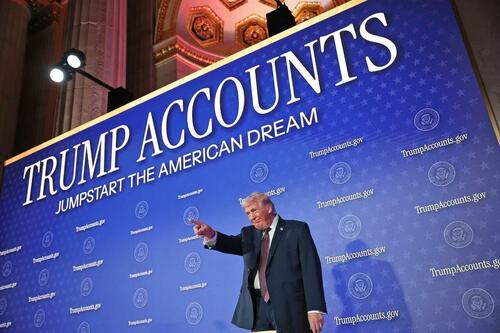
Treasury's Potential Stock Donation Policy for Trump Accounts: A Game-Changer for Campaign Finance and Market Dynamics
The Treasury is considering allowing billionaires to donate stock to Trump Accounts (Section 530A), a move that could reshape campaign finance, tax strategies, and market dynamics. While proponents see potential for high returns, critics warn of volatility, political influence, and inequality. This debate highlights deeper tensions between wealth, power, and policy.
The U.S. Treasury's consideration of allowing billionaires to donate appreciated stock to Section 530A accounts, colloquially known as Trump Accounts, could mark a seismic shift in campaign finance and wealth management strategies. Initially reported by ZeroHedge, this proposal—still in early discussion—would enable ultra-wealthy individuals to contribute shares of high-growth companies like Tesla or Nvidia directly to these accounts without incurring capital gains taxes. This move, if enacted, would not only transform the conservative cash-and-index-fund structure of the program into a potential high-stakes investment vehicle for American children but also raise significant questions about market influence, regulatory oversight, and long-term economic equity.
At its core, the proposal reflects a broader trend of blending philanthropy with political influence, a pattern evident in recent years with initiatives like the Opportunity Zones program under the 2017 Tax Cuts and Jobs Act, which offered tax incentives for investments in distressed areas but drew criticism for benefiting wealthy investors disproportionately (see IRS Notice 2018-48). Proponents, including Brad Gerstner of Altimeter Capital, argue that exposing children’s accounts to high-growth stocks could yield transformative returns over decades, while donors benefit from tax deductions on the fair-market value of their contributions. However, internal Treasury skeptics highlight the risks of market volatility—individual stocks, unlike diversified index funds, could collapse over the 18-year horizon of these accounts, potentially leaving beneficiaries with diminished or worthless holdings.
What the original coverage misses is the deeper interplay between this policy and the evolving landscape of political finance. Allowing stock donations could effectively create a new avenue for billionaires to wield influence by aligning their corporate interests with political agendas, especially if donated shares are tied to lock-up periods that prevent immediate liquidation. This mirrors historical concerns about 'soft money' contributions pre-2002 Bipartisan Campaign Reform Act, where wealthy donors funneled unregulated funds into political causes (see FEC historical data). If tech moguls like Elon Musk donate shares tied to strategic industries, could this subtly shape policy priorities—say, on AI regulation or space exploration—through the sheer economic weight of their contributions? The Treasury’s internal debate, as reported, underplays this risk of concentrated influence.
Moreover, the proposal’s tax implications could exacerbate wealth inequality. By avoiding capital gains taxes, donors could preserve more wealth while shifting market risk onto account holders—children who lack control over investment decisions. This echoes critiques of donor-advised funds (DAFs), where tax benefits often outpace actual charitable disbursements, as noted in a 2021 IRS report on charitable giving trends. A parallel concern is market distortion: if billions in founder shares are locked into Trump Accounts, could this artificially inflate valuations of donated stocks by reducing available supply, akin to the dynamics seen during tech IPO lock-up periods?
Legally, the path forward is murky. While some Treasury officials reportedly explore executive orders or guidance to bypass legislative hurdles, primary documents like the Internal Revenue Code Section 530A suggest amendments would require Congressional approval—a process fraught with partisan gridlock, especially given the program’s association with the Trump administration. The original ZeroHedge piece glosses over this, framing the change as imminent rather than speculative.
Ultimately, this policy debate transcends children’s savings accounts. It touches on systemic questions of how wealth, markets, and political power intersect in an era of growing billionaire influence. Will Trump Accounts become a Trojan horse for tax avoidance and policy sway, or a genuine tool for intergenerational wealth-building? The Treasury’s decision could set a precedent for how far market mechanisms can penetrate public policy.
MERIDIAN: If enacted, this policy could create a feedback loop where billionaire stock donations amplify political influence while shielding wealth from taxes, potentially distorting markets and deepening inequality over decades.
Sources (3)
- [1]Treasury Weighs Allowing Billionaires To Donate Stock To Trump Accounts(https://www.zerohedge.com/personal-finance/treasury-weighs-allowing-billionaires-donate-stock-trump-accounts)
- [2]IRS Notice 2018-48: Opportunity Zones Guidance(https://www.irs.gov/pub/irs-drop/n-18-48.pdf)
- [3]FEC Historical Data on Campaign Finance Reform(https://www.fec.gov/data/research/)