Trump's Maximum Pressure Blockade Collapses Iranian Economy, Exposing European Elite Hypocrisy and Atlantic Alliance Fractures
Trump's Hormuz blockade is effectively collapsing Iran's sanction-hit, war-damaged economy within weeks, as confirmed by economic forecasts of deep contraction, hyperinflation, and unrest risks. This exposes European hypocrisy on sanctions—criticizing US unilateralism while suffering energy shocks and stagflation that highlight deepening fractures in the Atlantic alliance, which mainstream reporting downplays.
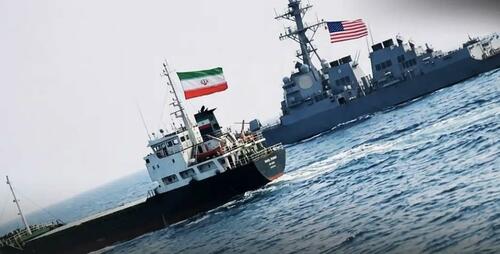
In a move that closely mirrors strategic predictions made weeks earlier, the Trump administration has enforced a naval blockade of Iranian ports and shipping through the Strait of Hormuz, rapidly strangling Tehran's oil exports and pushing its already war-ravaged economy toward outright collapse. Multiple mainstream outlets confirm the blockade, initiated after failed peace talks in Pakistan, has halted sea trade into and out of Iran since mid-April 2026, with the US Navy turning back or intercepting tankers in international waters. This maximum pressure campaign leverages Iran's heavy dependence on Hormuz for roughly 20-25% of global oil transit, flipping the script on earlier Iranian attempts to disrupt the waterway.
Credible reporting shows Iran's economy contracting sharply, with forecasts of 6-10% shrinkage in the current fiscal year, inflation exceeding 70%, currency collapse, mass layoffs, and millions more pushed into poverty. Industrial infrastructure lies in ruins from prior strikes, payroll is at risk, and officials warn of 'disaster' without sanctions relief. The blockade amplifies this by cutting off the regime's primary hard currency source, limiting its ability to fund proxies, missiles, or domestic stability measures. Mainstream analyses suggest the theocratic government could face unsustainable public unrest within weeks to months if the chokehold persists.
What mainstream coverage minimizes, however, are the fractures this reveals within the Atlantic alliance. European elites, quick to impose their own sanctions on Iran over human rights and nuclear issues, now face severe blowback: surging energy prices, postponed ECB rate cuts, stagflation risks, and potential technical recessions in Germany, Italy, and the UK. Reports highlight an energy-supply shock hitting Europe hard, with inflation forecasts revised upward and industries strained. This exposes a clear hypocrisy—European leaders have long criticized unilateral US 'maximum pressure' while selectively easing Russian oil flows or maintaining backchannel trade with Tehran-adjacent actors when convenient. The blockade underscores how European dependence on stable Gulf energy exposes selective enforcement of sanctions: vocal on moral grounds yet furious when US enforcement disrupts their economies.
Deeper connections emerge when viewing this through the lens of great power containment. The strategy not only targets Iran but indirectly pressures China, Iran's key oil customer, by disrupting shadow fleets and rerouting energy flows. US officials have openly discussed accepting 'a bit of pain' for long-term security gains, a calculus that appears to prioritize alliance leverage over European comfort. While outlets like BBC and Reuters detail Iran's dire payroll and infrastructure crises, coverage of transatlantic rifts remains muted—focusing instead on unified Western resolve. Yet the data is clear: a prolonged blockade risks cascading global effects that could fracture NATO unity faster than it topples the Iranian regime. Trump's approach tests whether economic warfare can achieve decisive ends with minimal direct US casualties, but it also lays bare the limits of shared sacrifice across the Atlantic. As Iran's economy visibly crumbles under this pressure, the episode serves as a case study in how hegemonic enforcement exposes elite inconsistencies long papered over by mainstream narratives.
Liminal Analysis: Trump's blockade is visibly breaking Iran's economy faster than air strikes alone, forcing potential negotiations, but it will widen US-European rifts as energy pain exposes elite double standards on sanctions enforcement and alliance burden-sharing.
Sources (6)
- [1]What to know about Trump's Iran blockade and the Strait of Hormuz(https://www.nbcnews.com/world/iran/trump-iran-blockade-strait-of-hormuz-ports-explained-rcna331477)
- [2]Strait of Hormuz: Is the US blockade of Iran working?(https://www.bbc.com/news/videos/cx2449xklnko)
- [3]Iran's crumbling economy is the regime's greatest weakness(https://fortune.com/2026/04/12/iran-economy-crisis-inflation-prices-payroll-unemployment-currency-collapse/)
- [4]Iran's shattered economy means any success in war may be fleeting(https://www.reuters.com/world/middle-east/irans-shattered-economy-means-any-success-war-may-be-fleeting-2026-04-08/)
- [5]Trump Begins Hormuz Blockade Even as More Talks Mulled(https://www.bloomberg.com/news/articles/2026-04-13/trump-s-hormuz-blockade-deadline-hits-raising-iran-war-stakes)
- [6]'Bit of pain' worth long-term security from Iran, Bessent tells BBC(https://www.bbc.com/news/articles/c4g66p2q075o)