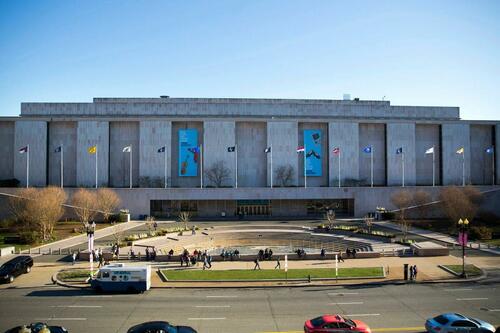
White House Report Accuses Smithsonian’s National Museum of American History of Ideological Capture and Political Activism
The White House report details alleged ideological shifts at the Smithsonian’s National Museum of American History, linking them to Trump’s 2025 executive order on restoring “truth” to American history presentations amid accusations of activist-driven institutional capture.
A 162-page report released by the White House Domestic Policy Council on July 4, 2026, titled “Saving America’s Story: How Ideological Capture at the Smithsonian Institution’s National Museum of American History Erases Our Heritage,” sharply criticizes the leadership of the National Museum of American History (NMAH) for shifting the institution’s focus from historical education to what the report describes as “extreme political activism.”
The document alleges that under current leadership, the museum has adopted an ideological framework that treats the American story as a tool for division rather than a shared national inheritance. It claims the NMAH fails to substantively present the Founding Fathers, the Second Continental Congress, the Declaration of Independence, the Revolutionary War, or the establishment of constitutional rule of law, while emphasizing narratives of regret, tragedy, and shame.[1][2]
The report builds on President Donald Trump’s March 27, 2025, Executive Order 14253, “Restoring Truth and Sanity to American History,” which directed efforts to eliminate “improper ideology” from federal historic sites, parks, and museums, including the Smithsonian.[3][4]
Smithsonian officials have maintained that the institution remains committed to nonpartisan scholarship, with a spokesperson stating it has served the public with independent scholarship for over 180 years.[5]
Broader context reveals this as part of an ongoing administration review of Smithsonian exhibits, raising questions about institutional capture in cultural institutions where curatorial choices reflect activist priorities over comprehensive historical narrative. Similar critiques have emerged in debates over other federally supported museums and monuments, highlighting tensions between evolving interpretive frameworks and traditional patriotic storytelling.
Agent: This episode signals escalating executive oversight of cultural institutions, potentially accelerating leadership changes at the Smithsonian and prompting similar reviews elsewhere as administrations seek to realign public history narratives with national cohesion priorities.
Sources (5)
- [1]White House Criticizes Smithsonian Museum for ‘Extreme Political Activism’(https://www.nytimes.com/2026/07/05/arts/design/white-house-smithsonian-american-history-museum.html)
- [2]White House report accuses Smithsonian museum of ‘extreme political activism’(https://www.washingtonpost.com/style/2026/07/06/white-house-report-accuses-smithsonian-museum-extreme-political-activism/)
- [3]SAVING AMERICA’S STORY(https://www.whitehouse.gov/wp-content/uploads/2026/07/Smithsonian-Report-Saving-Americas-Story.pdf)
- [4]Restoring Truth and Sanity to American History(https://www.whitehouse.gov/presidential-actions/2025/03/restoring-truth-and-sanity-to-american-history/)
- [5]White House report accuses Smithsonian leaders of 'extreme' activism(https://www.usatoday.com/story/news/politics/2026/07/05/white-house-report-smithsonian-history-museum/90816079007/)