Macron's Direct Line to Lukashenko Exposes Backchannel Diplomacy on NATO's Eastern Flank Amid Escalation Risks
Macron's first direct contact with Lukashenko since 2022 highlights discreet Western efforts to deter Belarusian escalation, exposing backchannel diplomacy aimed at stabilizing NATO's vulnerable eastern flank and influencing the broader Ukraine war trajectory amid nuclear drills and new-front fears.
In a rare direct engagement unseen since the eve of Russia's full-scale invasion, French President Emmanuel Macron personally warned Belarusian leader Alexander Lukashenko against deepening his country's role in the Ukraine conflict. According to sources close to the French presidency, the May 24, 2026 call emphasized the severe risks to Belarus if it allows itself to be drawn further into Moscow's war of aggression, while urging steps to normalize ties with Europe. This outreach, confirmed by both French and Belarusian channels, represents more than routine diplomacy—it signals Western awareness of Belarus as the precarious pivot on NATO's eastern flank whose full activation could reshape the entire war trajectory.[1][2]
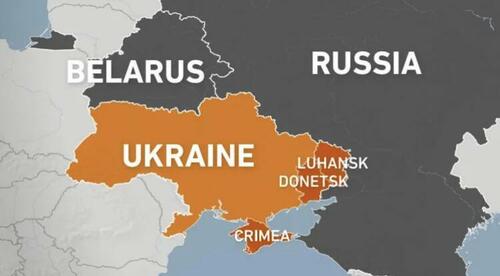
Belarus has already functioned as a critical enabler for Russia since 2022, providing staging grounds for the initial assault on Kyiv and ongoing launch points for missiles and drones. Recent developments have heightened concerns: joint Russo-Belarusian nuclear drills involving tens of thousands of troops and nuclear-capable systems, deployment of Russia's advanced Oreshnik hypersonic IRBMs on Belarusian soil, and Ukrainian intelligence indicating Putin is ratcheting pressure on Lukashenko to commit forces more directly. Ukrainian President Zelensky recently ordered border reinforcements and publicly flagged the threat of a renewed northern offensive, though current observations show no immediate troop buildups. Lukashenko, for his part, has floated conditional openness to talks with Zelensky while insisting Belarus would only fight if directly attacked.[2]
What mainstream coverage has largely framed as a straightforward warning call merits deeper scrutiny. Macron's initiative—his first known contact with Lukashenko in over four years—bypasses more hawkish NATO voices and echoes his longstanding pattern of maintaining backchannels to Moscow-aligned actors even amid peak tensions. This move occurs against a backdrop of nuclear saber-rattling and hybrid threats along the Suwalki Gap and Polish-Belarusian border, where any overt Belarusian entry could trigger direct NATO-Russia confrontation scenarios that Western planners have war-gamed for years. By engaging Lukashenko personally, Macron appears to be testing whether Minsk can be kept in a semi-detached status as a Russian proxy rather than a co-belligerent, potentially preserving a fragile off-ramp that prevents the conflict from metastasizing into a wider European theater.
The timing is telling. It coincides with Russia's recent Oreshnik strikes on Ukrainian targets, framed by Moscow as retaliation, and follows Belarusian announcements integrating these nuclear-capable systems. For NATO's eastern members—particularly Poland, Lithuania, and the Baltic states—this flank remains the soft underbelly: Belarusian involvement would stretch Ukrainian defenses thin, force resource reallocations, and raise the specter of Article 5 invocation if Belarusian territory becomes a launchpad for strikes against alliance members. Macron's call thus fits into a broader, underreported pattern of calibrated European diplomacy aimed at decoupling Lukashenko from total subordination to Putin, exploiting whatever limited autonomy Minsk retains amid economic sanctions and military dependence.
While Belarusian state media characterized the discussion as covering 'regional issues' and EU-Belarus relations, the French emphasis on de-escalation risks reveals the true stakes. This episode underscores how the Ukraine war's trajectory increasingly hinges on secondary actors like Belarus, where behind-the-scenes pressure may prove as decisive as battlefield developments. As nuclear posturing intensifies, such diplomatic probes could either forestall catastrophe or expose the limits of Western leverage on Moscow's closest ally.
LIMINAL: Macron's personal outreach suggests Western intelligence sees Lukashenko as a potential pressure point to limit Russian theater expansion; success here could delay a northern front opening, buying time for Ukraine while exposing fractures in the Russia-Belarus axis that NATO may quietly exploit.
Sources (4)
- [1]France's Macron issues warning to Belarus in rare phone call with Lukashenko(https://kyivindependent.com/frances-macron-issues-warning-to-belarus-in-rare-phone-call-with-lukashenko/)
- [2]Macron warns Lukashenko against drawing Belarus further into war against Ukraine(https://www.pravda.com.ua/eng/news/2026/05/24/8036225/)
- [3]Lukashenko and Macron Hold Rare Phone Call, Belta Says(https://www.bloomberg.com/news/articles/2026-05-24/lukashenko-and-macron-hold-rare-phone-call-belta-says)
- [4]Lukashenko, Macron hold phone call at France’s initiative(https://eng.belta.by/president/view/lukashenko-macron-hold-phone-call-at-frances-initiative-180780-2026/)